
Clear glass, clearly scoped
Window Cleaning in London
Arrange interior or exterior window cleaning with access, frames and difficult panes considered upfront. Send property photographs for a tailored quotation.
- Interior and exterior scope agreed
- Glass, frames and sills discussed
- Access-led methods for each property
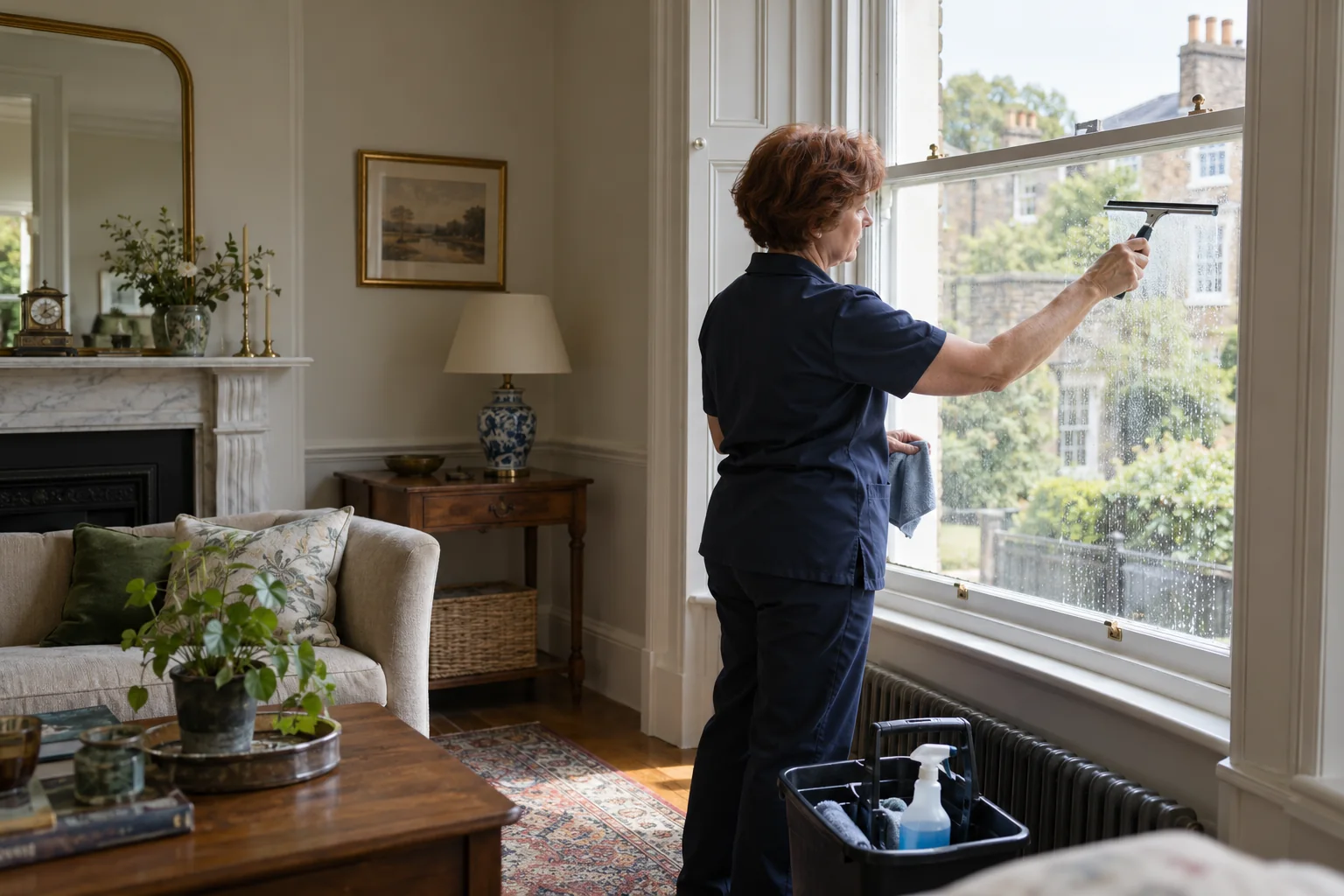
Assessment
Start with which glass you want cleaned
A window-cleaning enquiry is more useful when it describes the whole opening rather than simply the number of rooms. A bay may contain several panes, a sash can have divided lights, and a glazed door may be larger than an ordinary window. Tell Move Out Mates whether you need the inside, outside or both sides cleaned. Mention rooflights, conservatory glazing, balcony doors and any panes that cannot be reached from a normal working position.
Describe the marks too. Traffic film, fingerprints, insect deposits and ordinary dust are different from paint, adhesive, cement residue or mineral staining. Cleaning the accessible surfaces cannot remove condensation trapped between sealed glazing units. Clear scope avoids disappointment when a building defect or specialist residue is mistaken for normal dirt. If windows need attention after renovation, coordinate with after builders cleaning and identify the residue instead of assuming routine window cleaning includes scraping every construction deposit.
| Feature | Information needed | Important distinction |
|---|---|---|
| Glass sides | Inside, outside or both | One side does not include the other |
| Frames and sills | Materials and current condition | Tracks and deep detailing may differ |
| Glazed doors | Number, size and access | Large doors affect the work area |
| Rooflights | Position and safe access | A separate access assessment |
| Special residue | Paint, adhesive or mineral marks | Not ordinary surface soiling |
Materials
The access route determines the suitable method
The safest practical method depends on the building and the surrounding ground. A water-fed pole can allow some exterior glass to be cleaned from ground level, where there is suitable reach, a clear line of approach and a workable place to stand. Height alone does not establish access. A deep extension roof, parked vehicles, overhead obstructions or a narrow passage may make a particular pane inaccessible by that method.
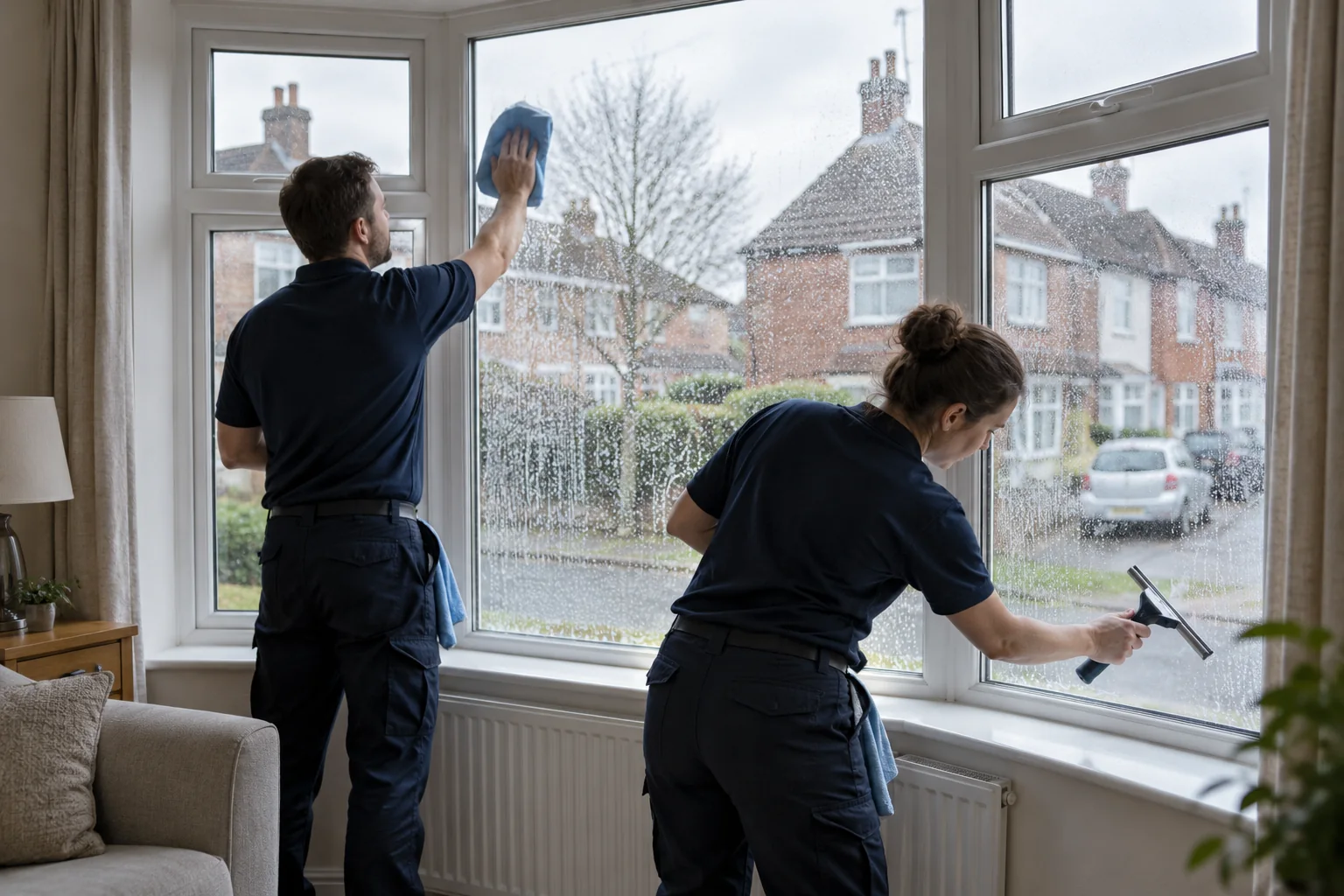
Inside a property, traditional applicator-and-squeegee work may be appropriate where the glass can be reached safely and nearby finishes can be protected. Opening mechanisms should not be forced, and unfamiliar sash cords, restrictors or hinges deserve care. Specialist access equipment or permissions should be discussed explicitly rather than assumed. Tell us about balconies, security grilles and shared courtyards. Cleaning windows should never require a resident to lean out of an opening, climb onto a roof or move onto an unsuitable ledge to make the appointment possible.
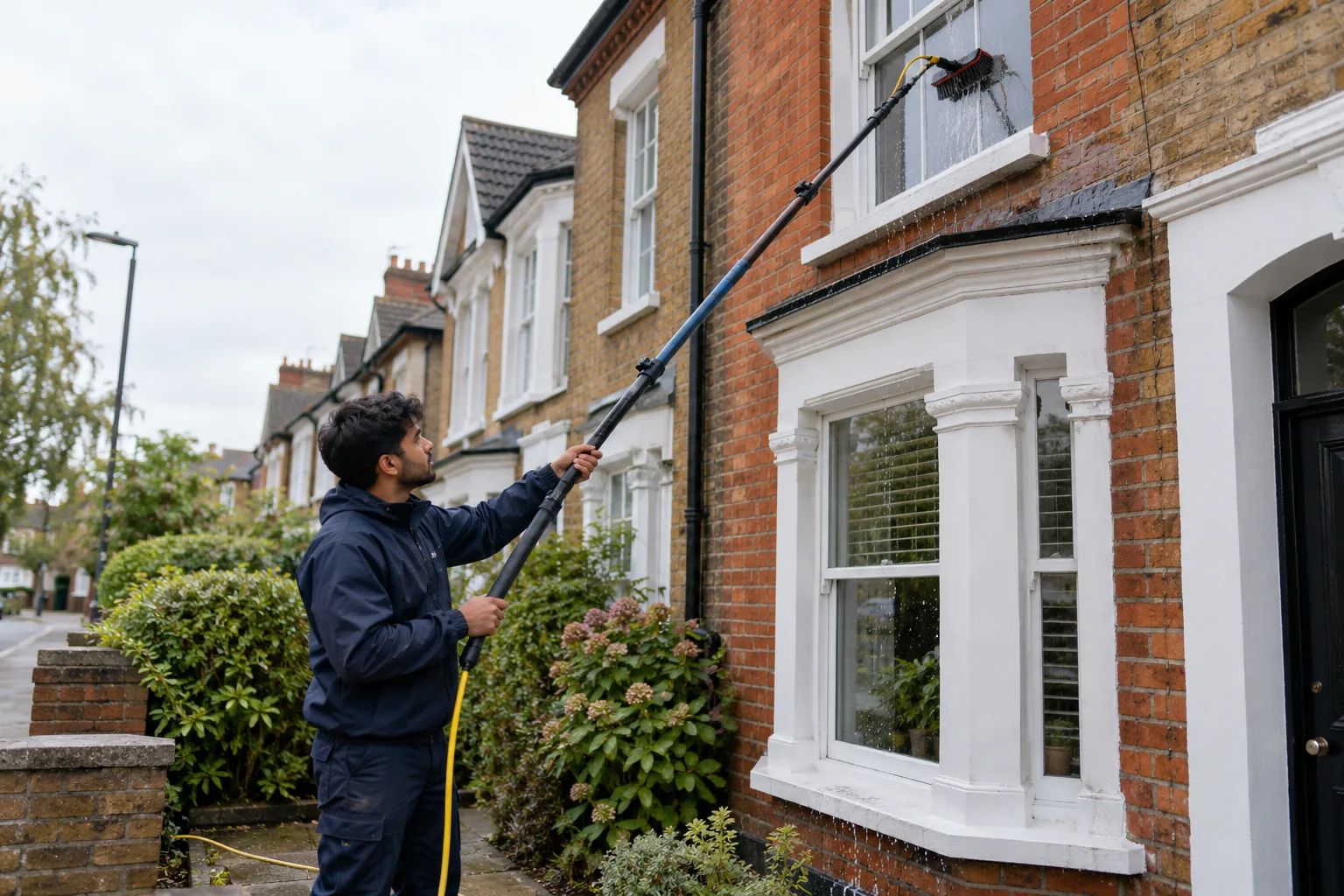
| Property feature | Potential issue | What to confirm |
|---|---|---|
| Extension or conservatory roof | Blocks the line to upper panes | Which glass remains reachable |
| Shared side passage | Restricted working space | Permission and clear access |
| Balcony glazing | Inside and outside differ | Safe working position |
| Old sash windows | Cords, locks or restrictors | Opening and handling limitations |
| Overhead obstructions | Equipment cannot be positioned freely | Suitability of the proposed method |
Preparation
Different frame materials need appropriate handling
Window frames are part of a larger weatherproof assembly. Painted timber can have loose coatings or soft areas, while older putty and seals may be fragile. uPVC can hold grime around gaskets and corners, and powder-coated metal can show marks that require a compatible approach. Describe known leaks, damaged seals and loose paint before booking. Cleaning is not a repair service and should not be expected to make a defective window watertight.
Ask exactly what frame and sill work is included. A normal wipe is different from deep track cleaning, removing ingrained discolouration or treating mould. Decorative films, tinted glass and specialist coatings also need identifying before the method is chosen. Do not assume an abrasive pad or scraper is suitable for a stubborn mark. If the interior window area includes fabric coverings, discuss blind cleaning separately; liquid suitable for glass may damage a blind, cord or delicate finish beside it.
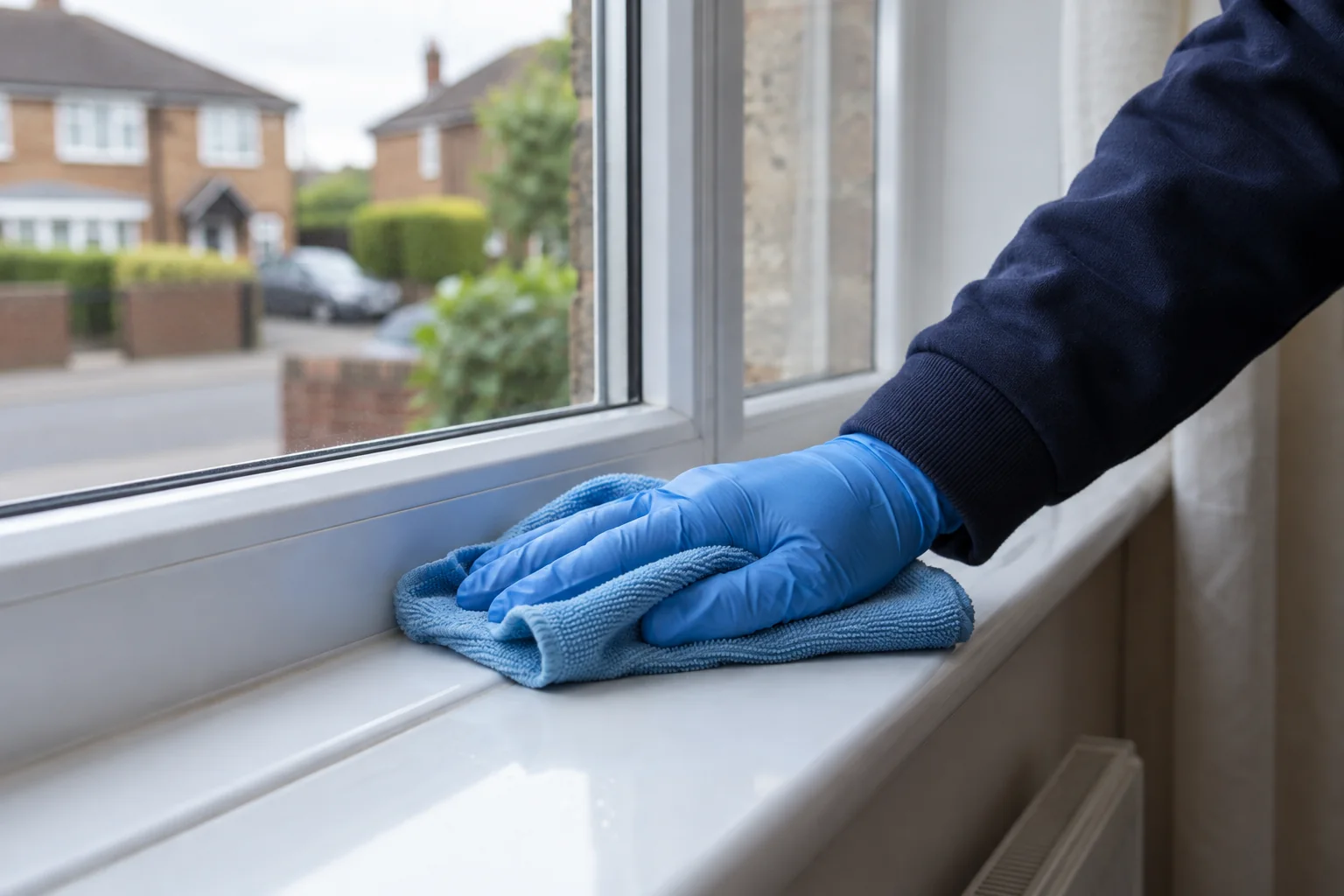
| Material or finish | Mention before booking | Scope limit |
|---|---|---|
| Painted timber | Loose paint, putty or soft areas | Cleaning does not repair decay |
| uPVC | Gasket condition and ingrained marks | Surface cleaning versus restoration |
| Metal frames | Finish and known corrosion | Compatible products required |
| Window film | Film type and care instructions | Avoid unsuitable abrasion |
| Special glass coating | Manufacturer information if known | Method must respect the coating |
Method
Prepare the space around the windows
Clear small movable items from sills and provide a safe route to the glass. Move fragile ornaments and protect private belongings that could be disturbed during access. Heavy furniture is a separate question: tell us what blocks the window and discuss responsibility for moving it. Do not try to shift a large wardrobe or lift a heavy planter without appropriate help. Curtains and blinds should be positioned as agreed so that they do not obstruct the work.
For exterior cleaning, arrange access through gates and tell the team about pets, locked courtyards and any managing-agent requirements. Keep the working area clear of children and animals while equipment is in use. Mention nearby electrical equipment, a conservatory that leaks or surfaces that must not get wet. If a wider outdoor clean is also planned, it can make sense to schedule pressure washing before the final window visit so that splash from paving does not immediately soil clean glass. Confirm the actual sequence with the services involved.
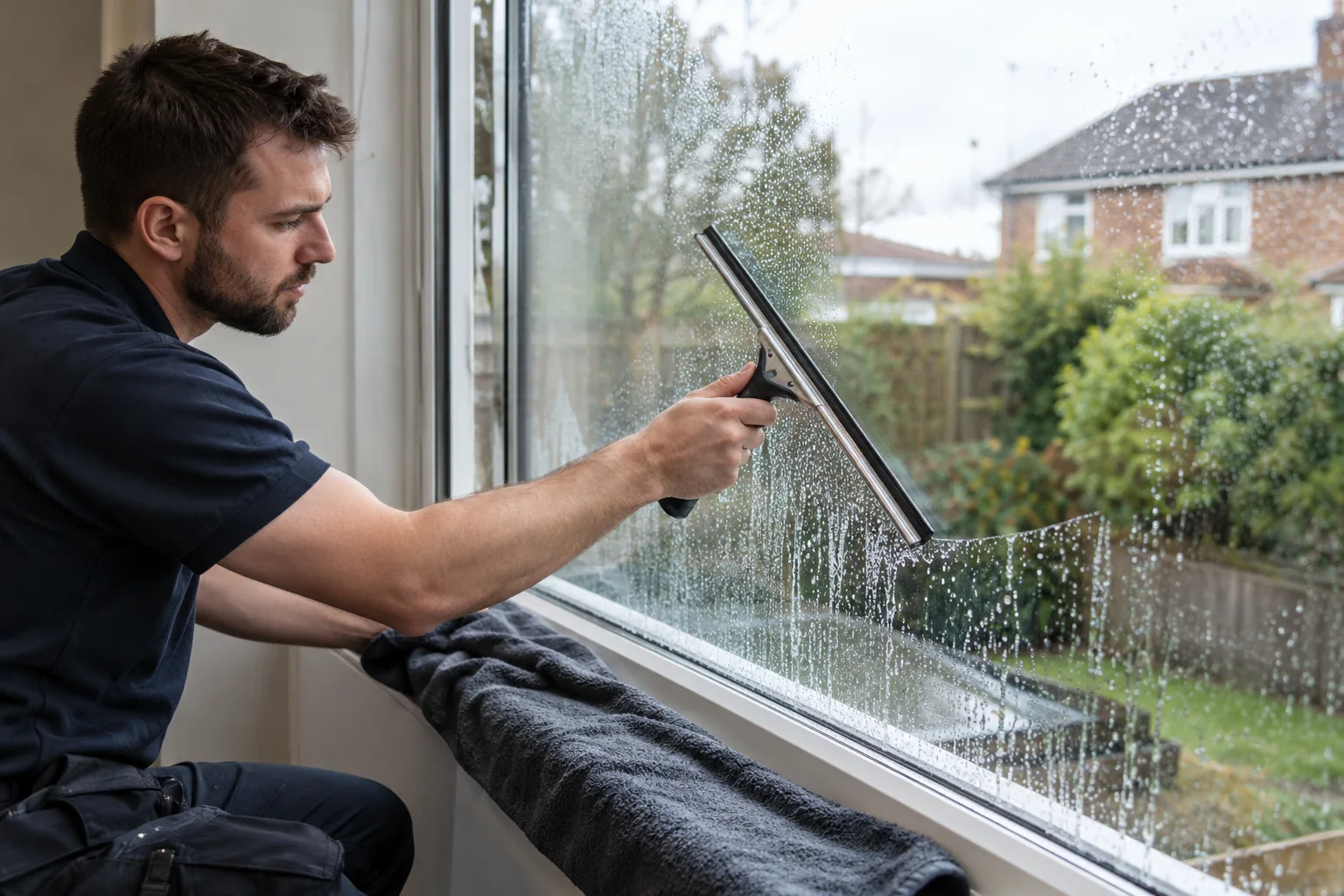
| Area | Helpful preparation | Discuss rather than assume |
|---|---|---|
| Interior sills | Remove ornaments and small items | Who moves large furniture |
| Floor below | Identify sensitive surfaces | Protection during wet work |
| Blinds and curtains | Provide clear access to the opening | Separate textile cleaning |
| Exterior route | Unlock agreed gates and clear hazards | Communal access permissions |
| Pets and children | Keep away from equipment | A suitable secure area during work |
Finishing
Understand drying marks and stubborn deposits
With an appropriate purified-water exterior process, glass may be left to dry naturally after rinsing. That is different from leaving ordinary tap-water droplets on a pane. The suitability and result depend on the water quality, cleaning technique and existing condition of the glass and frames. Residue from dirty seals or older frame deposits may need further attention. Ask what to expect at the end of the particular method proposed for your property.
Persistent cloudy patches can have several causes. Mineral deposits, surface etching, scratches and failed sealed units do not respond in the same way. A cleaner cannot diagnose every glazing fault from a distant photograph, and aggressive attempts to remove a mark can make matters worse. Describe the history, whether the mark changes when wet and which side it appears on. If condensation is between the panes, a glazing professional may be the appropriate next contact. Routine window cleaning should not be sold as a cure for structural or sealed-unit problems.
| Appearance | Possible explanation | Useful next step |
|---|---|---|
| Droplets after a pole clean | Natural drying after purified-water rinsing | Ask about the expected drying process |
| Haze between panes | Possible sealed-unit issue | Seek glazing advice |
| Chalky exterior patches | Possible mineral deposits | Assess before specialist treatment |
| Fine linear marks | Scratches or abrasion | Cleaning cannot remove missing glass |
| Dark frame corners | Deposits or possible biological growth | Agree suitable detailing and limitations |
Your quotation
Get a quotation for the actual property
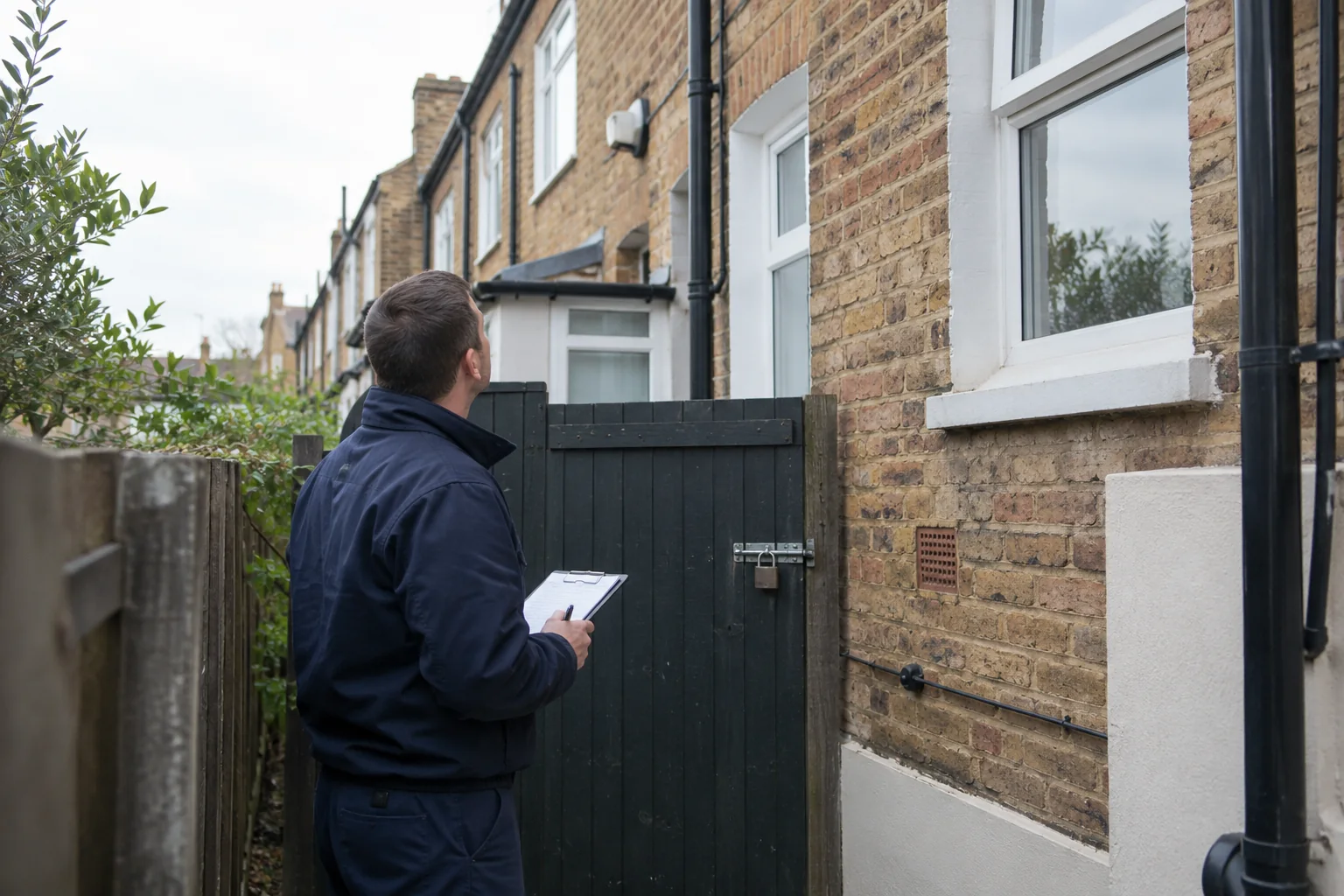
Send photographs of each elevation and the inside where access is restricted. Include the property type, approximate floor levels and a list of unusual glazing. A simple count can underestimate the work in divided panes, bays or glazed extensions. State whether the request is a one-off clean after a long gap or part of an ongoing arrangement. The initial condition can be more important than the property’s bedroom count.
Your quotation should identify the sides of the glass, the agreed frame and sill scope, access assumptions and any specialist residues. Ask about parking, permissions and areas that may remain inaccessible. Ask for a property-specific quotation based on this information. Where windows form part of a rented-property handover, compare the proposed work with the actual checkout requirements and the scope of end of tenancy cleaning. This avoids booking both services on the assumption that each includes the same glass or that exterior cleaning is automatically part of an indoor clean.
| Detail | Why it affects scope | Confirm in writing |
|---|---|---|
| Panes and dimensions | Different openings require different work | Which windows are included |
| Sides required | Inside and outside have separate access | One side or both |
| Current condition | First cleans and special deposits differ | Routine versus specialist work |
| Height and obstructions | Reach and equipment suitability | Any inaccessible panes |
| Frame detailing | Materials and depth of cleaning | Frames, sills and tracks |
| Property logistics | Parking and permissions | Customer arrangements and charges |
Planning
Choose a maintenance pattern that suits the setting
There is no single interval that suits every London property. Busy roads, nearby trees, building work and exposed positions can affect how quickly glass becomes visibly dirty. Interior fingerprints around patio doors have a different pattern from exterior deposits on upper windows. Review the condition and your priorities rather than assuming every pane needs the same attention on every visit.
Weather can also affect access and the suitability of work. Strong wind, freezing conditions or unsafe ground may require a change of plan. Ask about the arrangements for weather-related changes when booking. After a visit, note any areas that deserve discussion and use clear photographs to show them. A practical ongoing plan records the accessible glazing and agreed scope, so that each appointment has a consistent reference without making unrealistic promises about permanent clarity or the repair of existing defects.
If the property has a concierge, alarm system or automatic gate, provide practical access instructions through the agreed booking channel. Do not leave security details on a publicly visible note. Where cleaning involves communal glazing, establish who is responsible for permission and the exact boundary of the work. A ground-floor flat may have access to its own glass while neighbouring panes belong to a shared arrangement. Recording those boundaries avoids accidental assumptions and helps the visit concentrate on the windows you are authorised to have cleaned.
Practical questions
The details worth asking.
Do you clean inside and outside?
You can request either or both, but the quotation must state the sides included. Each side has different access requirements. Identify any panes that cannot be reached from the inside or outside in a normal safe position.
Are frames, sills and tracks all the same service?
No. A frame and sill wipe can differ from deep track detailing or restoration. Describe the condition and ask which elements are included, especially where older deposits or delicate finishes are involved.
Can a water-fed pole reach every upstairs window?
No. Reach, obstacles, ground conditions and the position of the pane all matter. Send photographs showing extension roofs, balconies and access routes so that the suitable method can be assessed.
Why is there still water on the glass?
Some exterior methods use purified water and leave glass to dry naturally. Ask which process was used and what drying result to expect. Persistent marks should be discussed with photographs rather than immediately treated with household chemicals.
Can cleaning remove condensation between double glazing?
Surface cleaning cannot reach moisture trapped within a sealed glazing unit. A persistent internal haze may need assessment by a glazing specialist rather than further washing of accessible surfaces.
Will paint and cement splashes be removed?
Construction residue needs identifying and assessing separately. Scrapers and abrasive methods may damage some glass or coatings. Do not assume a routine clean includes complete removal of paint, adhesive or cement.
Should I move furniture before the visit?
Clear small items and provide safe access where you can. Discuss heavy furniture and fragile belongings beforehand. Do not move a large object unsafely merely to make a window accessible.
Can a visit go ahead in bad weather?
That depends on the actual conditions, access and method. Strong winds, ice or unsafe ground may affect work. Confirm weather-related arrangements during booking rather than assuming every appointment can proceed unchanged.