
Fitted carpets / Thoughtful textile care
Carpet cleaning. Begin with the fibre.
The mark is only part of the story. Carpet fibre, backing, previous treatments and room conditions all influence how a clean should be planned, from the first inspection to the time allowed for drying.
- Fitted carpets, staircases and landing areas scoped individually
- Material and colour checks before selecting a suitable method
- Stain history and drying access discussed before the appointment
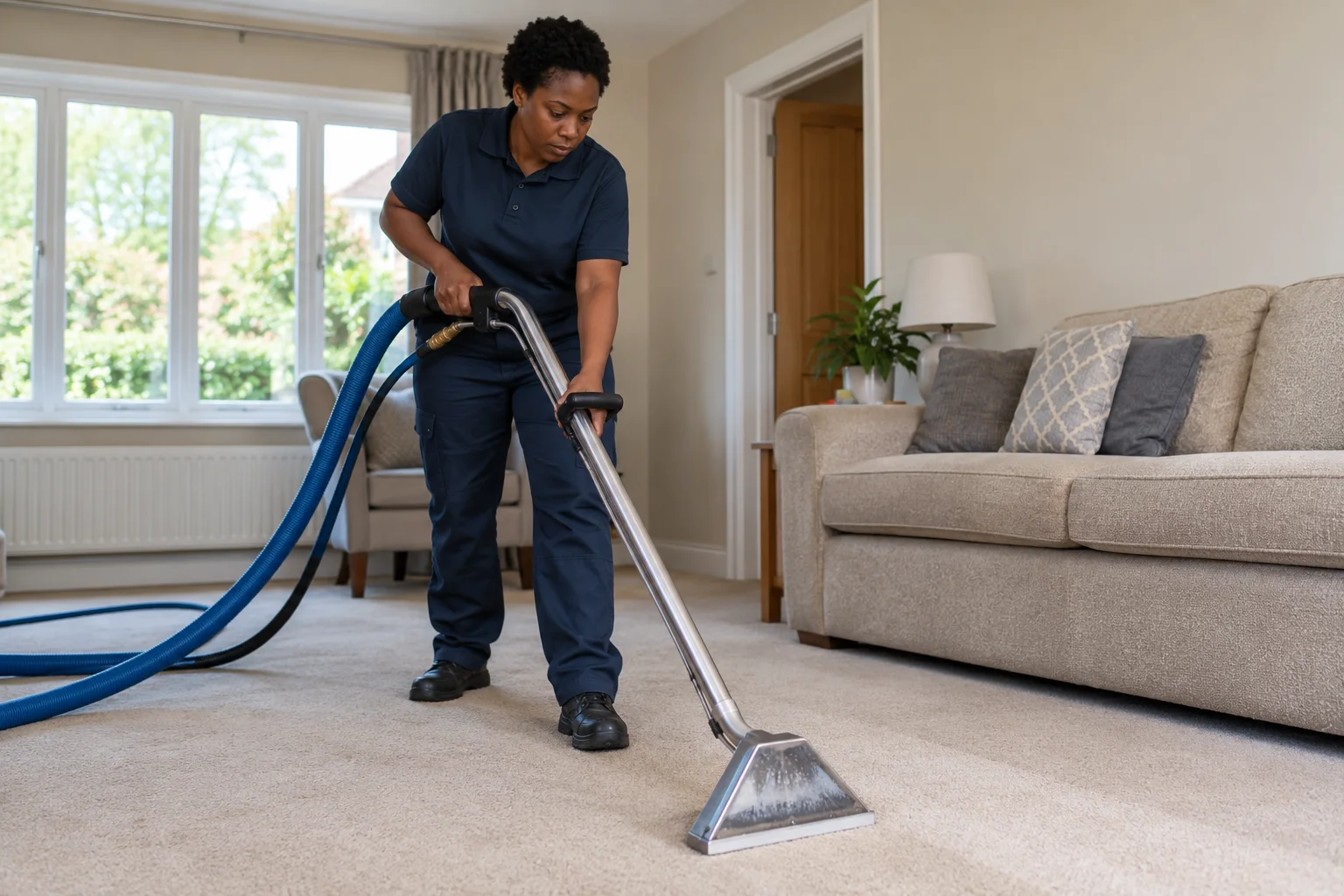
Look beyond the visible stain.
A carpet can hold loose grit near the backing while looking fairly tidy from above. In a busy hallway that grit is worked into the pile by shoes; in a bedroom the more noticeable problem may be a local spill or dust along the skirting. Carpet cleaning addresses removable soil in the textile, with the method chosen around its construction and condition. It does not replace worn pile, repair burns or reverse colour loss.
Move Out Mates offers professional carpet cleaning for homes and other suitable properties. Describe which rooms need treatment, whether they are furnished and what you know about the fibre. If the floor covering is a separate movable piece rather than fitted carpet, our rug cleaning page explains the different information needed for that item. A rug and the carpet underneath should be assessed as separate textiles.
Wool, synthetics and natural fibres need different decisions.
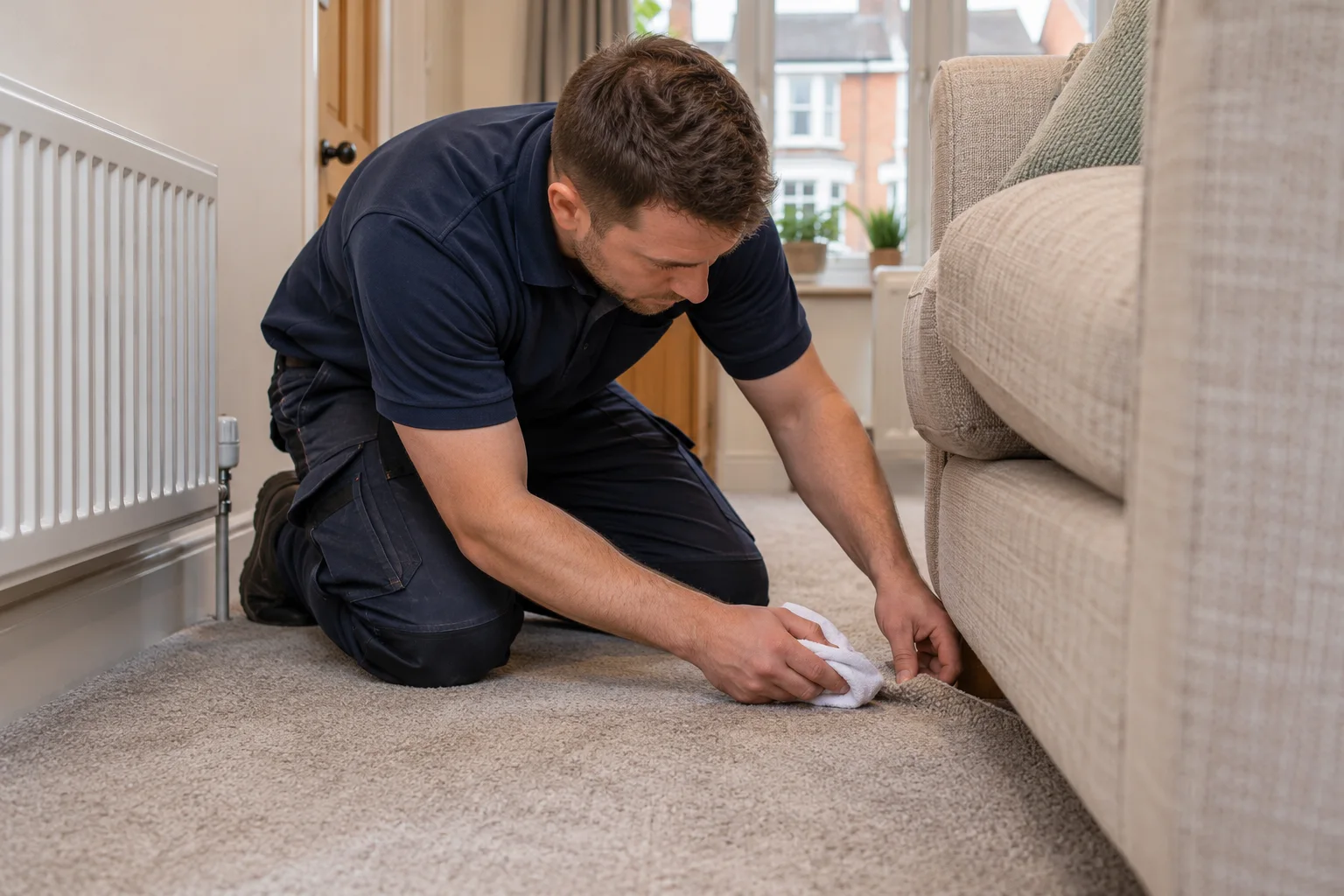
A familiar colour or soft feel does not reliably identify a carpet fibre. The label, purchase information or installer’s specification can be useful, especially with blended yarns or unusual backing. Please share these details rather than choosing a method based on a neighbour’s carpet. The technician may check a discreet area for colour transfer and inspect edges, seams and existing distortion before work begins.
Hot water extraction is a common industry method for suitable carpets, using controlled cleaning solution and simultaneous recovery. Some materials need a lower-moisture or specialist dry approach. These are general options, not a promise that every carpet can receive every process. Material uncertainty, damaged backing or unstable dyes can justify a restricted treatment or a decision not to proceed.
| Carpet detail | What to establish | Why it matters |
|---|---|---|
| Wool or wool blend | Fibre content, dyes and care guidance | Method and product selection need care |
| Synthetic fitted carpet | Backing, condition and previous treatment | A suitable extraction process may be considered |
| Sisal, jute or seagrass | Exact material and water sensitivity | Wet treatment may cause marks or distortion |
| Loose or damaged seams | Existing lifting, splitting or fraying | Treatment may be limited until repaired |
The useful work starts before the machine pass.
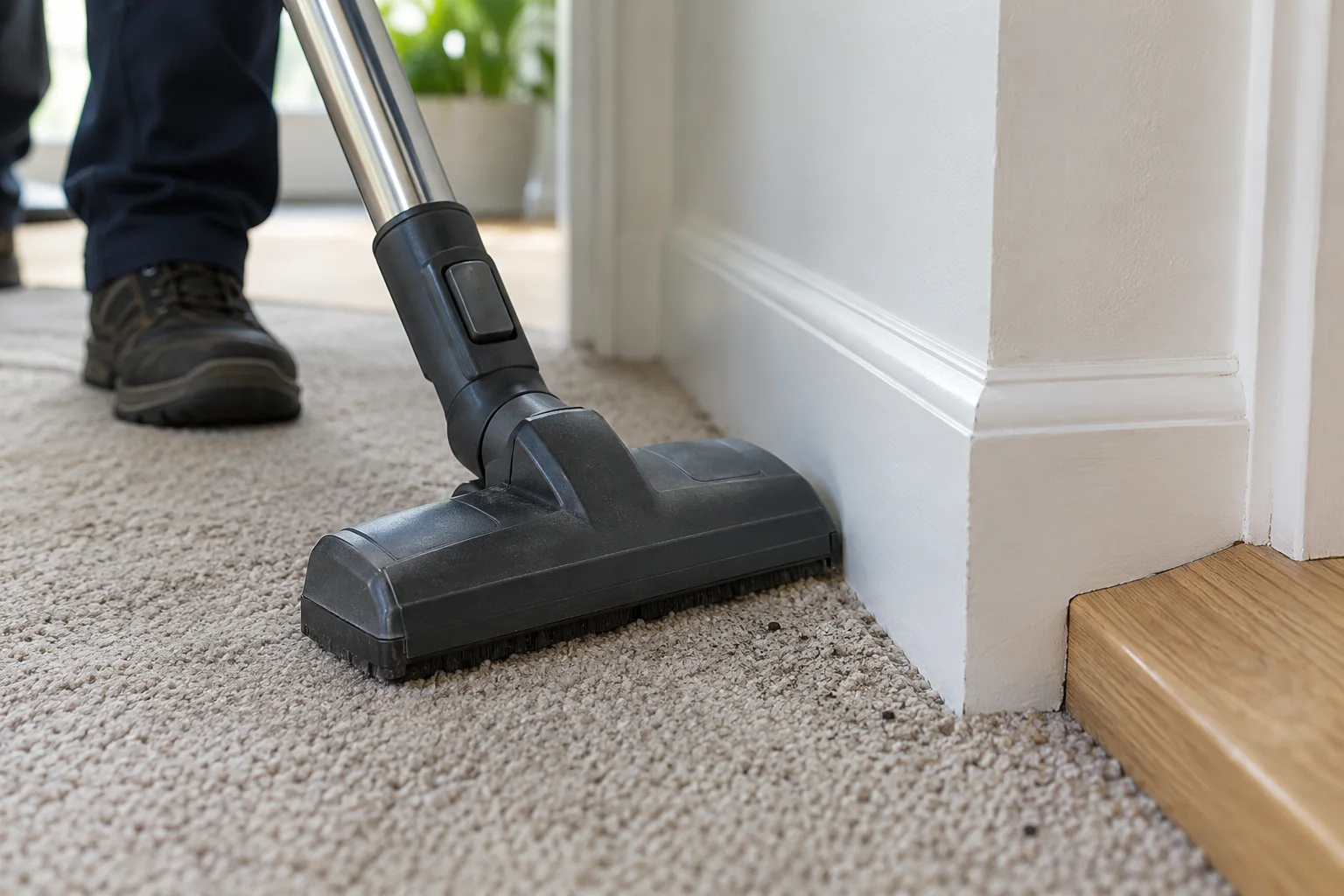
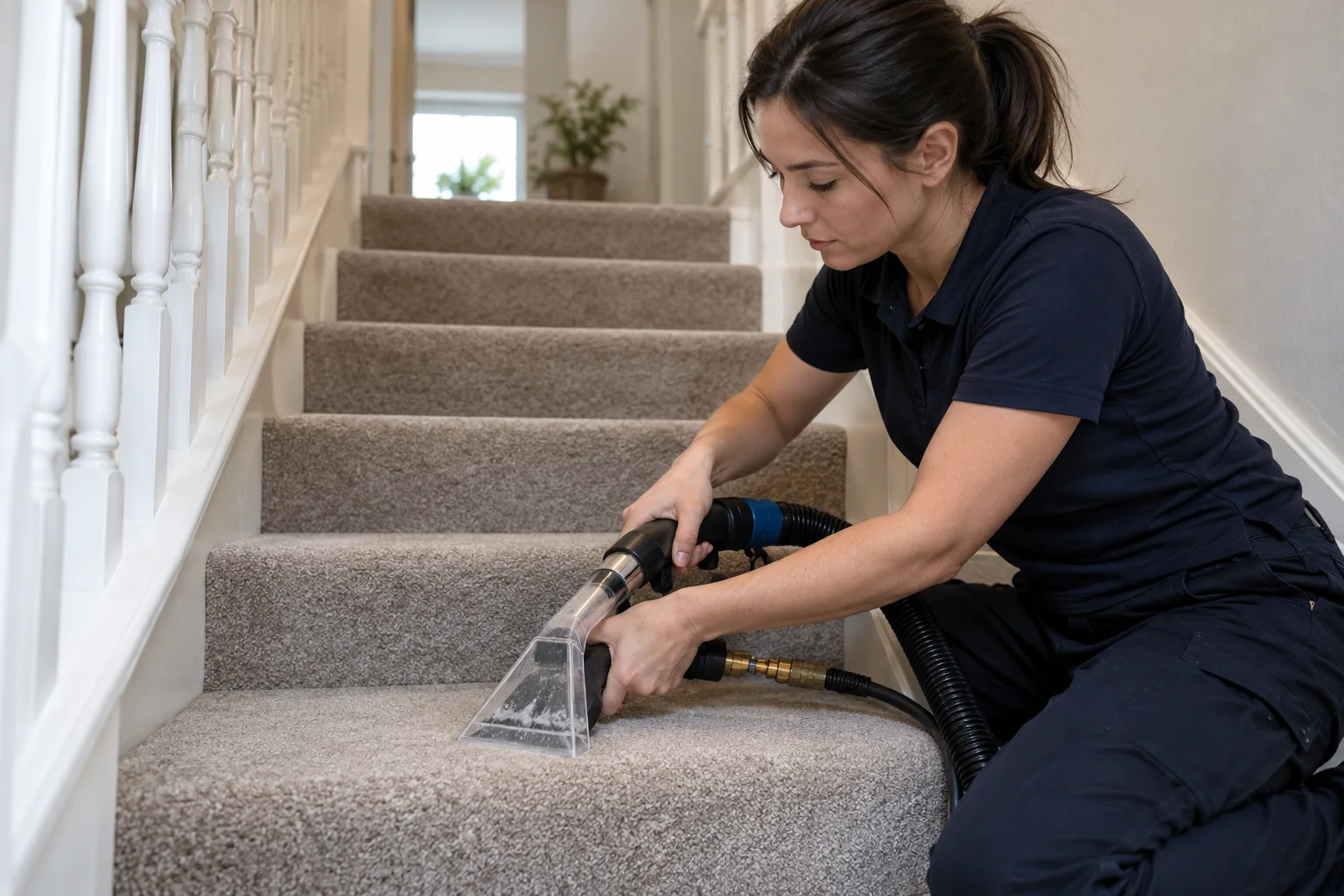
A considered visit begins with inspection and a conversation about problem areas. Dry vacuuming removes loose particles that should not be mixed into the wet cleaning stage. Marks can then be assessed individually, and a compatible pre-treatment may be used where appropriate. The main cleaning process should control moisture and recover loosened soil, followed by advice suited to the material and room conditions.
Please tell us if you have used a hired machine, washing-up liquid, stain powder or another product recently. Residues can foam or change the way the next treatment behaves. Overwetting at home can also affect backing and underlay. The purpose of this discussion is to select a suitable process, not to blame a previous attempt. Clear information helps the technician avoid repeating a treatment that has already failed.
| Stage | Purpose | What to discuss |
|---|---|---|
| Inspection and testing | Assess material and existing defects | Labels, seams and colour stability |
| Dry soil removal | Lift accessible loose grit and dust | Edges and heavily used traffic lanes |
| Local treatment | Address suitable marks individually | Cause, age and previous products |
| Main cleaning and recovery | Remove compatible soil using the agreed method | Moisture level and drying arrangements |
What happened to the carpet matters.
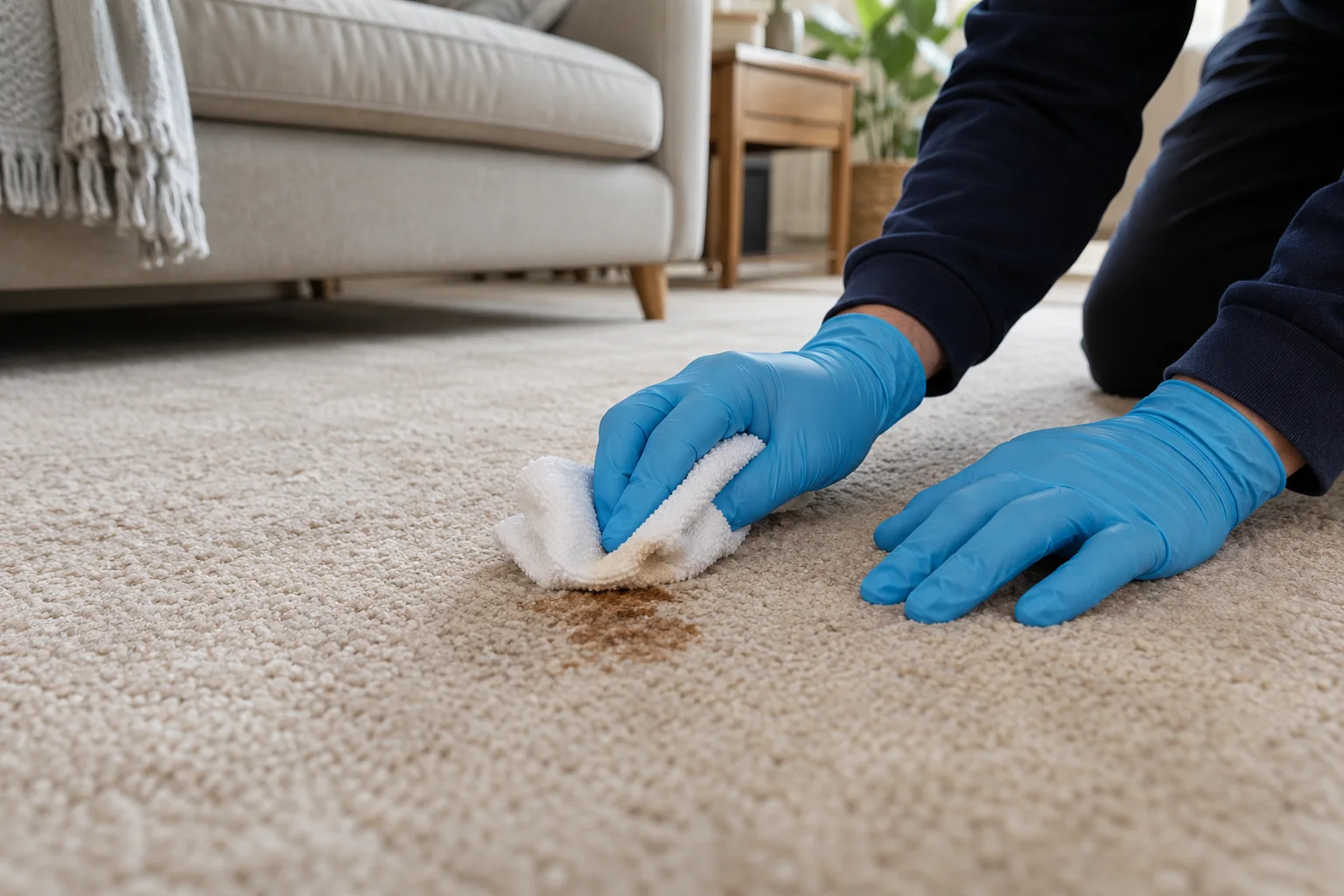
A fresh drink spill, a long-standing pet accident and a bleached patch can look similar in a phone photograph but behave very differently. Tell us the suspected cause, approximate age and any products used. Some substances permanently alter dye or fibre. Cleaning may improve the surrounding soil and still leave the affected patch visible. Complete removal cannot be promised from a photograph or a short description.
Odours also need realistic expectations. Where liquid has reached underlay or the subfloor, surface cleaning may not address the full source. Please raise pet accidents and any persistent smell before booking so the limits can be discussed. Do not cover a damp area with a rug or move furniture over it to hide the problem. If there is continuing water ingress, deal with the source before treating the carpet.
| Issue | Information that helps | Possible limitation |
|---|---|---|
| Food or drink spill | Substance, age and previous attempts | Some dyes can remain after soil is removed |
| Pet accident | Affected locations and recurrence | Contamination may extend below the pile |
| Dark traffic lane | Use pattern and wear | Flattened or worn pile may still look different |
| Pale or bleached patch | Chemical exposure or sunlight | Lost colour is not restored by cleaning |
Clear the route and the working area.
Collect loose toys, cables, shoes and fragile ornaments before the appointment. Decide which small furniture can be moved safely and discuss heavier pieces in advance. A technician should not be expected to dismantle a bed, shift a loaded bookcase or move an aquarium during a carpet clean. Empty rooms give access to more of the floor; a furnished-room quote should say what remains in place.
Provide the floor level, lift arrangements and parking information so the equipment route can be planned. Tell us if corridors are narrow or if doors have unusual restrictions. Keep children and pets away from active work and hoses. If you need larger items moved as part of a house change, discuss home removals separately rather than treating heavy handling as an incidental cleaning task.
| Before the visit | Customer action | Purpose |
|---|---|---|
| Floor access | Pick up small items and cables | Makes the carpet reachable |
| Furniture | Agree what moves and what stays | Avoids unsafe lifting and unclear coverage |
| Equipment route | Share stairs, lift and parking details | Supports a workable setup |
| Household arrangements | Keep people and pets out of the work zone | Reduces trips and immediate re-soiling |
Allow time after the cleaner leaves.
Cleaning time and drying time are separate. With a wet method, the carpet may remain damp after the active work has finished. Fibre thickness, backing, moisture recovery, temperature and airflow all influence the drying period. Several hours may be needed, and some conditions can extend that further. Ask for advice based on the carpet and conditions on the day rather than planning around a universal “dry in an hour” claim.
Where practical and safe, normal ventilation can help. Keep heavy furniture off damp pile until advised, and avoid returning metal or stained timber feet directly to a damp carpet without the protection recommended by the technician. Minimise walking on the area while it dries. If a rental handover or furniture delivery follows the appointment, allow a sensible gap and tell us about the deadline when arranging the booking.
| Condition | Practical consideration | What to avoid |
|---|---|---|
| Limited airflow | Discuss safe ventilation and room access | Closing everything up without asking for advice |
| Thick pile or absorbent backing | Allow a longer period if advised | Assuming the surface feel proves the backing is dry |
| Furniture return | Follow protection and timing advice | Heavy legs directly on damp fibres |
| Handover deadline | Book with drying time in mind | Scheduling final inspection immediately after wet cleaning |
A useful quote describes the floor.
Room count is a helpful starting point, but approximate dimensions make the estimate more meaningful. Include each room, landing and flight of stairs separately, along with the fibre if known. Large open-plan rooms and narrow corridors do not take identical effort. Photographs of traffic lanes and local marks help distinguish ordinary soiling from specialist treatment that may need separate discussion.
Ask for an itemised quotation and confirm the total, applicable minimum charge, scope of local stain work and any extra options before booking. If you need the whole property prepared for a move, tenancy cleaning can address other rooms and surfaces under a separate agreed scope. Keep carpet extraction explicitly listed, so a general clean is not mistaken for textile treatment.
| Quote detail | What to send | Reason |
|---|---|---|
| Rooms and dimensions | Approximate area for each carpeted space | Establishes the treatment area |
| Stairs and landings | Flights, step count and landing size | Separate handling and tool work |
| Material and condition | Labels, photos and stain history | Determines suitability and local treatment |
| Access and extras | Floor level, furniture and any protection request | Defines setup and optional work |
Keep the result practical.
Once the carpet is dry, resume gentle routine vacuuming according to its manufacturer’s guidance. Entrance mats and prompt attention to spills can reduce the amount of soil reaching the pile. Blot a fresh spill without aggressive rubbing, and check the care instructions before applying anything. Strong home mixtures and repeated wetting can make later professional assessment harder.
Frequency depends on household use, shoes, pets and the carpet’s care requirements; it should not be dictated by an invented fixed schedule. For surrounding dust or kitchen and bathroom build-up, one-off deep cleaning serves a different purpose. To discuss your carpet, call 020 3746 3110 or send an enquiry with dimensions and photographs.
Practical questions
The details worth asking.
Is hot water extraction the same as using steam?
The terms are often confused. Extraction normally applies a cleaning solution and recovers moisture and loosened soil with suction. The actual process must suit the carpet; do not choose it solely because a service is casually called steam cleaning.
Can you remove every old stain?
No. Results depend on the substance, age, fibre and previous treatment. Some marks involve permanent dye change or damage. Tell us what happened and what has been applied so likely limits can be discussed before treatment.
How long should I keep furniture off the carpet?
Follow the advice given for the material and drying conditions. Wet-cleaned carpet may need several hours or longer to dry. Heavy furniture and unprotected feet should not be returned to damp pile simply because the surface feels nearly dry.
Should I book stairs as a room?
Describe stairs separately with the number of flights, approximate step count and landings. Their shape and hand-tool work differ from an open room, so listing them separately makes the quotation and scope clearer.
Will cleaning remove pet odour from the underlay?
Not necessarily. If contamination has penetrated below the pile, a surface process may not reach its source. Identify the affected locations before booking; additional assessment or replacement of affected materials may be needed.
Can all natural-fibre carpets be wet cleaned?
No. Some natural fibres are particularly sensitive to moisture and may require a specialist alternative. Share the exact fibre and care information if available. A technician may limit treatment or decline an unsuitable wet process.
Do you move wardrobes and loaded bookcases?
Do not assume heavy furniture moving is included. Clear small items and agree movable pieces in advance. Large, loaded or fragile furniture may need a separate handling arrangement, with the carpet beneath excluded until accessible.
Can carpet cleaning be part of a tenancy clean?
Yes, enquire about the two services together, but keep carpet extraction explicitly listed in the agreed quotation. The room clean and the textile process have different equipment, timing and drying requirements.