
A focused reset · Your priorities
One-off deep cleaning. Time for the overlooked details.
Some jobs need more attention than a routine visit can give them. One-off deep cleaning makes space for accumulated soil and overlooked details, with the work ordered around your priorities. Move Out Mates describes this as an hourly service, so a useful checklist matters as much as the time booked.
- Rank rooms and tasks by importance.
- Describe grease, scale and dust before booking.
- Agree equipment, extras and realistic limits.
Choose the right reset
A flexible clean for an occupied home.
A one-off deep clean is useful when ordinary upkeep has fallen behind, a room needs concentrated attention or you want a seasonal reset without arranging an ongoing schedule. It can focus on selected rooms or a wider household list. The job is defined by the priorities and booked time, rather than an assumption that every surface in the building will be restored in one visit.
That flexibility makes it different from end-of-tenancy cleaning, where an empty property and a handover checklist shape the work. If you are moving out, explain that purpose when asking for a quote. If you simply want the kitchen and bathroom brought back under control while living at home, an hourly one-off may fit the brief better.
Recent building work also changes the question. Fine construction dust, adhesive residue and debris require a specific assessment rather than being added casually to a spring-cleaning list. See after-builders cleaning when the main problem follows renovation, and make sure trades have finished before deciding the cleaning sequence.
| Situation | Service to discuss | Main distinction |
|---|---|---|
| Occupied home with accumulated dirt | One-off deep cleaning | Priorities within agreed hours |
| Empty rental being handed back | End-of-tenancy cleaning | Handover scope and property preparation |
| Ongoing domestic upkeep | Housekeeping | Recurring routine rather than a single reset |
| Dust and residue after works | After-builders cleaning | Construction-specific assessment |
| Embedded carpet or rug stains | Textile cleaning | Material-specific method and drying time |
What needs the time?
Start with the places where dirt has built up.
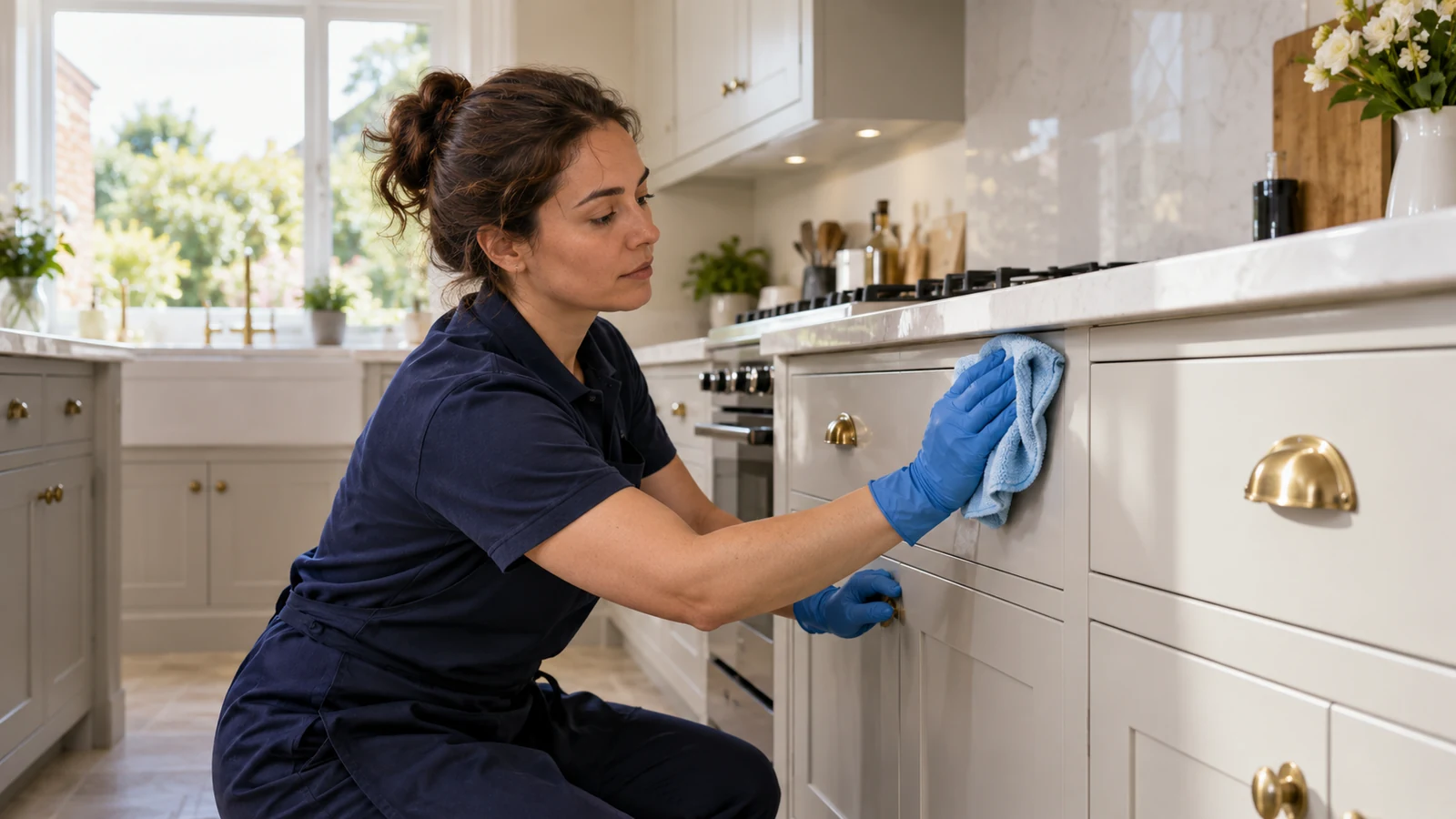
The kitchen often needs a different pace from a spare bedroom. Grease on cupboard fronts, residue around handles and dirt near appliance edges may require suitable product contact time and careful wiping. An oven interior or dismantled appliance is a separate task to clarify; it should not silently take the time intended for the rest of the room.
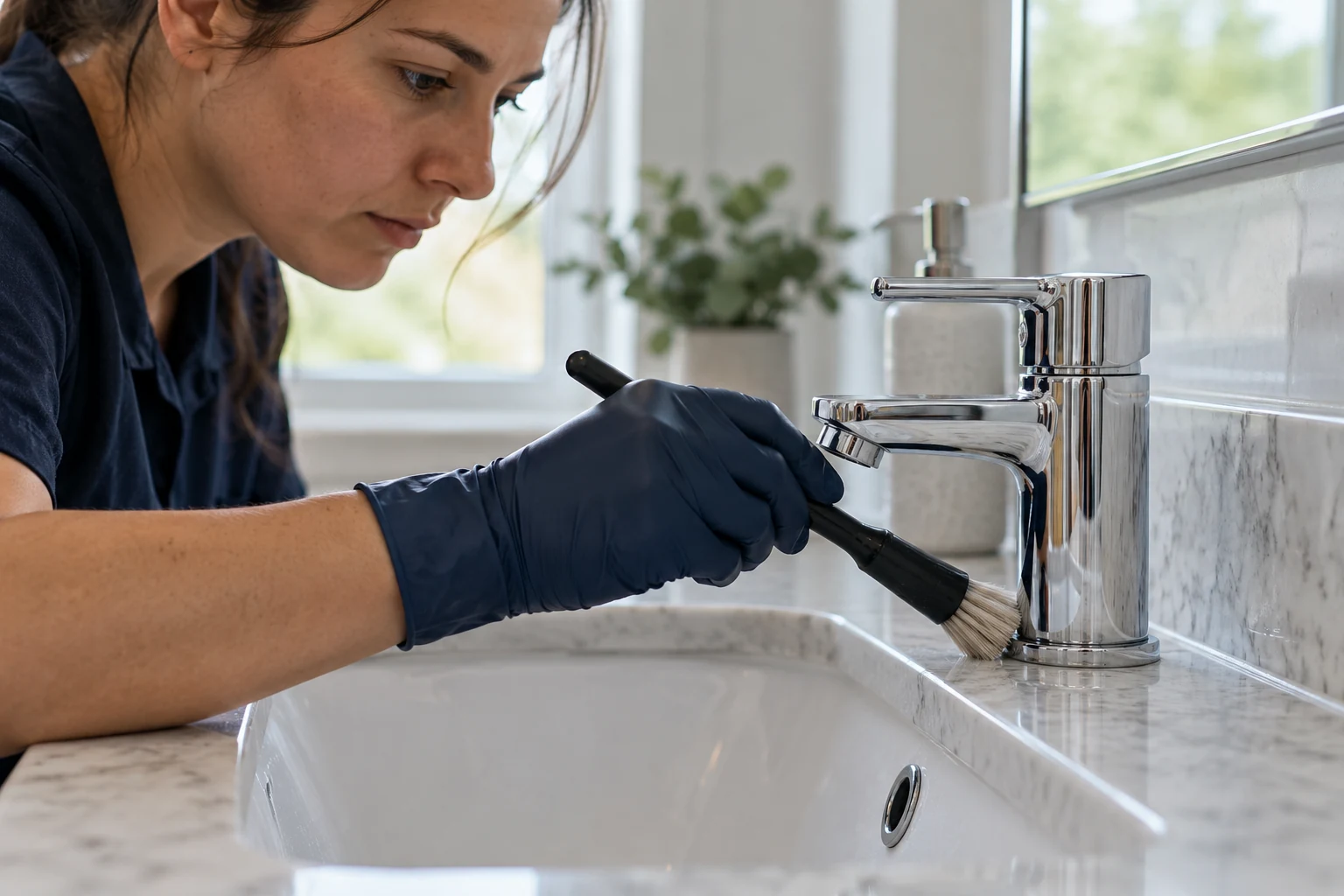
In bathrooms, a concentrated clean can address ordinary scale deposits and soap residue where the surface tolerates the proposed method. Heavy staining, worn grout and damaged sealant may not respond as a customer expects. Tell the team about natural stone, decorative finishes and any previous chemical damage so treatment can stay within appropriate limits.
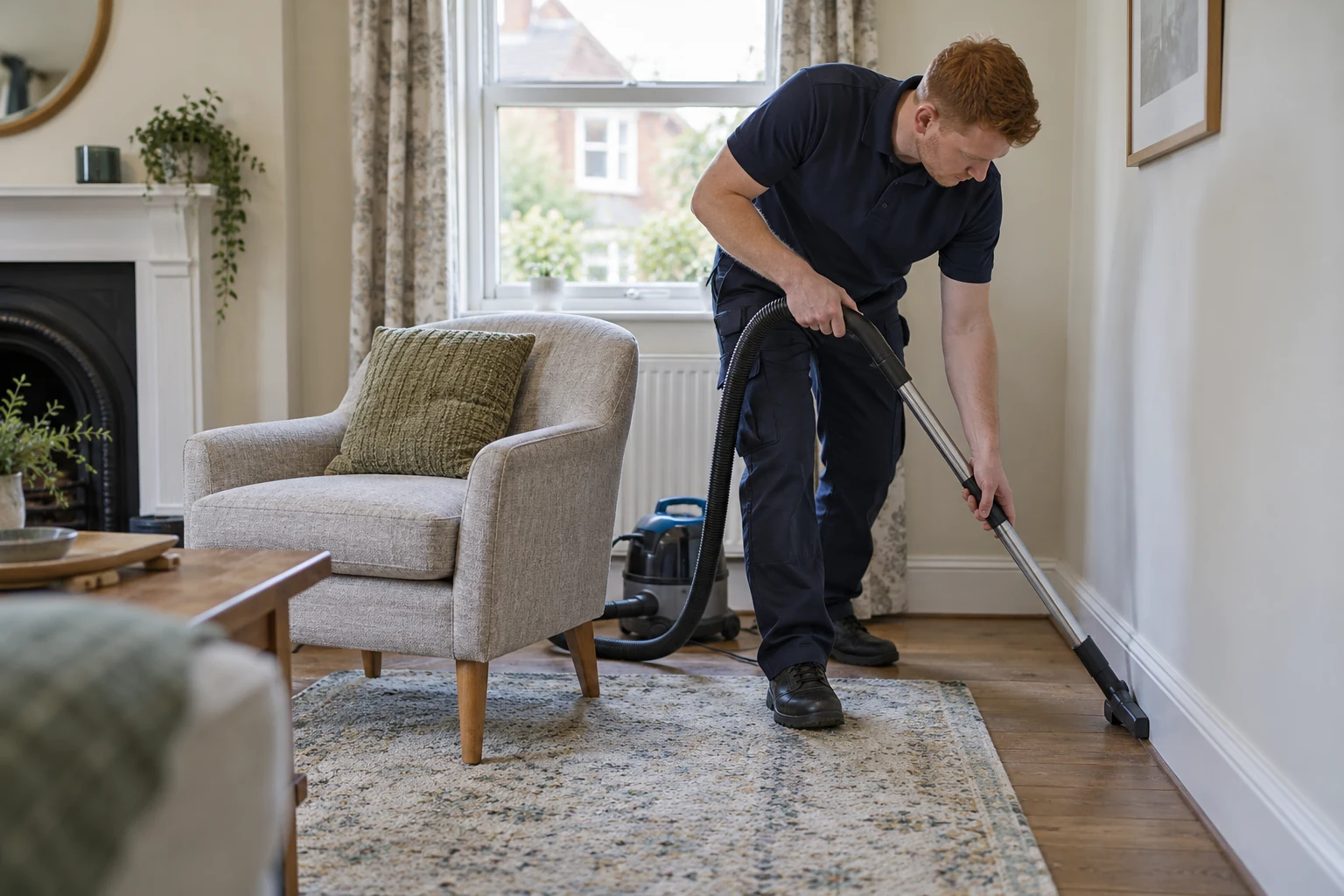
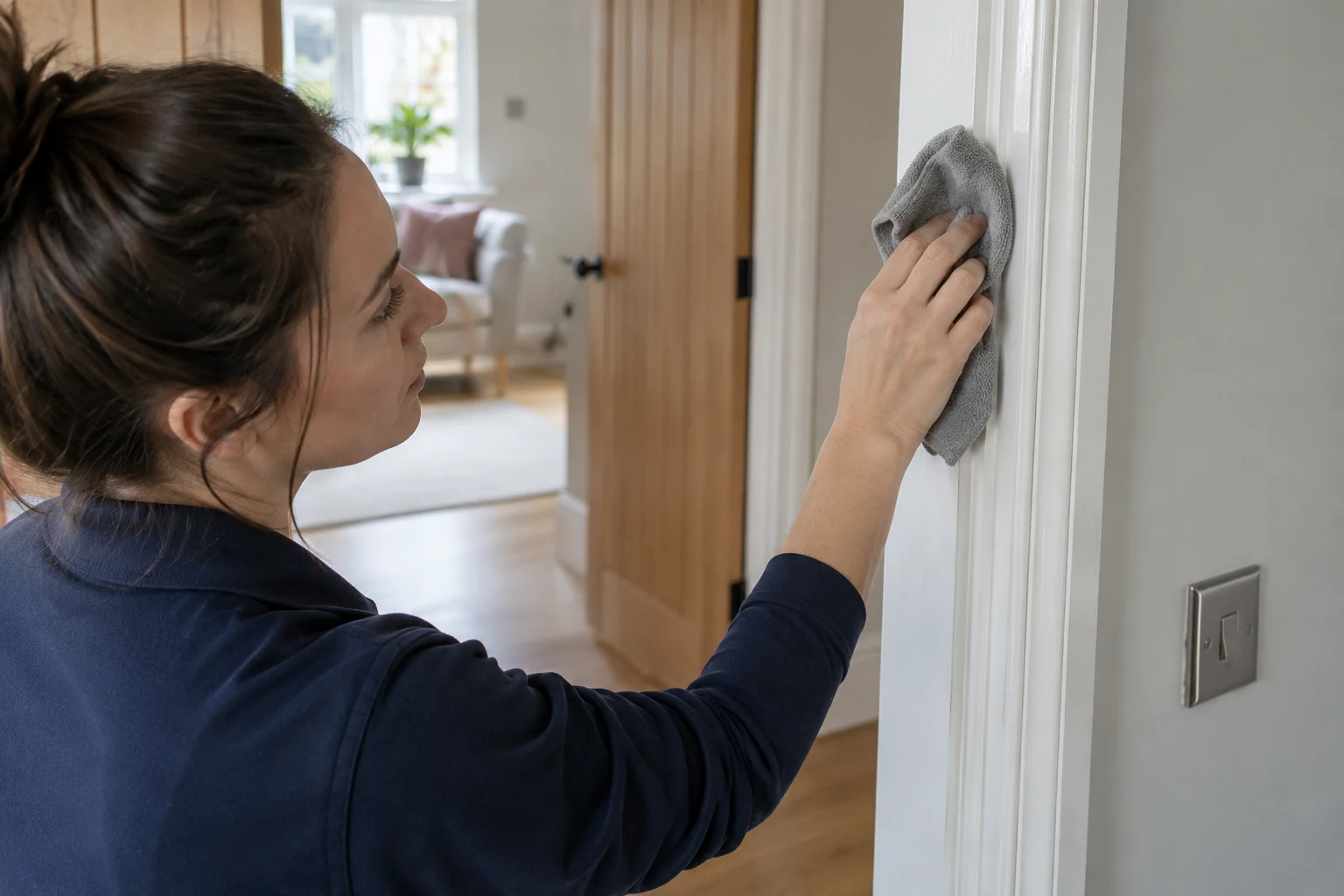
Dust detail in living rooms and bedrooms can include reachable door frames, skirting, ledges and furniture surfaces. List the areas that matter instead of saying everything. For fabric floors, normal vacuuming is different from carpet cleaning; ingrained soiling may need a separate assessment and drying period.
| Area | Tasks to request | Clarify the boundary |
|---|---|---|
| Kitchen | Cupboard fronts, sink, accessible grease and floor edges | Appliance interiors and heavy deposits |
| Bathroom | Fittings, compatible descaling and tile surfaces | Damaged grout, stone and failed seals |
| Living spaces | Reachable dust, door marks and skirting | Fragile items and furniture movement |
| Bedrooms | Surfaces, accessible edges and floor care | Wardrobe contents and linen requests |
| Entrance | Handles, doors and frequently used floors | External surfaces and shared spaces |
Material before method
More intensive does not mean more aggressive.
Deep cleaning means allowing attention for a task; it does not mean applying the strongest product to every mark. Surface condition, finish and manufacturer guidance determine what is appropriate. An acidic limescale remover suitable for one bathroom fitting may damage nearby stone, and an abrasive pad may scratch a polished surface.
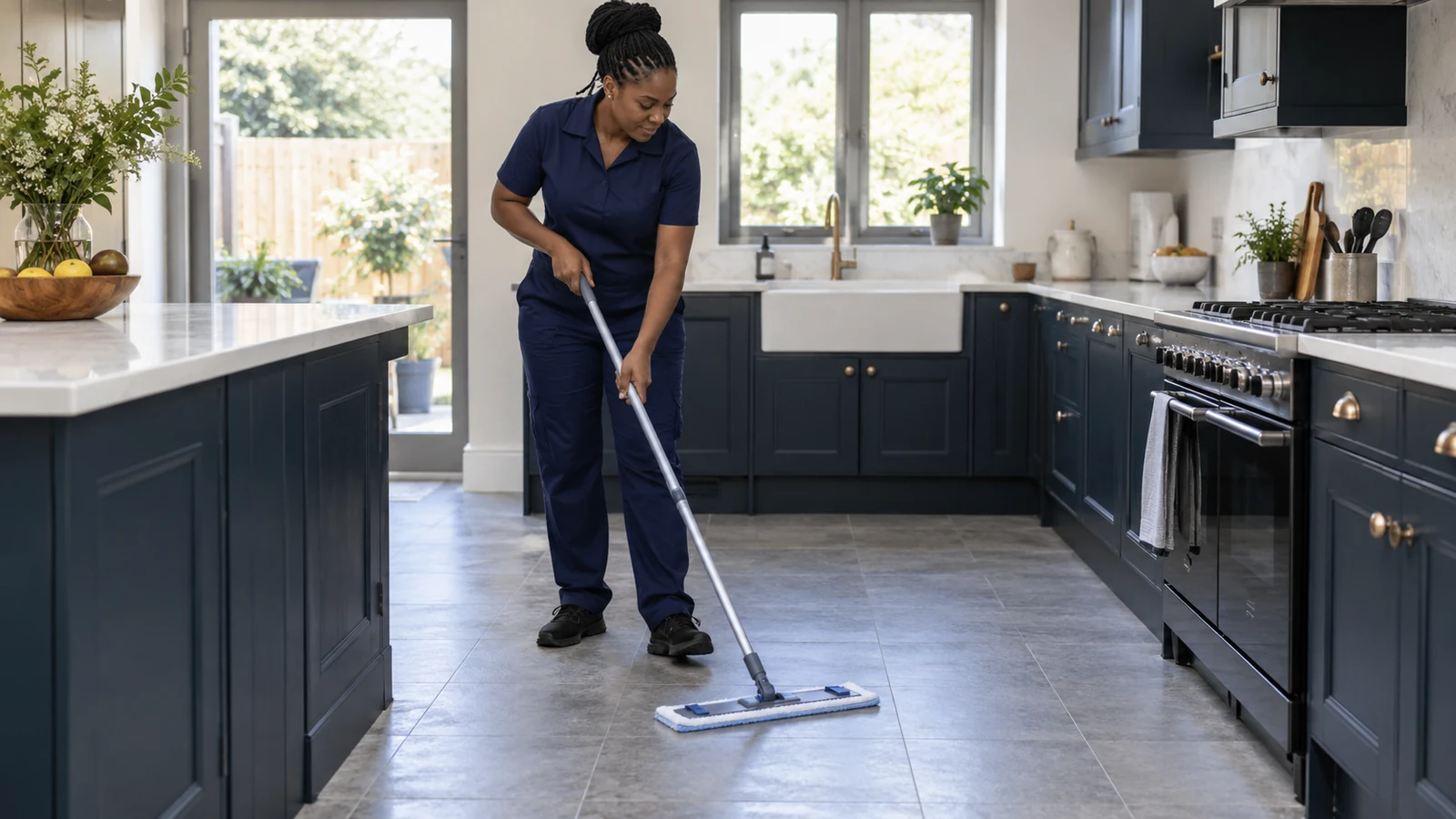
In normal professional practice, loose dust is removed before wet wiping where suitable, and separate tools help keep toilet soil away from kitchen and living areas. Vacuum attachments, microfibre cloths, soft brushes and flat mops each serve different purposes. The exact tools and detergent supply for your appointment should be agreed with Move Out Mates.
Tell the team about fragrance sensitivity and any product restrictions. Products need to be used according to their labels, without mixing chemicals. Steam is not automatically appropriate for every floor, fabric or fitting, and no ordinary deep clean should be sold as sterilisation or a solution to structural damp.
| Surface or material | Approach to discuss | Limitation |
|---|---|---|
| Painted woodwork | Gentle compatible wiping | Loose paint or staining may remain |
| Chrome fittings | Suitable residue removal | Abrasives can damage the finish |
| Natural stone | Material-compatible cleaner | Acidic descalers may etch stone |
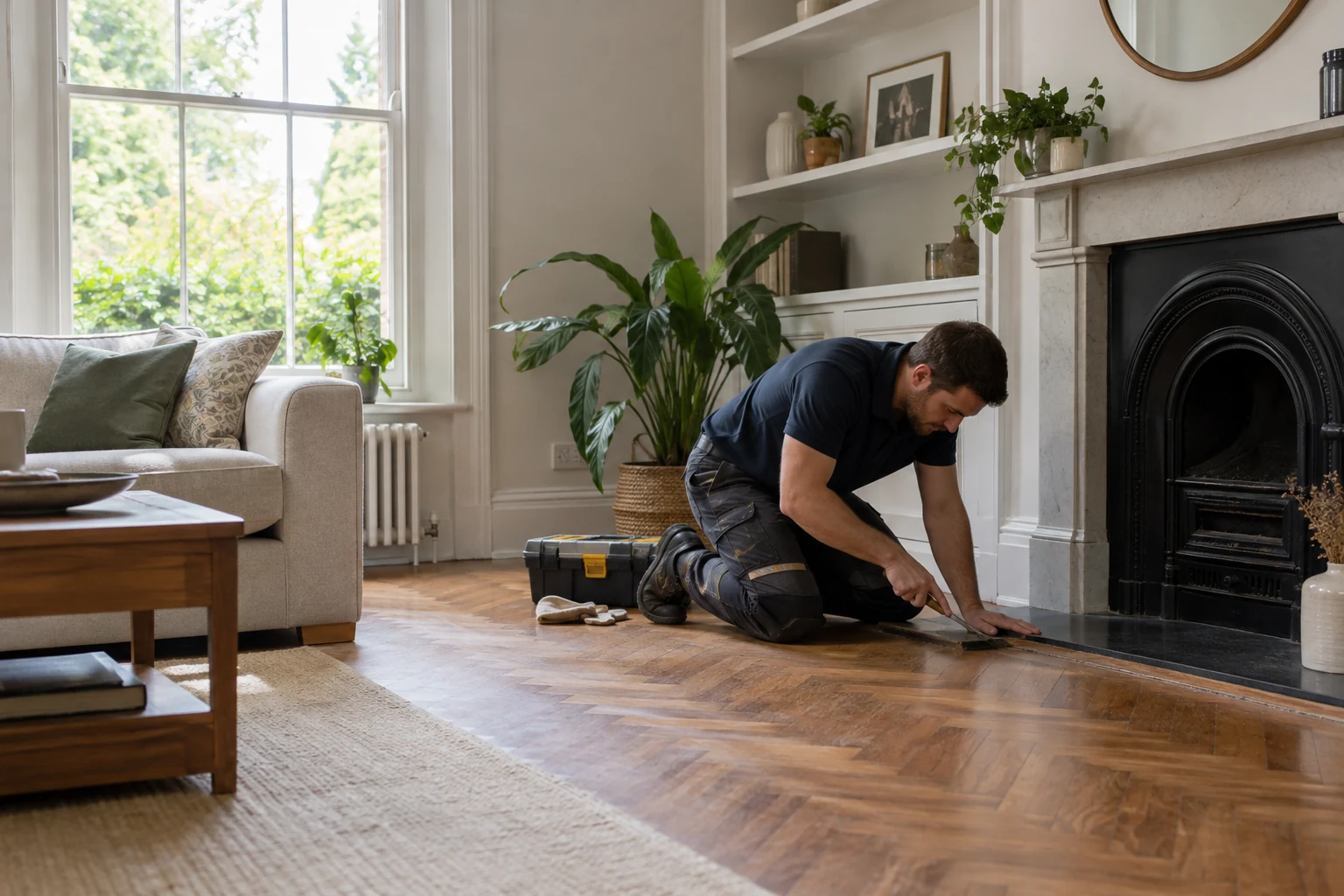
| Timber or laminate floor | Controlled moisture and suitable product | Saturation can affect joints and finish |
| Delicate upholstery | Material assessment before treatment | General cleaning is not specialist fabric care |
Give the cleaner access
A clearer room creates more cleaning time.
Remove loose belongings from the worktops and floors you want cleaned. Put personal papers, medicines and valuables away, and identify anything fragile that should remain untouched. If cupboards are part of the requested job, agree whether you will empty them first. Sorting possessions is different from cleaning the empty surfaces beneath them.
Explain which lightweight furniture may be moved and which pieces should stay in place. A heavy bookcase or bed with storage is not assumed to be movable within a general clean. Do not pull appliances out yourself without considering their connections or ask a cleaner to work behind something that cannot be accessed safely.
Make sure the agreed access route, water and electricity are available as needed. Mention pets, alarms and any occupied rooms the team must avoid. For a house move, aim to clean before boxes arrive or after they have left so the appointment is not spent repeatedly working around the load.
| Before the visit | Customer action | Practical benefit |
|---|---|---|
| Worktops and ledges | Remove personal items | Leaves time for actual surface cleaning |
| Floors | Clear loose items and cables | Allows access to edges and corners |
| Cupboards | Confirm emptying and interior scope | Avoids unplanned sorting work |
| Fragile belongings | Set aside or identify no-touch items | Protects delicate or private possessions |
| Utilities and access | Confirm what the agreed method requires | Lets the planned work begin promptly |
Hours and priorities
Choose what must be completed first.
An hourly appointment needs a ranked list. Put the main bathroom or greasy kitchen first if those are the reason for booking, then list secondary rooms. A large room with little soil can take less attention than a compact kitchen with heavy residue. Photos and a frank description help make the initial estimate useful.
Ask whether the quotation refers to one cleaner’s hours or the combined labour of a team. Two people attending for part of a day is not the same as one person attending for that number of elapsed hours. Confirm the booking basis, any minimum and what happens if the condition requires more time.
If the full list cannot be completed, an agreed order makes the result understandable. Discuss any extension before it is undertaken and ask for remaining tasks to be identified. For ongoing maintenance afterwards, housekeeping can help keep the priority rooms manageable without repeatedly scheduling the same backlog.
| Factor | Why it changes the workload | Information to provide |
|---|---|---|
| Condition | Grease and scale need more attention than loose dust | Recent photographs and problem areas |
| Room use | Busy kitchens and bathrooms carry more soil | Occupancy and practical priorities |
| Access | Clutter and heavy furniture reduce reachable area | What will be cleared before arrival |
| Requested extras | Laundry or appliance work takes time | Name each extra when asking for the quote |
| Team arrangement | Labour-hours differ from elapsed visit time | Confirm number of people and charging basis |
The quotation and the finish
A clear scope makes the result easier to review.
Ask for the rooms, priority tasks and supply arrangements to be included in the estimate. Specialist stain treatment, high-level access, exterior work, waste removal and repairs are separate questions. A one-off clean does not repair damaged finishes or remove every permanent stain, and it should not be presented as a property-wide guarantee regardless of condition.
Call 020 3746 3110 with the size, condition, preferred date and highest-priority tasks for the applicable quote. Discuss equipment, detergents and any optional jobs before confirming so the booking is based on the work you actually want.
At the end, review the agreed areas where practical and note any tasks that could not be completed. Let washed floors dry before normal use and follow any specific product or textile-care advice given for the work performed. A small follow-up routine for the kitchen and bathroom can preserve the benefit of the concentrated visit.
| Service | From price | What to agree | Additional information |
|---|---|---|---|
| One-off deep cleaning | Property-specific quote | Rooms, priorities and labour time | Condition influences how much fits |
| Products and equipment | Confirm with booking | Suitable tools and supply arrangement | Requirements vary by task |
| Appliance interiors | Separate scope if requested | Type, condition and method | Not assumed from exterior cleaning |
| Specialist textiles | Separate assessment | Material, stains and drying needs | Coordinate with the household schedule |
Practical questions
The details worth asking.
Does hourly deep cleaning cover the whole home?
It can focus on the whole home or selected areas, but what is completed depends on the agreed hours and condition. Rank the tasks so the most important areas are addressed first.
How is this different from a tenancy clean?
One-off deep cleaning follows your priorities within booked time. A tenancy handover has a different scope and preparation needs, usually after belongings have been removed. Explain the purpose before booking.
Can the cleaner work inside cupboards?
Discuss cupboard interiors specifically and agree whether you will empty them. Cleaning accessible empty surfaces is different from sorting contents and deciding where belongings should go.
Are products and equipment included?
Confirm the arrangement for your particular booking. Describe surfaces and product restrictions so suitable supplies are available rather than assuming the same equipment suits every task.
Can you promise to remove old bathroom stains?
No universal result can be promised. Scale, permanent staining and damaged finishes can look similar, so the surface and condition need to be assessed before choosing an approach.
Will the cleaner move my fridge or heavy bed?
Do not assume heavy furniture or connected appliances will be moved. Identify access constraints and agree any movement beforehand; some spaces may remain inaccessible.
Can I add washing and ironing on the day?
Ask in advance where possible. These tasks take time from the same appointment unless additional time is agreed, so they can change how much of the cleaning list is completed.
Should I book immediately after renovation?
Describe the work first. Construction dust, debris and residues may call for after-builders cleaning, with trades finished and surfaces ready for the proposed methods.