
After the trades / Before moving back
After builders cleaning. The renovation, finished.
New surfaces deserve a careful first clean. Plan the dust removal, window detailing and finishing work after your building team has completed the job, with a scope based on the actual condition of the property.
- For completed refurbishments, extensions and decorating projects
- Hourly cleaning with equipment and products brought by the team
- Residues and delicate finishes assessed before treatment

The right starting point
Start when the building work stops.
A kitchen installation can leave a surprisingly wide trail: dust on upstairs shelves, grit at door thresholds and plaster specks near the new units. After builders cleaning addresses that post-work condition. It suits a homeowner returning after a refurbishment, a landlord preparing a renovated rental, or a business arranging a clean before reopening. The work should be finished before the cleaning appointment, including sanding and any dusty snagging.
Move Out Mates offers after builders cleaning using professional equipment and detergents, charged on an hourly basis. Tell us which rooms were directly affected and which adjoining areas remained open during the project. A smaller room with heavy residue can require more work than a larger room with light settled dust. If the property simply needs attention after everyday use, one-off deep cleaning may be the closer match.
A room plan, not a single sweep.
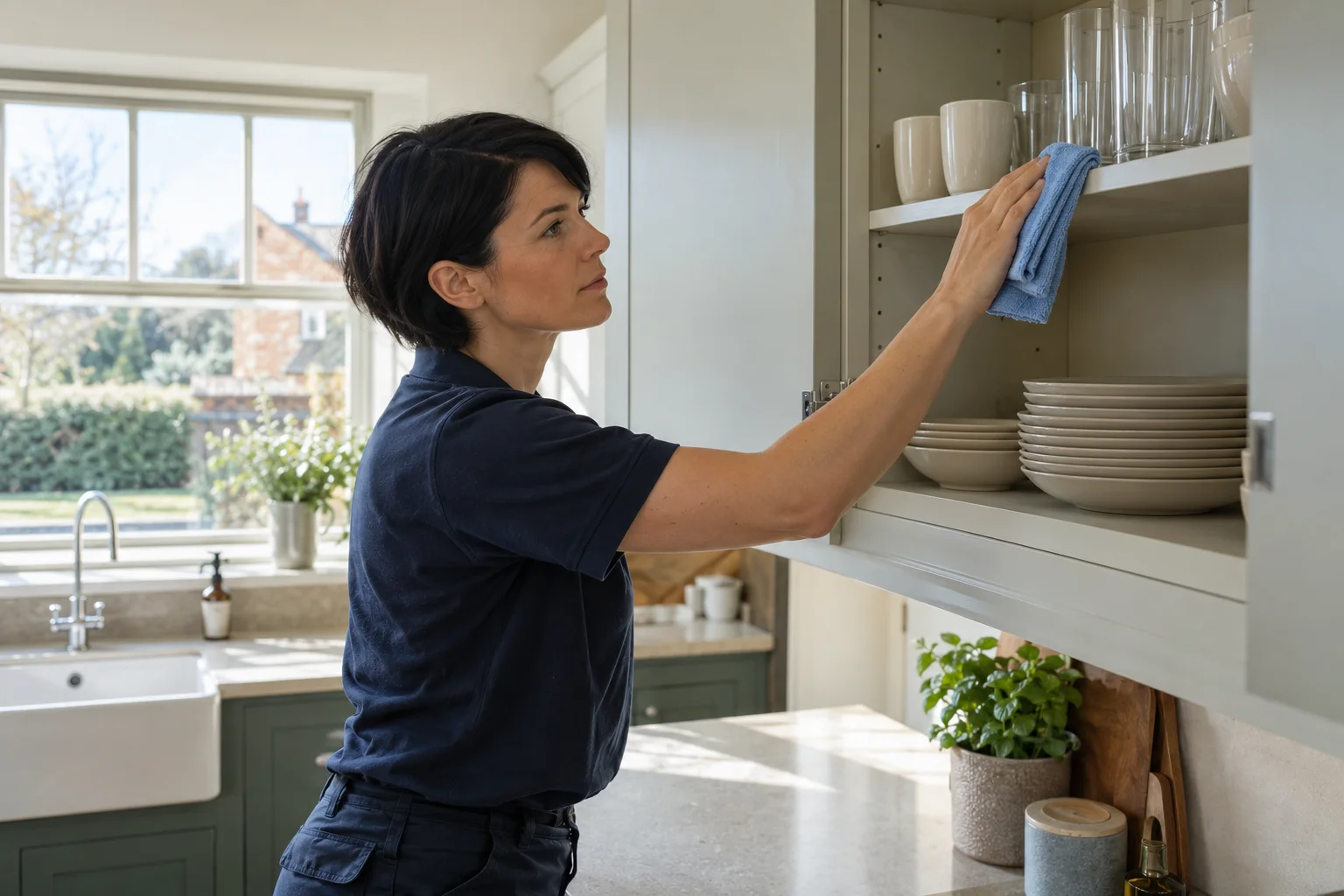
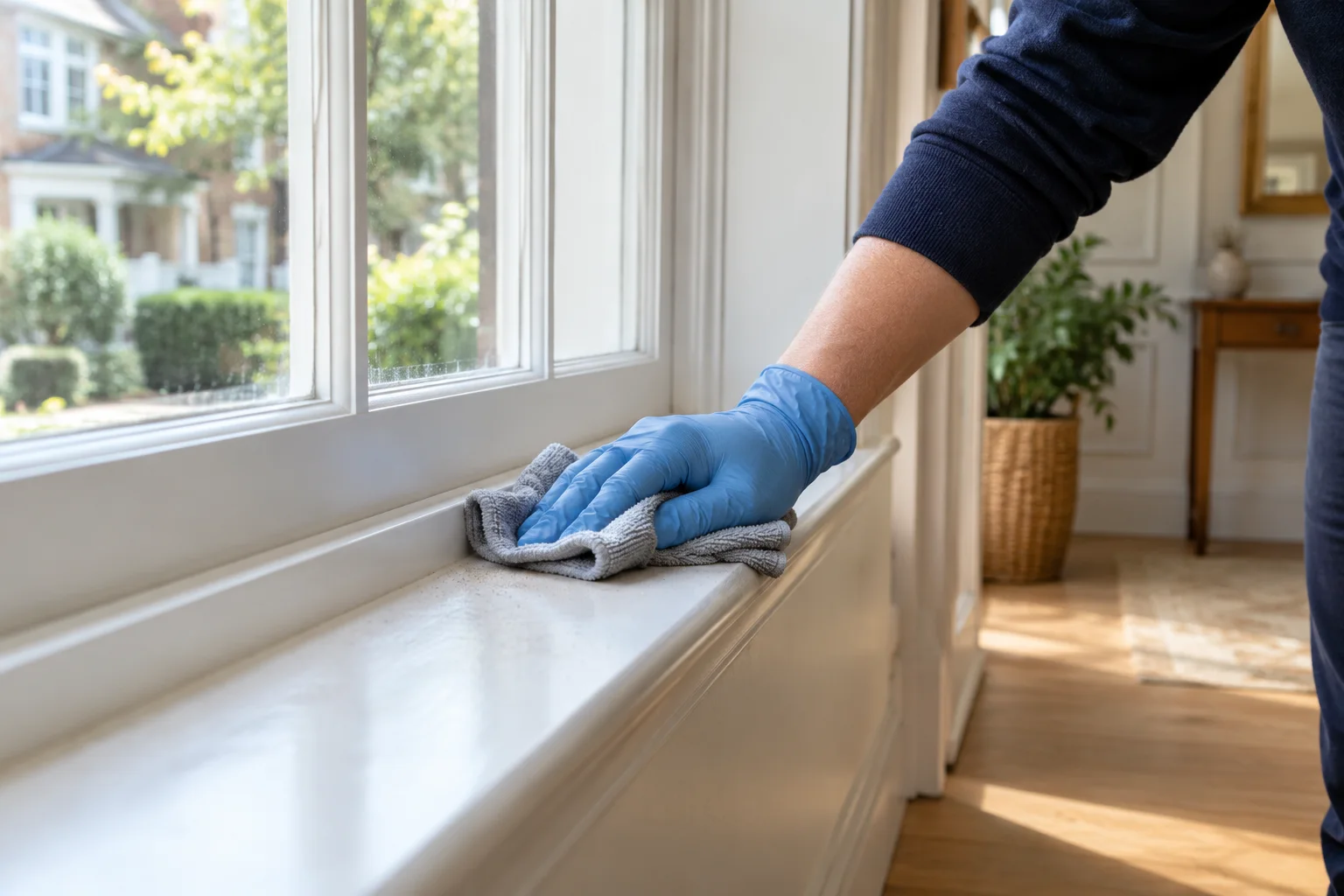
The agreed checklist can cover dust removal from accessible surfaces, interior window cleaning, floor vacuuming and mopping, bathroom cleaning and appliance exteriors. Empty cupboards are worth mentioning when you request the quote: a new fitted kitchen creates many separate shelves, hinges and edges. Let us know whether drawers are installed, whether protective films remain and whether the installer has approved cleaning of the new finish.
Work should distinguish between loose contamination and bonded residue. Loose dust is normally removed before damp wiping, so grit is not dragged across a new surface. Paint, adhesive, grout haze and plaster require separate assessment. Their removal depends on the underlying material and the product involved; no general promise should replace a test on an inconspicuous area.
| Area | Cleaning to agree | Important boundary |
|---|---|---|
| Living spaces | Accessible ledges, woodwork, fixtures and floors | High or fragile features need separate access assessment |
| Kitchen | Cabinet surfaces, sink, tiles and appliance exteriors | Used appliance interiors are a separate deep-clean task |
| Bathroom | Sanitaryware, accessible tiles, fittings and screens | New sealant and grout must be ready for cleaning |
| Interior windows | Glass, frames and sills where safely accessible | Bonded marks and exterior glass need specific agreement |
Protect what has just been installed.
Fresh paint, engineered timber and natural stone have different tolerances. Please share the installer’s care instructions and the dates when finishes were applied. A coating can feel dry while still being within its curing period. Cleaning a surface too early, or applying the wrong solvent, can mark the finish rather than improve it. Where the material is uncertain, the sensible response is to pause and clarify it.
In general industry practice, suitable extraction equipment removes dry soil first, followed by compatible detergents, clean cloths and controlled moisture. This is a description of how a careful job can be planned; the actual equipment and method depend on the assessment. We do not treat household cleaning as specialist hazardous-dust clearance. Suspected asbestos, unknown powders, sharps or unsafe electrical work must be raised before a visit.
| Surface or residue | Possible approach after testing | Limitation |
|---|---|---|
| Finished timber | Dry soil removal and lightly damp compatible wiping | Avoid saturation and unapproved abrasive pads |
| Natural stone | Stone-compatible cleaning selected for the finish | Acidic descalers can damage some stone |
| Painted surfaces | Gentle dust removal once coating is ready | Scrubbing can alter sheen or lift fresh paint |
| Adhesive or paint spots | Identify deposit and assess a local test | Removal is not guaranteed and may be declined |
Dust settles. The sequence matters.
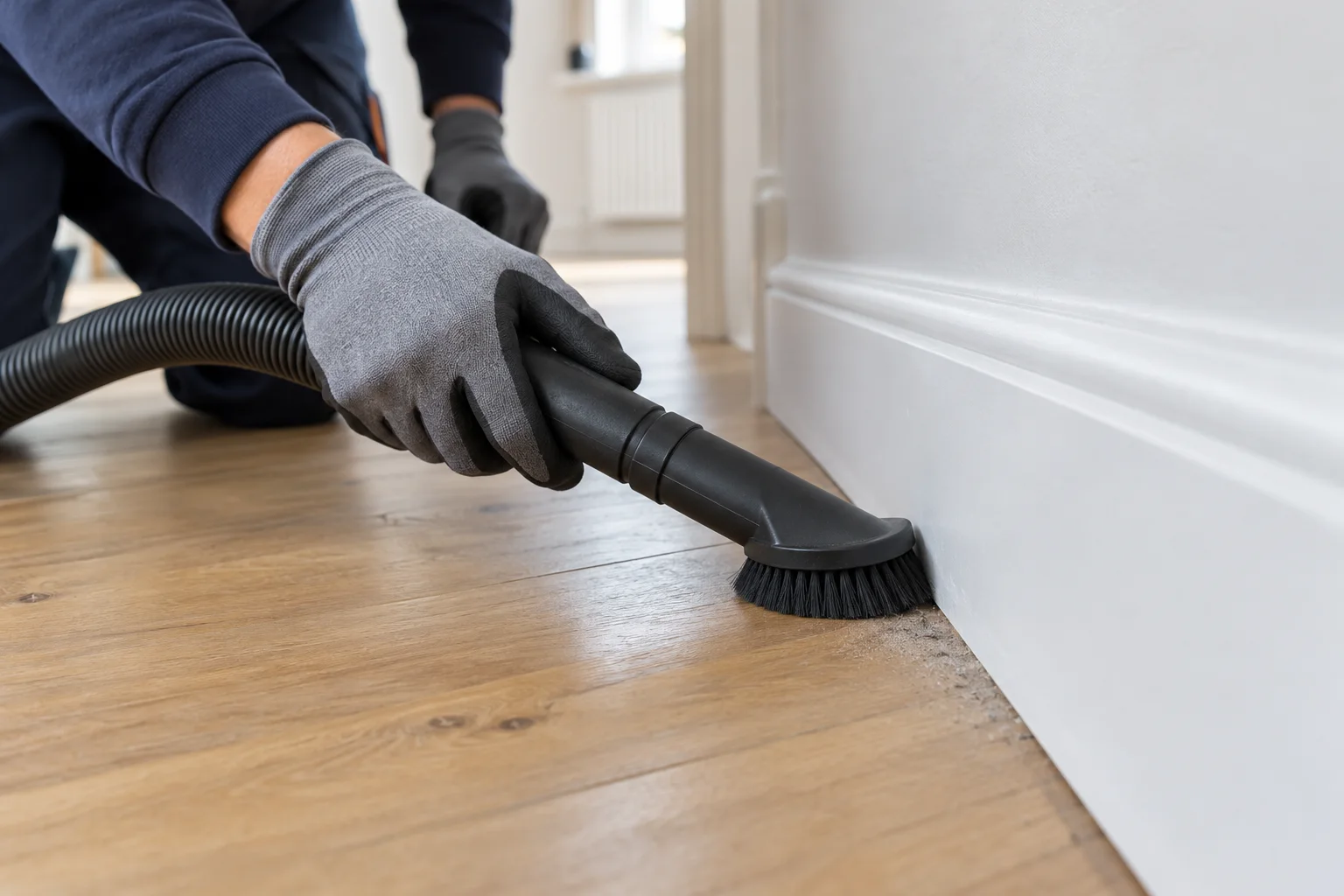
A sensible work order usually moves from accessible upper surfaces to lower surfaces, then finishes the floors and exit route. Vacuuming before wet work helps keep fine particles out of the wiping cloth. Internal windows, cupboard edges and bathroom fittings can be detailed while the floor remains clear. The team needs room to move equipment without walking repeatedly over a finished area.
Construction dust can reappear from gaps, open ventilation routes or unfinished work elsewhere in a building. A clean removes the accessible contamination present during the appointment; it cannot stop dust generated later. For larger projects, discuss whether one final visit or separate construction and finishing stages would suit the programme. Each visit needs its own agreed scope and cost, rather than assuming a later return is included.
Before the team arrives.
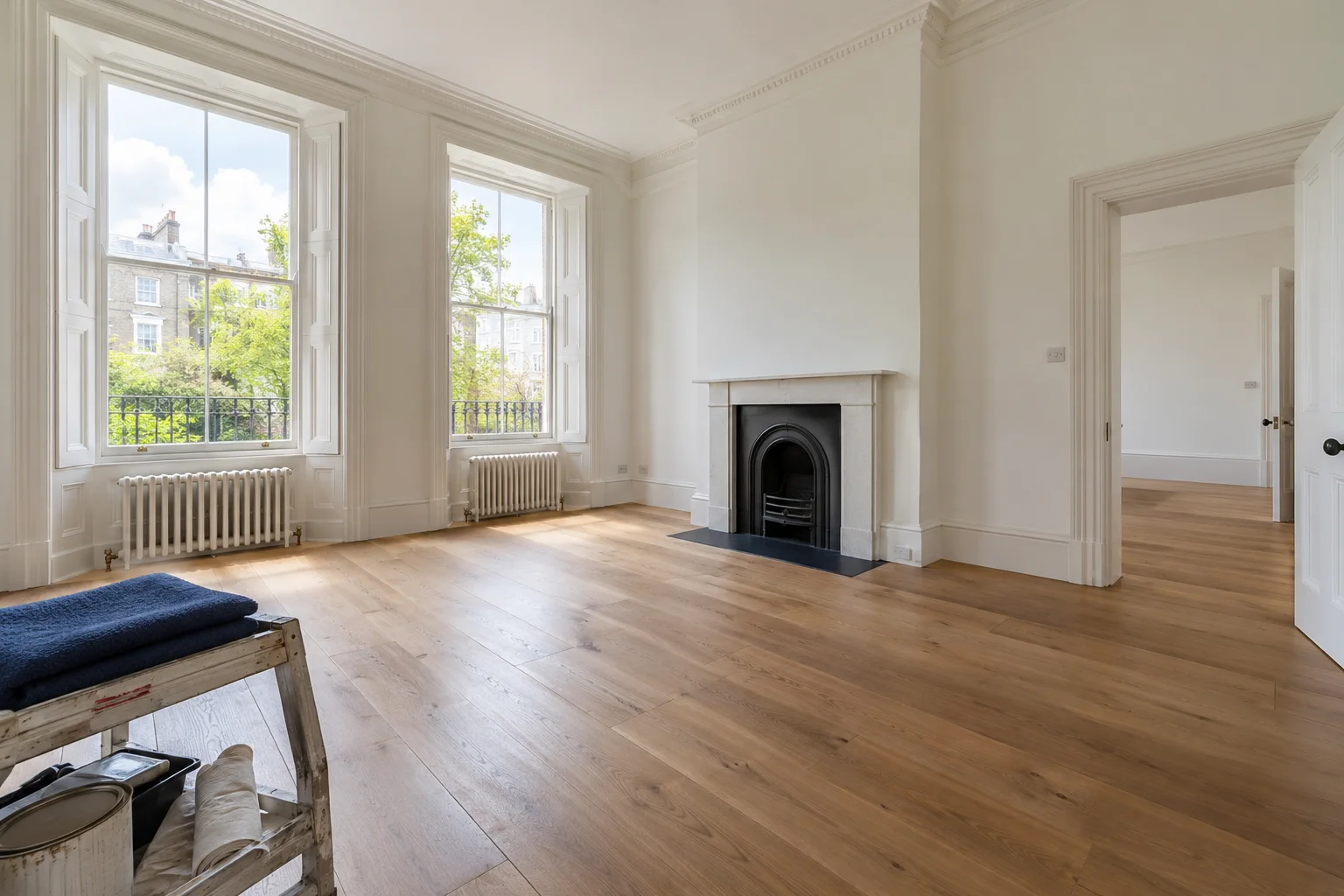
Arrange for builders’ materials, tools and large waste to be removed, leaving safe working routes and clear surfaces. The published service requires running water and electricity. Confirm that both will be available throughout the appointment, including access to the relevant rooms. Please describe parking, stairs, lifts and any building rules, especially where a contractor sign-in or timed goods lift is required.
Remove valuables and fragile loose items from shelves and worktops. Keep pets and children outside the work area while equipment and products are in use. If the property is empty, agree who will provide keys and who can authorise decisions about unexpected residue. A few clear photographs taken after the final trade has left are more useful than photographs from the middle of construction.
| Before appointment | Customer action | Why it helps |
|---|---|---|
| Finish the programme | Complete sanding, cutting, decorating and snagging | Prevents new contamination during cleaning |
| Clear the site | Remove tools, large rubble and waste | Creates safe access to the surfaces |
| Confirm utilities | Provide working water and electricity | Allows the agreed equipment and cleaning |
| Share care information | Provide finish labels or installer instructions | Helps avoid incompatible treatments |
Price follows the work left behind.
An hourly booking needs an estimate of the cleaning hours, an agreed priority list and clarity about the minimum call-out. The original service information allows an adjustment when the work finishes sooner, provided the applicable minimum charge is met. Confirm the current arrangement in your quote, including how any extra time would be authorised. Team attendance and total labour hours should be explained together so the estimate is easy to understand.
Request a quotation that reflects property size, dust level, residue type, access and any separate treatments. Tell us your handover date early. The expected duration can range from part of a day for a limited area to a longer appointment for a heavily affected property; we give a property-specific estimate rather than a promise based on bedroom count alone.

| Quote factor | Detail to send | How it affects planning |
|---|---|---|
| Property and rooms | Floor area, room count and affected adjoining spaces | Determines the working area |
| Post-work condition | Current photos of dust and bonded marks | Indicates effort and treatment checks |
| Finishes | New timber, stone, coatings or specialist fittings | May require restricted methods |
| Access and time | Parking, floor level, key collection and deadline | Shapes setup and appointment planning |
Keep specialist work visible in the brief.
Exterior windows, carpet extraction and used oven interiors involve different processes from removing construction dust. Our existing service information identifies external window cleaning, deep carpet cleaning and other additional work as separately bookable. Add the requirements at enquiry stage so equipment and time can be considered together. For fitted textiles, see carpet cleaning; for glass beyond the interior scope, see window cleaning.
Rubble collection, repairs, decoration and restoration are outside an ordinary finishing clean. Waste removal, where available, needs its own description and quotation; it should not be confused with collecting small cleaning waste. If the renovation precedes a tenancy change, compare the room requirements with end of tenancy cleaning. Agree the combined scope once, so the same work is not counted twice.
| Requirement | Why it is separate | Planning detail |
|---|---|---|
| Carpet extraction | Textile method and drying arrangements | Fibre, rooms and stain history |
| Exterior windows | Different access and equipment | Height, elevation and safe access |
| Used appliance interiors | Grease removal beyond renovation dust | Appliance type and condition |
| Waste clearance | Transport and waste handling requirements | Type, quantity and access |
Walk through the finish in daylight.
At completion, inspect the agreed areas with the responsible person where possible. Look across window glass rather than only straight through it, check cupboard ledges and note any marks identified as damage or incompatible residue. A useful handover separates remaining dirt from scratches, dried paint, unfinished snagging or marks in the material itself. Photograph any unresolved item clearly and raise it promptly with the booking details.
Keep manufacturer care instructions for your new surfaces and allow any remaining dampness to dry before replacing stored items. Arrange furniture delivery after the clean where possible. You can discuss the appointment on our contact page or by calling 020 3746 3110 with photographs, the work completion date and your priority rooms.
Practical questions
The details worth asking.
Can you clean while decorators are still working?
The appointment should follow completed construction and decorating. Active sanding, cutting and foot traffic can recontaminate cleaned rooms and create unsafe working conditions. Tell us about remaining snagging so the visit can be scheduled sensibly.
Does the service include removing rubble?
Do not assume it does. Large debris, building materials and waste should be cleared before cleaning. If you need separate waste removal, describe the material and volume when requesting the quotation.
Can all paint specks be removed from new glass?
No result can be promised before inspection. The type of paint, glass coating and existing damage matter. A cleaner may need to test a method or leave a mark untouched where removal risks scratching or coating damage.
Will you clean inside my new kitchen cupboards?
Mention empty cupboard and drawer interiors in the brief so their number and access can be included in the agreed scope. Remove stored items first and share any care restrictions supplied by the installer.
Do I need to supply water and electricity?
Yes, the existing after builders service information requires access to running water and electricity. Confirm that supplies are working and accessible, especially after plumbing or electrical works have just been completed.
What happens if fresh dust appears the next day?
Dust can migrate from gaps or from later work. A visit treats the accessible condition at the time. Discuss an additional finishing stage in advance if your project programme makes resettling likely; it is not automatically included.
Can you use strong descaler on newly fitted stone tiles?
A product must suit the stone, grout and finish. Some stone is damaged by acidic cleaners. Provide the material details and installer instructions; aggressive treatment should not be selected simply because a residue is stubborn.
How do I get a useful estimate before the visit?
Send photographs taken after the trades have finished, the approximate floor area, affected rooms, access details and examples of bonded residue. Include your deadline and any delicate finishes so the estimated hours reflect the actual work.