
Moving home · Practical coordination
Home removals. Plan the route before the first box.
A good move begins with the details a van cannot solve: what is being moved, how it leaves each room and when the destination becomes available. Move Out Mates offers home removals alongside moving-related services. Build a clear inventory and access brief so the quotation matches the work.
- List bulky items and packed box quantities.
- Describe stairs, lifts and loading at both addresses.
- Confirm packing, assembly and timing separately.
Start with the load
An inventory is more useful than a bedroom count.
Two one-bedroom flats can require very different moves. One may contain only a bed, a desk and packed cartons; the other may have bookcases, a large dining table, balcony furniture and a loft cupboard full of belongings. A room-by-room inventory turns that difference into useful information for the removal plan.
Record the larger furniture first, then estimate cartons and loose items. Include items in sheds, cupboards and communal storage where you have permission to collect them. Photographs help explain unusual shapes and the amount of furniture, but dimensions are important for pieces that may not fit through a doorway or lift. Tell the team about particularly heavy, delicate or valuable items before accepting a quote.
Separate the items travelling with you from those going to storage or remaining at the property. The same distinction should be visible on moving day, with a designated leave-behind area. A removal booking is not automatically a clearance or disposal service, and a change in destination can alter the journey and handling required.
| Item group | Details to record | Why it matters |
|---|---|---|
| Large furniture | Approximate dimensions and whether dismantled | Plans the route and handling |
| Cartons | Estimated count, size and general contents | Helps estimate load volume |
| Fragile belongings | Material, value concerns and packing status | Defines protective handling needs |
| Appliances | Size and disconnection arrangements | Avoids assuming technical work is included |
| Storage items | Separate destination and access requirements | May change the journey and unloading order |
Both ends of the journey
A clear doorway is only the first step.
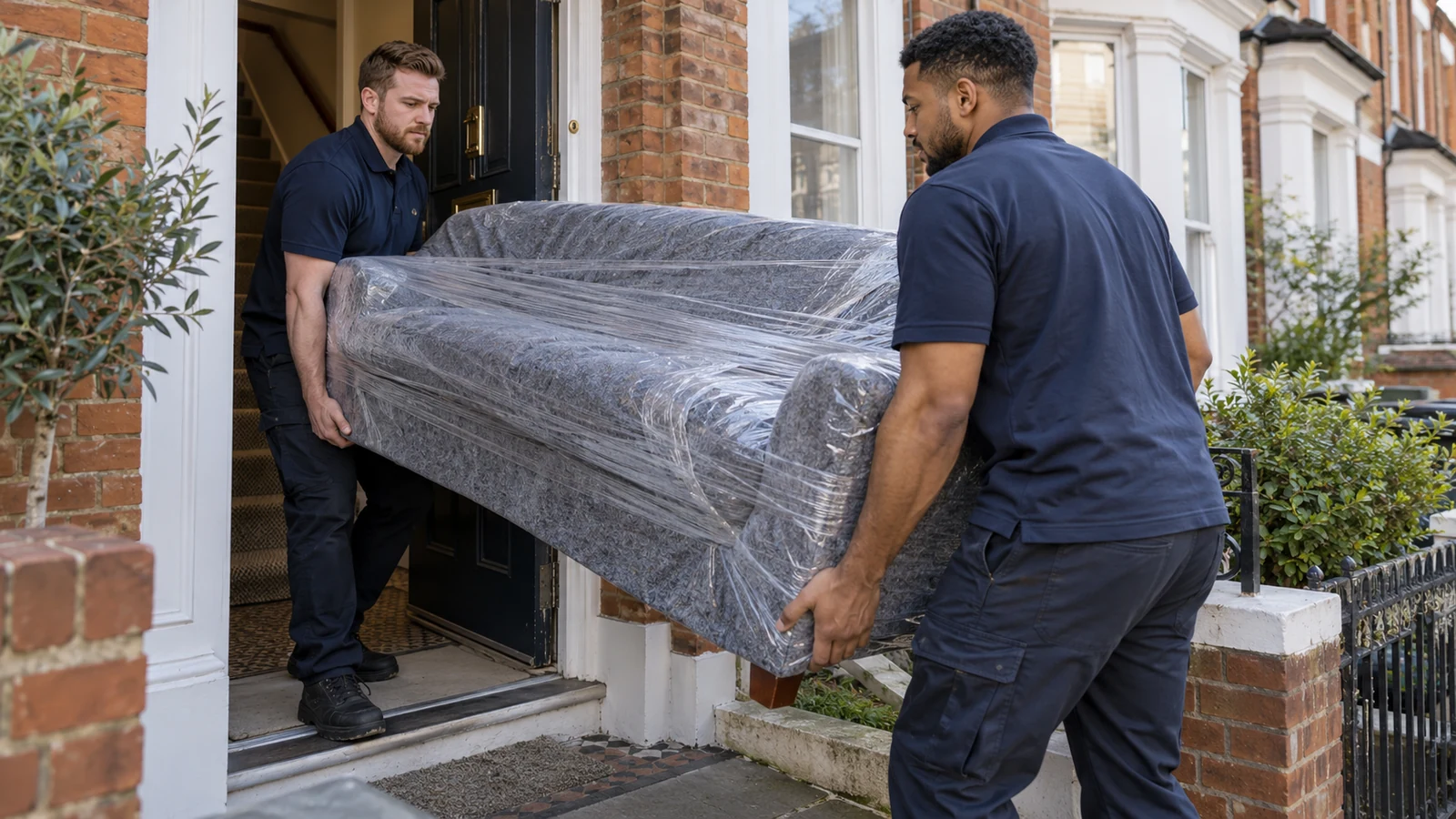
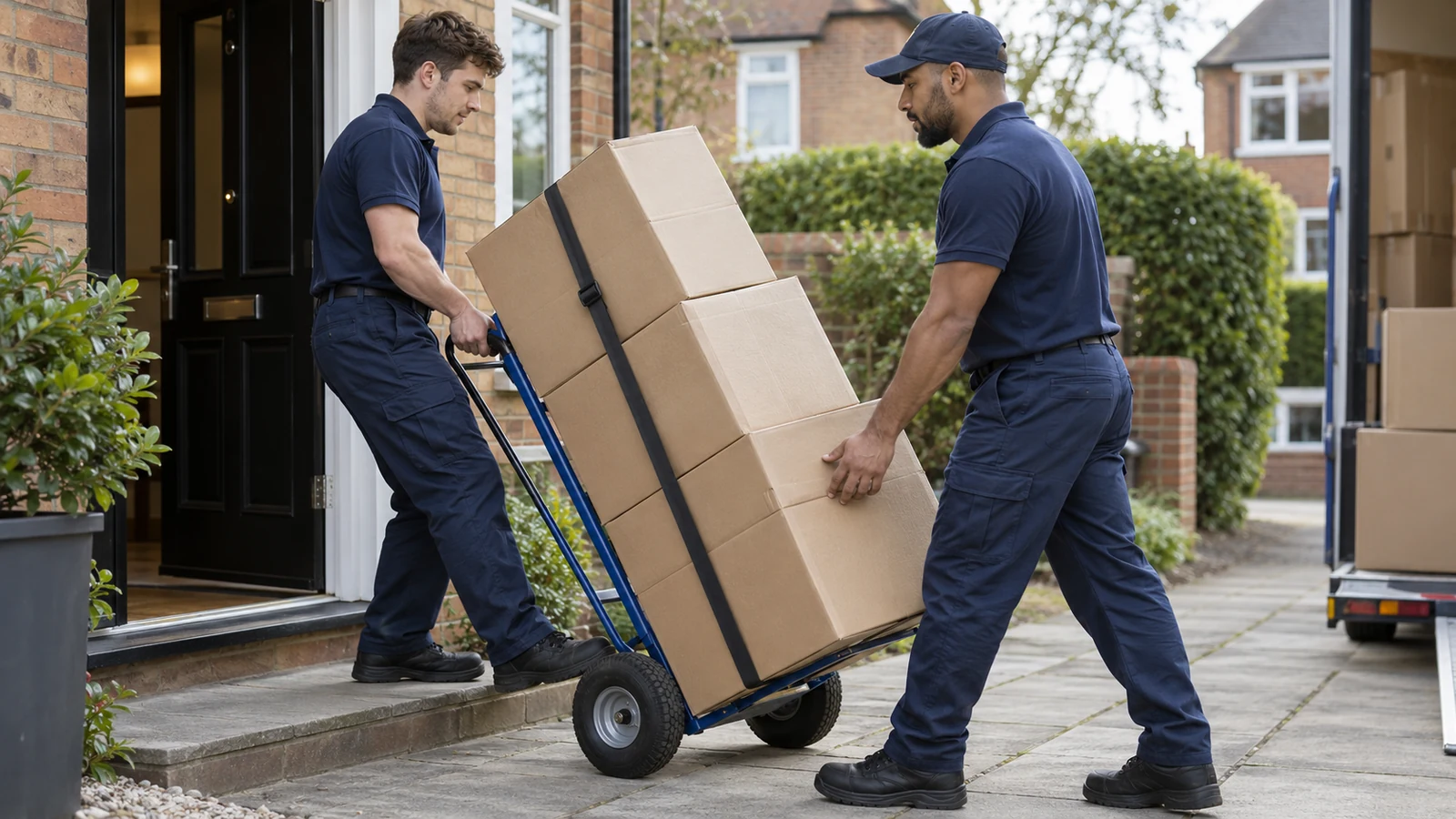
Describe the entire route between the home and the loading position at both addresses. Stairs, tight turns, communal corridors and long garden paths all affect carrying. If a lift is available, check its dimensions, booking rules and whether it will be working on the moving date. A lift that fits people may still be too small for a sofa.
Parking should be considered before the van arrives. Tell Move Out Mates about loading restrictions, controlled bays, access barriers and the distance to the door. Any permit, bay suspension or building permission must be arranged with the relevant party and confirmed as part of your plan. Do not assume that a removal vehicle can stop wherever there is a gap.
Measured furniture and door openings reduce surprises, but they do not guarantee that a bulky piece can negotiate a stair turn. Mention items that originally entered through a window or were assembled inside the room. Specialist lifting, external hoists and work at height require their own assessment and should never be implied within an ordinary move.
| Location | Question to answer | Planning consequence |
|---|---|---|
| Street or driveway | Where can the vehicle load legally? | Affects carrying distance and arrival plan |
| Communal entrance | Who provides keys or access permission? | Avoids a delayed start |
| Stairs | How many flights and tight corners? | Influences crew and handling time |
| Lift | What are its size and booking rules? | May restrict furniture movement |
| Destination rooms | Which room receives each item? | Reduces repeated handling after unloading |
Protect the contents
Packing support needs its own brief.
Packing can be done by you or discussed as additional help. State which arrangement you want so the time and materials can be considered. A transport booking for already packed belongings is different from a crew arriving to wrap fragile items and pack an entire kitchen. If you pack yourself, finish before the agreed arrival unless another arrangement has been confirmed.
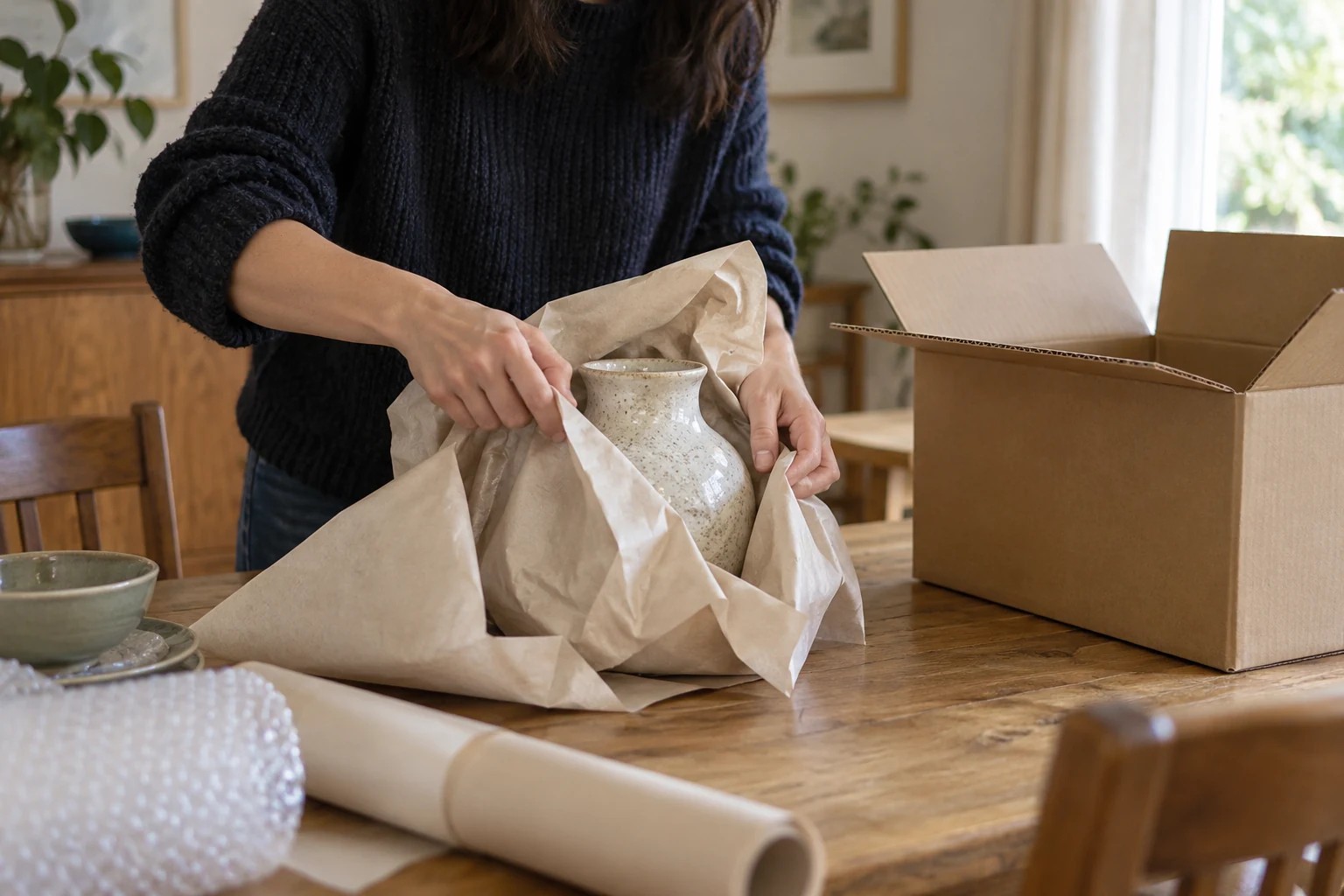
Use sound cartons that can be closed, with the weight distributed sensibly. Books usually need smaller boxes than bedding. Wrap fragile pieces individually with appropriate cushioning and avoid loose gaps that let contents move. Write the destination room and any handling instruction clearly; a box marked fragile still needs suitable packing inside.
Keep medicines, identity documents, keys and essential chargers with you rather than in an unidentifiable carton. Ask about the restrictions on liquids, aerosols, fuel, paint, plants or other unusual contents before packing them for the van. The accepted load and any protection or liability terms need to be confirmed for your booking rather than assumed from general industry practice.
| Belongings | Practical preparation | Confirm in advance |
|---|---|---|
| Books and records | Use manageable, securely closed cartons | Very large collections or unusually heavy loads |
| Glass and crockery | Wrap separately with cushioning | Whether packing materials and help are required |
| Clothes and bedding | Keep clean, dry and contained | Any wardrobe cartons requested |
| Documents and medicines | Carry essential items personally | Keep needed items out of the main load |
| Liquids or unusual goods | Identify before the quotation | Whether the item can be transported |
Dismantling and reassembly
Agree the furniture work before moving day.
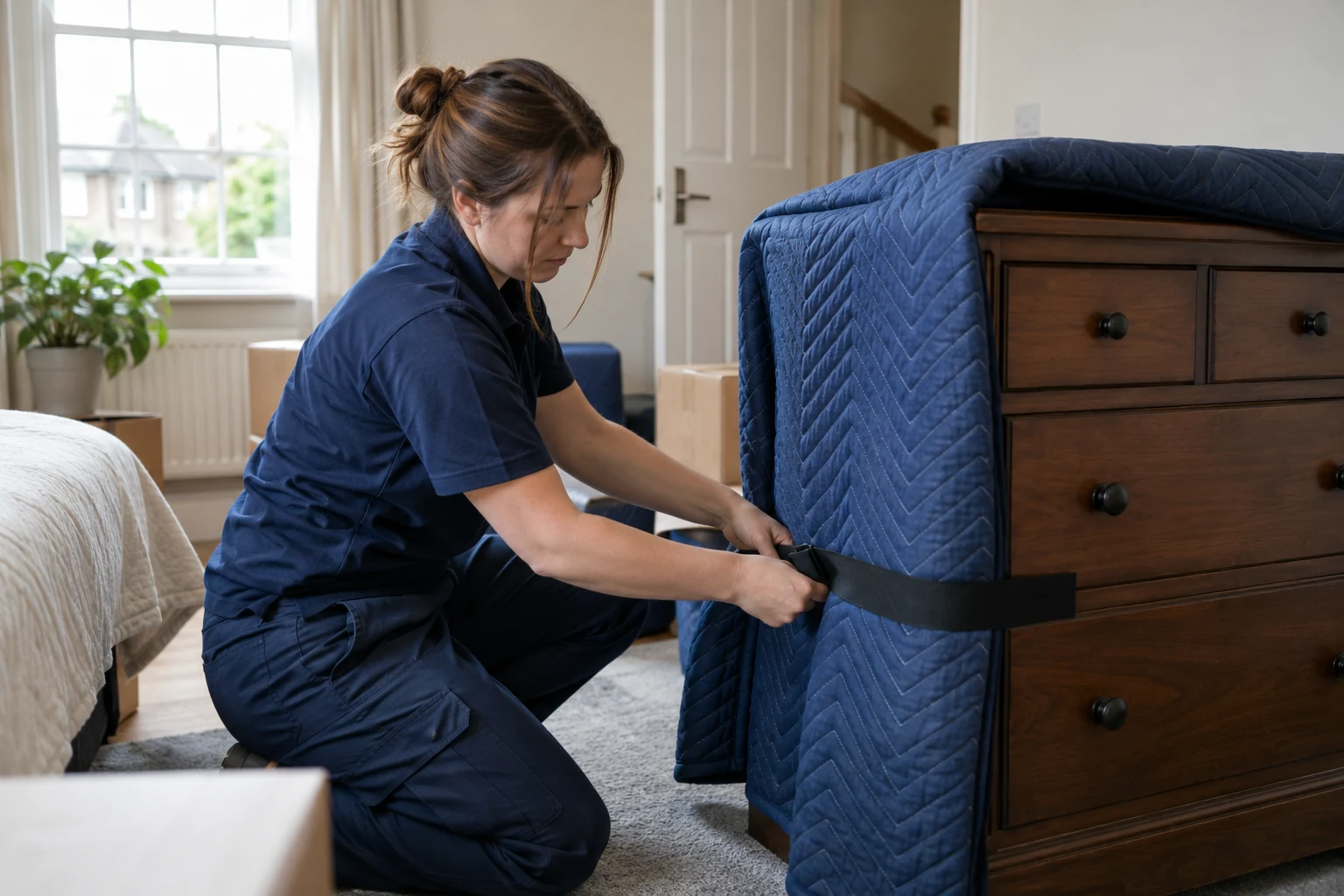
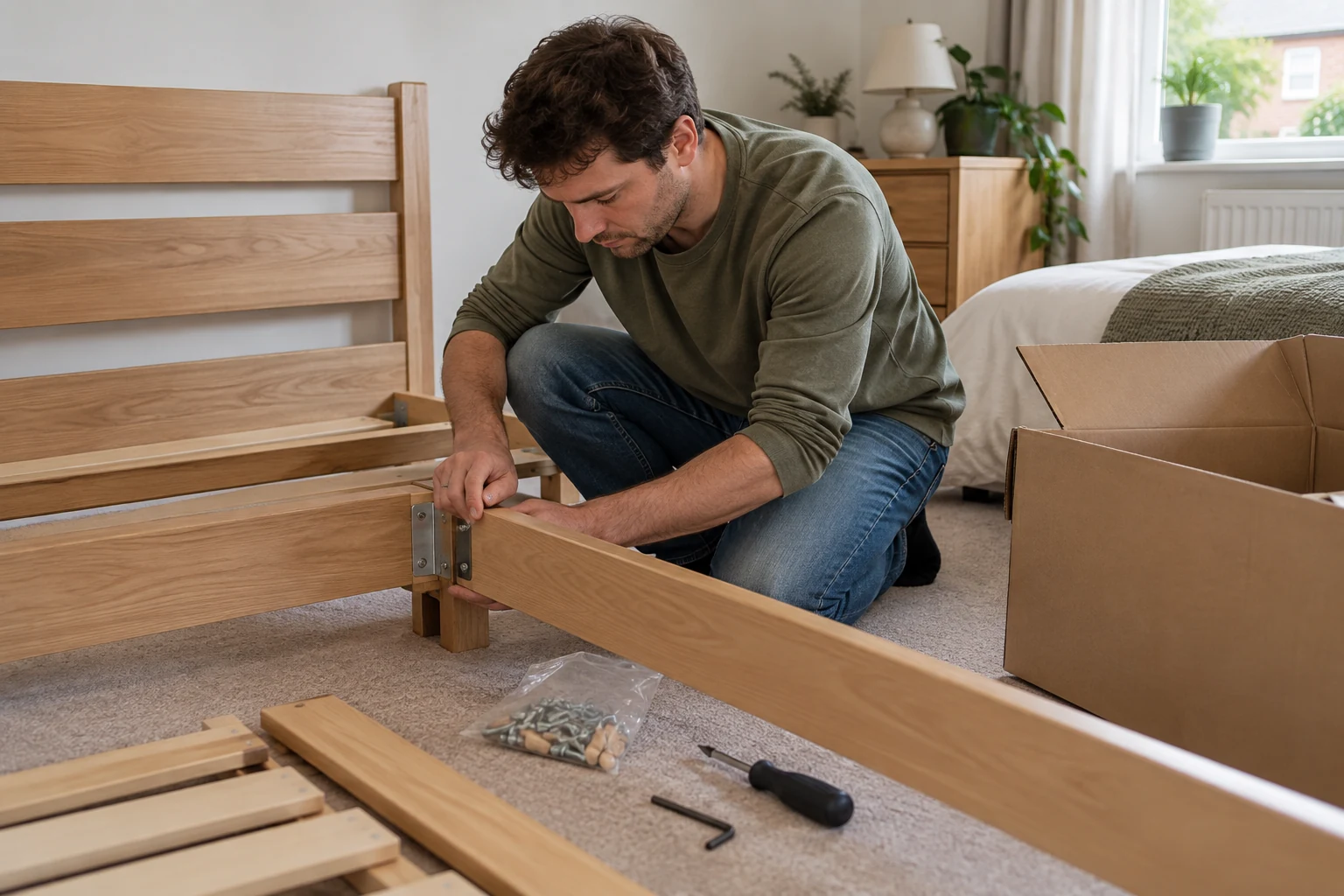
Some beds and tables travel more easily in sections, while other furniture is designed to move as one piece. Do not assume that every flat-pack item tolerates dismantling and rebuilding. Existing damage, worn fixings or glued joints can make the process unsuitable. Send the model details or photographs and explain any previous assembly difficulties.
Move Out Mates lists furniture assembly as a related service. Ask which dismantling and rebuilding tasks can be included with your move and whether they need additional time. Keep instructions, fittings and any specialist keys together. Photograph the item before dismantling if that will help you account for existing marks or missing components.
Appliance disconnection and installation are different from carrying an appliance. Arrange any necessary qualified trade work separately and follow the manufacturer’s preparation instructions. Empty and prepare appliances as required, and tell the mover if water or loose internal parts may remain. Furniture placement should not involve drilling, wall mounting or altering the property unless that work is explicitly agreed.
| Task | What to agree | Boundary |
|---|---|---|
| Moving assembled furniture | Dimensions, route and protection | Some items may not fit the route |
| Bed dismantling | Model, condition and fittings | Confirm reassembly at destination |
| Flat-pack rebuilding | Whether repeat assembly is suitable | Worn fixings can affect the result |
| Appliance transport | Preparation and handling needs | Technical connection is separate |
| Wall-mounted items | Removal and refitting responsibility | Do not assume drilling is included |
Keep moving day workable
Plan for keys, people and the final walk-through.
Moving-day timing depends on access and the point at which the new property is available. Tell the team about a completion-chain deadline or key collection arrangement. If keys are delayed, waiting can affect the schedule and cost; ask how that situation is handled before confirming. Do not promise the team access based only on an expected telephone call.
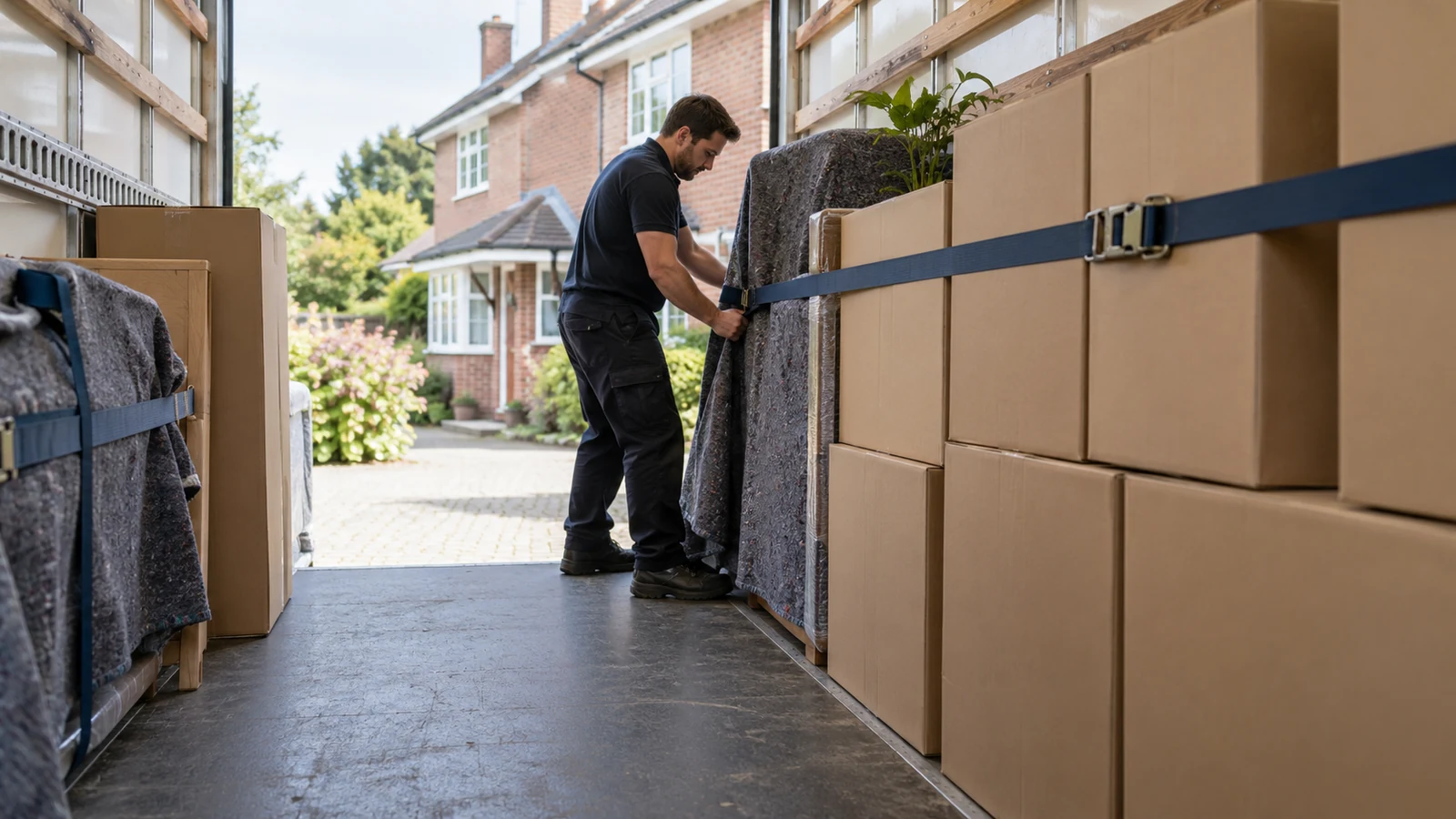
Keep children and pets away from carrying routes and choose a person who can answer placement questions. At the destination, a simple room plan and clearly marked cartons help direct unloading. Check the inventory and accessible furniture together where practical, and report concerns through the agreed contact route.
Leave time for the old property to be empty if you are arranging end-of-tenancy cleaning. Cleaning around a loaded hallway or repeatedly reopening rooms for furniture collection can undermine the sequence. If the new home needs a reset before arrival, discuss a one-off deep clean before boxes cover the floors.
Understand the estimate
Scope, crew and access determine the basis.
A useful removal quote explains what is being carried, which addresses are involved and what additional work is included. Ask whether the charge is hourly or based on an agreed job scope, what any minimum booking means and how additional time is treated. Vehicle size, crew requirements and the journey should correspond to the inventory.
Packing materials, dismantling, extra stops, waiting and access-related charges can change the total. Ask which taxes, road charges or parking costs are included rather than comparing headline amounts alone. Call 020 3746 3110 with the inventory, dates and both access descriptions to request the applicable quotation.
Before accepting, review the booking terms, exclusions and available protection for your belongings. Declare anything requiring special consideration. A written record of what is agreed is more useful than a general promise of a stress-free move, especially if your load or completion date changes after the original estimate.
| Service | From price | What to agree | Additional information |
|---|---|---|---|
| Home removal | Inventory-based quote | Load, addresses, crew and vehicle | Confirm charging basis and minimums |
| Packing support | Separate quote if requested | Rooms, materials and fragile items | Packing changes the time required |
| Dismantling and assembly | Quote for named items | Models, condition and fittings | Check suitability before booking |
| Extra stops or storage delivery | Route-specific quote | Destination and unloading plan | Access and waiting may change the total |
Practical questions
The details worth asking.
Can you quote using only the number of bedrooms?
Bedroom count is a starting point. A room-by-room inventory, carton estimate and details of bulky items produce a more useful quote, particularly where the home has sheds or storage cupboards.
What should I do about parking permits?
Tell the team about restrictions at both addresses. Confirm who arranges any required permission or bay suspension with the relevant authority or building manager before moving day.
Will every flat-pack wardrobe be dismantled?
That must be assessed and agreed. Furniture condition, construction and worn fittings can make dismantling unsuitable. Send the model or clear photographs before the quote is finalised.
Can I travel with valuables in the van?
Confirm passenger arrangements separately; do not assume a seat is available. Keep essential personal documents, medicines and small valuables under your own control during the move.
What happens if I cannot collect the new keys on time?
Tell Move Out Mates as soon as possible and check the agreed waiting and scheduling terms. A delayed handover can affect both the crew timetable and the cost.
Should appliances be disconnected before the crew arrives?
Arrange disconnection and any required trade work beforehand unless explicitly confirmed otherwise. Transporting an appliance does not automatically include plumbing, gas or electrical work.
Can part of the load go into storage?
Provide separate item lists and the storage destination when requesting the quote. Another stop changes the route, unloading order and potentially the time required.
When should cleaning take place during a move?
An outgoing clean generally works best after belongings have left. At the new home, cleaning before unloading avoids working around cartons. Confirm both schedules with enough time for access and any drying.