
Exterior care · Gutter clearance
Gutter cleaning. Give rainwater a clear route.
Leaves, moss and roof grit can collect out of sight until rain spills over the edge. Gutter cleaning removes accessible loose debris from the rainwater channel; the right scope depends on height, layout and safe access. Tell Move Out Mates where water is escaping so the appointment starts with the right questions.
- Describe front, rear and extension gutter runs.
- Flag leaks, loose sections and difficult access.
- Agree clearance, checks and disposal before booking.
Read the symptoms
A blockage is only one possible cause.
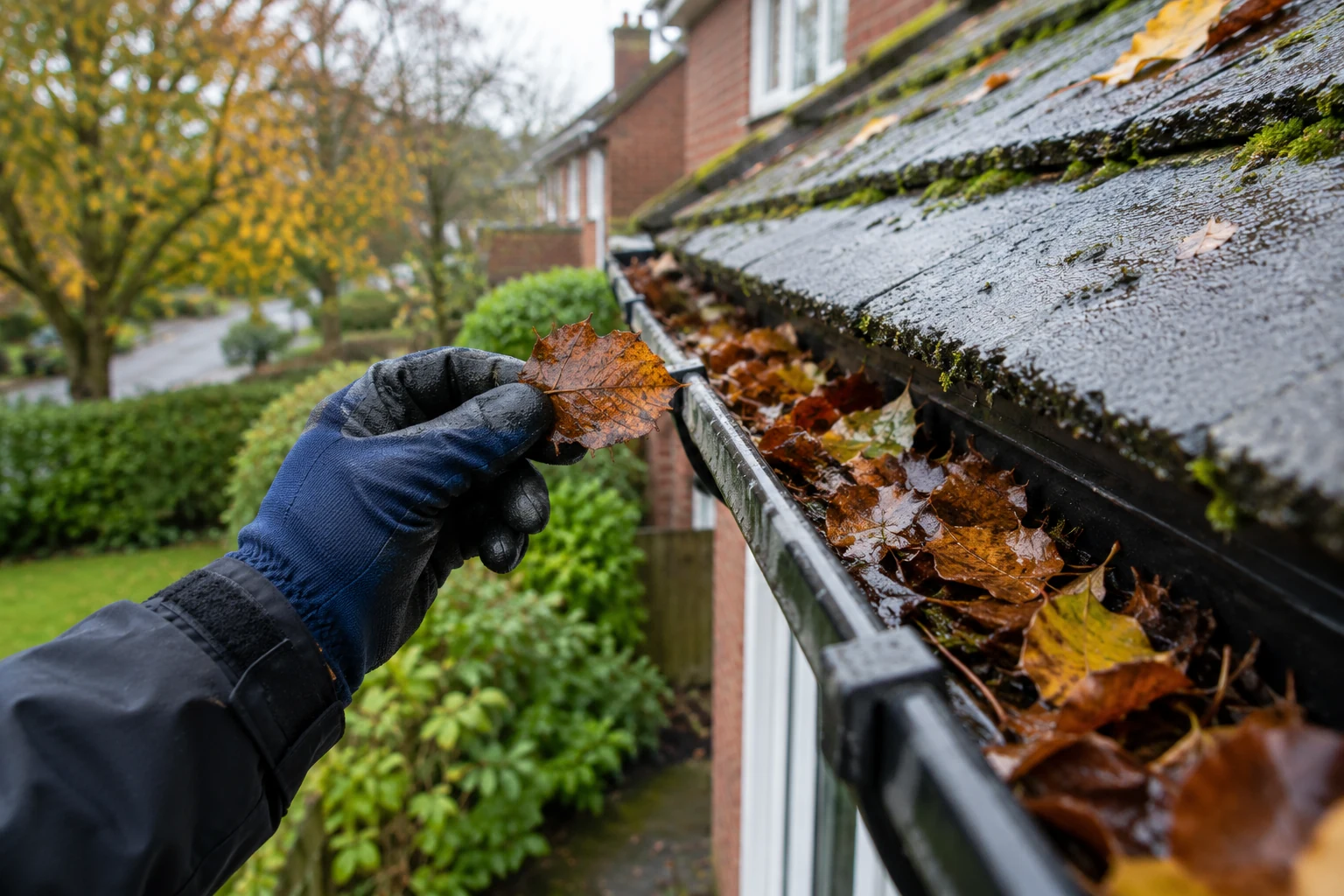
An overflowing gutter is a reason to investigate, rather than proof that the whole system needs replacement. Leaves can lodge at an outlet while grit forms a shallow bed further along the channel. Wind-blown seedlings may take root in that material. Clearing the obstruction can improve the route for rainwater, but it cannot correct a gutter with the wrong fall or a joint that has opened.
Look from a safe ground position and describe what happens during ordinary rain. Does water pour over one corner, run behind the gutter, or emerge halfway down a pipe? Photographs of the exterior and the affected wall help define the job. Persistent damp indoors may have other causes, so gutter clearance should not be sold as a diagnosis or a promise to resolve every damp patch.
| Observation | Possible explanation | Useful next step |
|---|---|---|
| Overflow at one outlet | Leaves or sediment may restrict the opening | Describe the location and request clearance assessment |
| Drip at a joint | Seal or connection may need repair | Separate the repair question from debris removal |
| Sagging run | Fixings, standing water or damaged material | Report before work; do not attempt to pull it straight |
| Water at downpipe base | Outlet or drainage route may be obstructed | Identify where the pipe discharges |
Define the appointment
Clear channels, with the limits agreed.
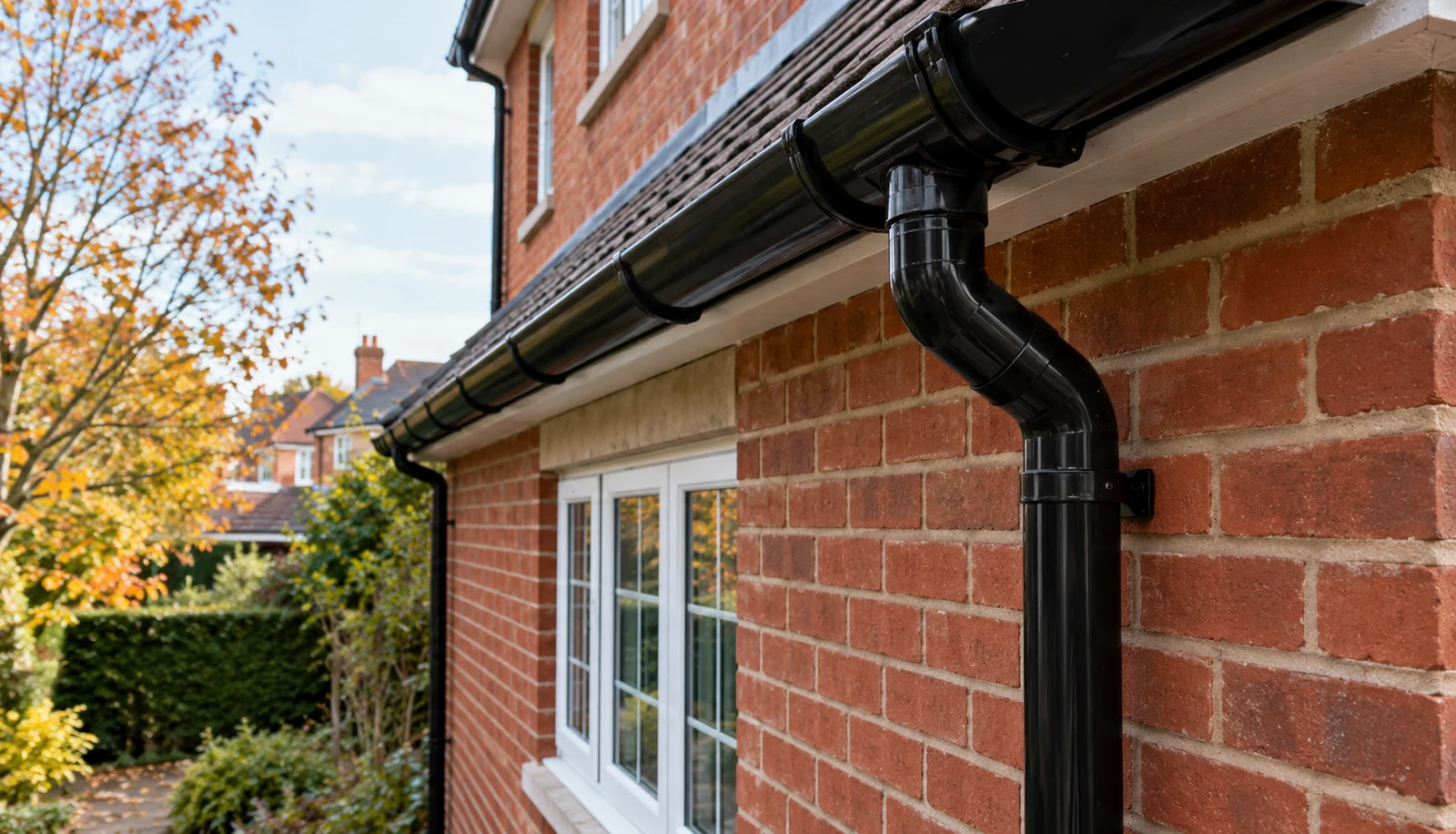
A useful gutter-cleaning brief identifies each run and the accessible outlets. A front elevation alone is different from a house with a rear extension, porch and side return. Mention guards, concealed gutters and pipes that enter an underground drain. Removing loose debris from a reachable channel does not automatically include dismantling downpipes, removing gutter guards or opening sealed drainage systems.
Ask which checks and photographs can be provided for your property. Camera inspection may be appropriate where equipment can be positioned safely, but visibility can be restricted by roof shape, overhangs and neighbouring structures. If a section cannot be reached, the practical outcome is to identify the limitation and discuss the next step rather than imply that the entire roofline has been cleaned.
External gutter-face washing, fascia washing and window cleaning address appearance rather than the inside of the channel. Describe these separately if required. This distinction makes it easier to compare quotations and avoids confusing a brighter gutter exterior with a clear rainwater route.
| Part of the system | Work to discuss | Important boundary |
|---|---|---|
| Open gutter channel | Removal of reachable loose leaves and sediment | Safe equipment position required |
| Outlet and hopper | Accessible debris removal and visual check | Deep pipe obstruction may need other work |
| Downpipe | Assess visible or accessible blockage | Dismantling is a separate scope |
| Fascia and gutter exterior | Optional surface washing | Not the same task as internal clearance |
| Damaged guttering | Identify visible concern | Repair or replacement is separately agreed |
Method and access
The working position matters as much as the tool.
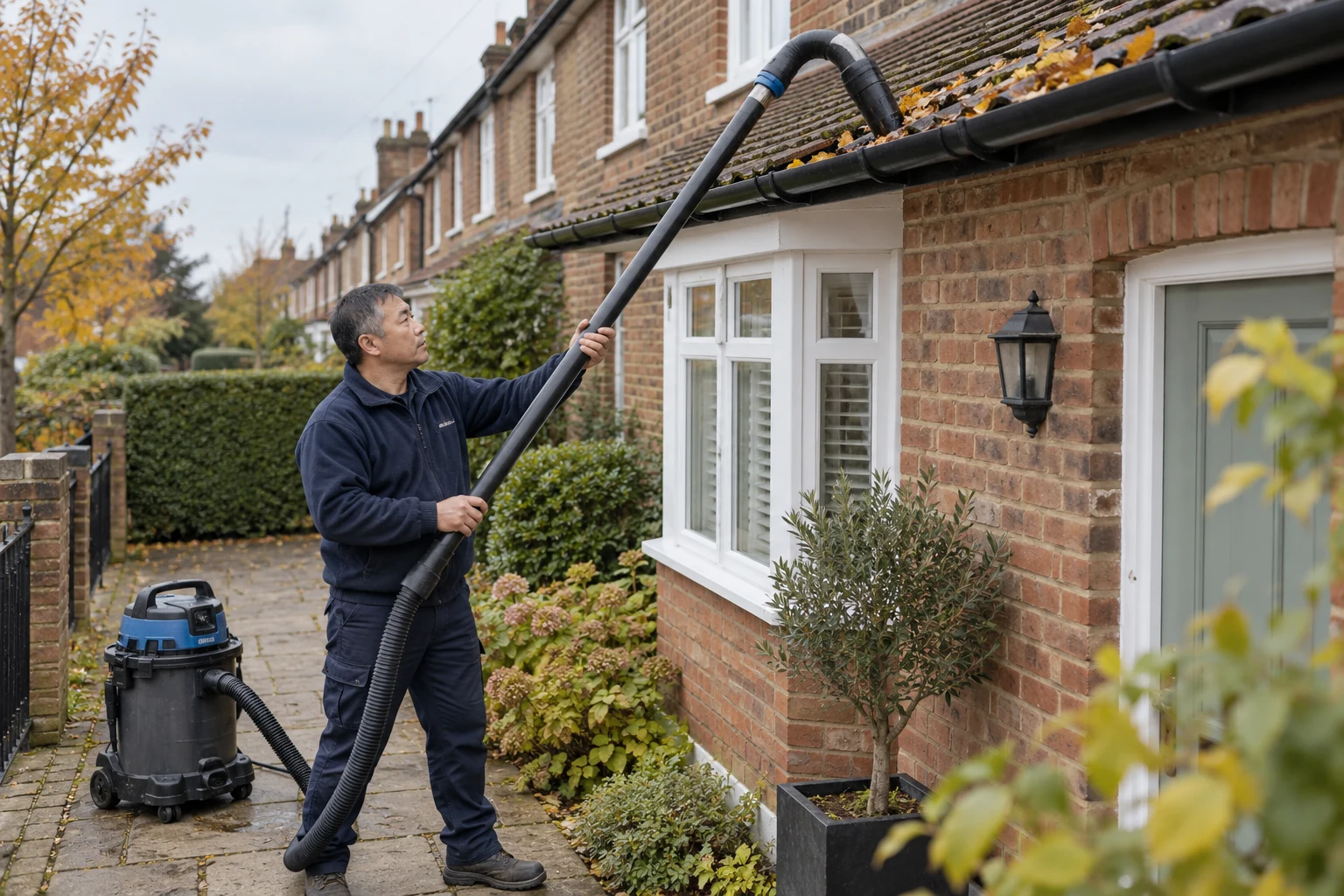
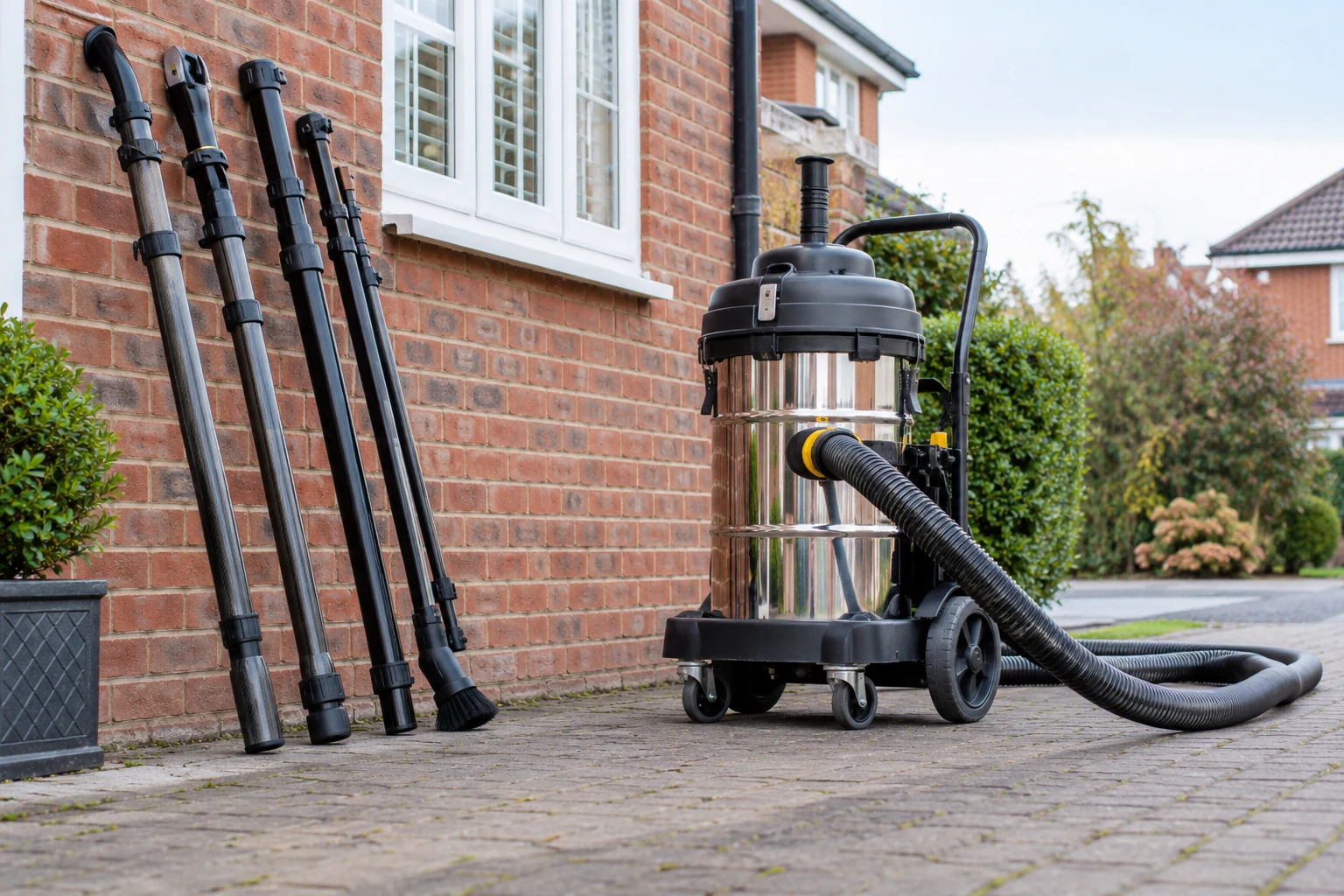
Professional gutter clearance may use a ground-based vacuum with sectional poles, hand tools where there is suitable access, or another method chosen after assessment. The appropriate approach depends on the gutter profile, debris and surrounding obstacles. Ground-based equipment needs a stable working area and a usable line to the channel; a conservatory or narrow passage can alter what is practical.
Do not climb onto a roof or set up improvised access in preparation for the cleaner. Point out fragile roof sheets, loose masonry, overhead cables and any recently repaired sections. Occupants should keep clear of the work area. If weather or the condition of the building makes the planned approach unsuitable, the job may need a revised method or another appointment.
Gutter cleaning is separate from roof moss removal, roof repairs and drain jetting. Forceful washing is not a substitute for assessing the building material and discharge route. If you are also considering pressure washing for paving, coordinate the sequence so the exterior ground surfaces are addressed after loose roofline debris has been collected.
| Approach | Where it may help | What can restrict it |
|---|---|---|
| Ground-based vacuum | Reachable open channels and loose debris | Pole route, suction access and compacted obstructions |
| Camera inspection | Viewing accessible areas before or after clearance | Blind corners and enclosed construction |
| Manual removal | Suitable safely accessible sections | Access arrangements and fragile materials |
| Controlled flow check | Assessing a permitted accessible route | Water availability and existing leaks |
Before the visit
Make the outside route usable.
Send the property type, approximate building height and clear pictures of each elevation. Include extensions, gates, steps, parked vehicles and any rear access through the home. A photo taken from the garden can show constraints that a street address cannot. Explain if the team will need permission from a neighbour or a building manager to work beside the gutter.
Move portable garden furniture and keep pets indoors while the work area is in use. Unlock the agreed route and mention parking restrictions before the appointment. Water or electricity requirements depend on the method, so confirm these rather than assuming an outdoor socket or tap is essential. Keep windows near the work closed if debris could fall beside them.
For shared buildings, establish who is authorising the appointment and which gutter runs are included. A leaseholder asking for one elevation to be cleared may not be able to authorise work on the whole block. Good access information also helps if you are coordinating exterior work with a tenancy handover clean inside the property.

| Before appointment | Action | Why it matters |
|---|---|---|
| Access | Unlock gate and clear the agreed passage | Allows safe positioning of equipment |
| Parking | Explain restrictions and distance from property | Avoids an unsuitable arrival plan |
| Shared property | Obtain permission for communal areas | Confirms authority and boundaries |
| Loose belongings | Move furniture, toys and plant pots | Keeps the working space available |
| Known defects | Send photographs and repair history | Helps distinguish existing damage from debris |
Property-specific estimate
Height is only part of the price.
The length and number of gutter runs influence the amount of work, while building height and access influence the equipment needed. An extension beneath a rear gutter can make a short section more involved than a longer open front run. Heavy compacted material, multiple outlets and restricted parking can also change the scope. The quote should reflect the actual building rather than a bedroom count alone.
Ask whether the quotation covers both sides of the house, accessible downpipe checks, debris collection and any inspection images. Confirm separately whether guards need removal and whether repairs are available. For an estimate that reflects your building, call 020 3746 3110 with the property details and the scope you want assessed.
Appointment duration cannot be estimated reliably from a photograph of one gutter corner. Explain whether the job is routine clearance or an investigation of repeated overflow. If the issue turns out to be a broken fitting or an inaccessible pipe, the next action may involve another trade rather than extra cleaning time.

| Service | From price | What to agree | Additional information |
|---|---|---|---|
| Gutter clearance | Property-specific quote | Named accessible runs and outlets | Height, debris and access affect scope |
| Additional elevations | Quoted with the property | Rear, side and extension runs | Send a view of each elevation |
| Exterior washing | Separate quote if available | Gutter faces or fascias | Does not replace internal clearance |
| Repairs or concealed blockages | Separately assessed | Exact defect and required access | Cleaning does not include automatic repair |
After clearance
Observe the next rainfall without climbing.
Ask which sections were completed and whether any concern remains. A clear photograph is useful for a reachable open channel, but it does not prove that underground drainage is unobstructed. Keep the agreed scope and any images with your household maintenance records. Where a repair has been recommended, arrange an appropriate assessment instead of relying on another clearance visit.
From indoors or ground level, observe the gutter during the next suitable rainfall. Continued dripping from a joint suggests a different question from leaves remaining at an outlet. Tell the provider the location and pattern rather than simply reporting that the wall is still wet. Old wall staining will not necessarily disappear immediately after the water route improves.
Future cleaning frequency depends on nearby trees, roof debris and the design of the building. Check after leaf fall and after unusual debris events, and agree a suitable maintenance interval if needed. Gutter guards can reduce some debris entering a channel but do not remove the need to inspect outlets. For wider household maintenance, regular housekeeping covers interior routines rather than roofline care.
Practical questions
The details worth asking.
Will clearing the gutter fix a leaking joint?
Not necessarily. Removing debris and repairing a failed seal are different tasks. Identify the leak before booking and ask whether repair can be assessed separately.
Can you reach the gutter over my conservatory?
Send photographs showing the gutter, conservatory roof and available working space. Reach depends on the equipment route and safe access; it cannot be promised from the address alone.
Does the service include underground drains?
Do not assume so. Clearance of open gutters and accessible outlets is different from diagnosing or clearing an underground drain. Describe where the downpipe discharges.
Should I remove the gutter guards first?
Leave them in place and disclose them when requesting the quote. Removal and replacement may affect access and the agreed work; avoid climbing to prepare them.
What if water still overflows after debris is removed?
Note the location during rain from a safe position. A damaged joint, incorrect fall, restricted downpipe or another drainage issue may need assessment.
How do I know whether both elevations are included?
Ask for front, rear, side and extension runs to be named in the quotation. A generic house description can miss shorter secondary sections.
Must I provide an outdoor tap?
It depends on the agreed method and any flow checks. Confirm water and electricity requirements before the appointment rather than making access assumptions.
Is cleaning needed only in autumn?
Leaf fall is one trigger, but roof grit, moss fragments and spring growth can collect at other times. Base checks on the property and visible symptoms rather than a fixed season alone.