
Outdoor surfaces, considered carefully
Pressure Washing in London
Refresh patios, paths and paving with a pressure washing plan based on the surface, its condition and practical access. Request a tailored quotation.
- Surface and drainage assessment
- Patios, paths and suitable paving
- Clear scope before work begins
Assessment
A cleaner outdoor space starts with the right assessment
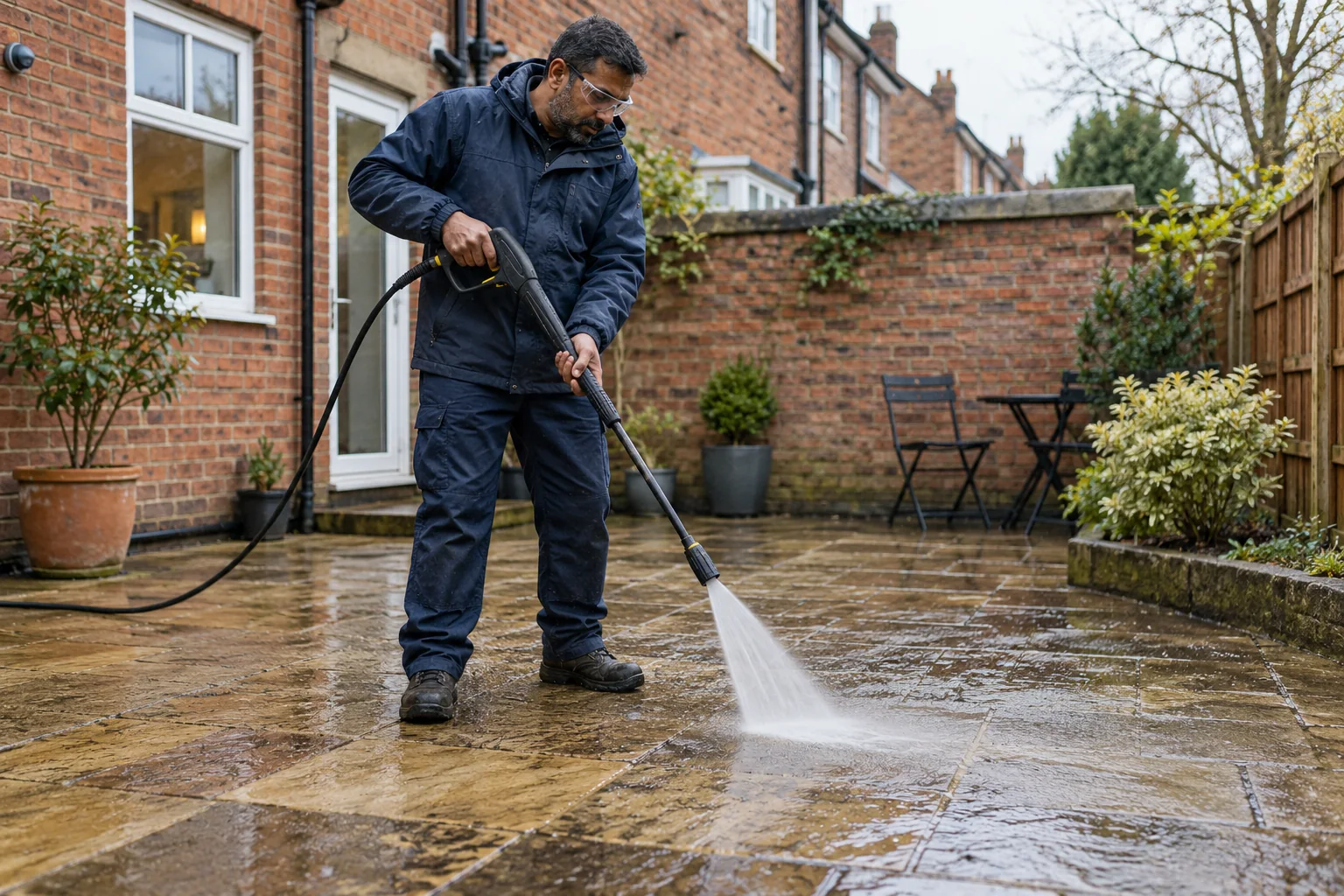
A patio can look uniformly grey while hiding several different problems: loose soil, algae, weathered joints, old sealant and marks absorbed into the stone. Treating all of these with the strongest possible jet is rarely the right starting point. Tell Move Out Mates what the area is made from, how it is used and which marks concern you. Photographs showing the whole space and close views of damaged areas help establish an appropriate scope.
The practical aim is to remove removable soiling while respecting the existing surface. Cleaning cannot replace missing pointing, level a sunken slab or restore a coating that has already failed. A cracked edge may become more obvious when dirt is removed, rather than having been caused by that cleaning. Discuss existing defects before work begins so that expectations are recorded. Where outdoor presentation is part of a property handover, coordinate the timing with end of tenancy cleaning rather than assuming exterior work is included in the indoor specification.
| Observation | Likely discussion | Expectation |
|---|---|---|
| Green film in shade | Biological growth and drainage conditions | Removal does not prevent future growth |
| Black spots on stone | Embedded staining or biological deposits | Specialist treatment may be needed |
| White crystalline marks | Possible salts or mineral deposits | Identify the cause before treatment |
| Oil-darkened paving | Contamination absorbed into a porous surface | A permanent shadow may remain |
Materials
Match the cleaning approach to the paving
The name of the material is only part of the assessment. New concrete, worn concrete and concrete with a decorative coating can respond differently. Natural stone varies in hardness, porosity and finish; sandstone and limestone should not be treated as interchangeable. Soft mortar, shallow joints and loose aggregate can be vulnerable even when the surrounding slabs seem robust. A discreet test area is useful where the material or previous treatment is uncertain.
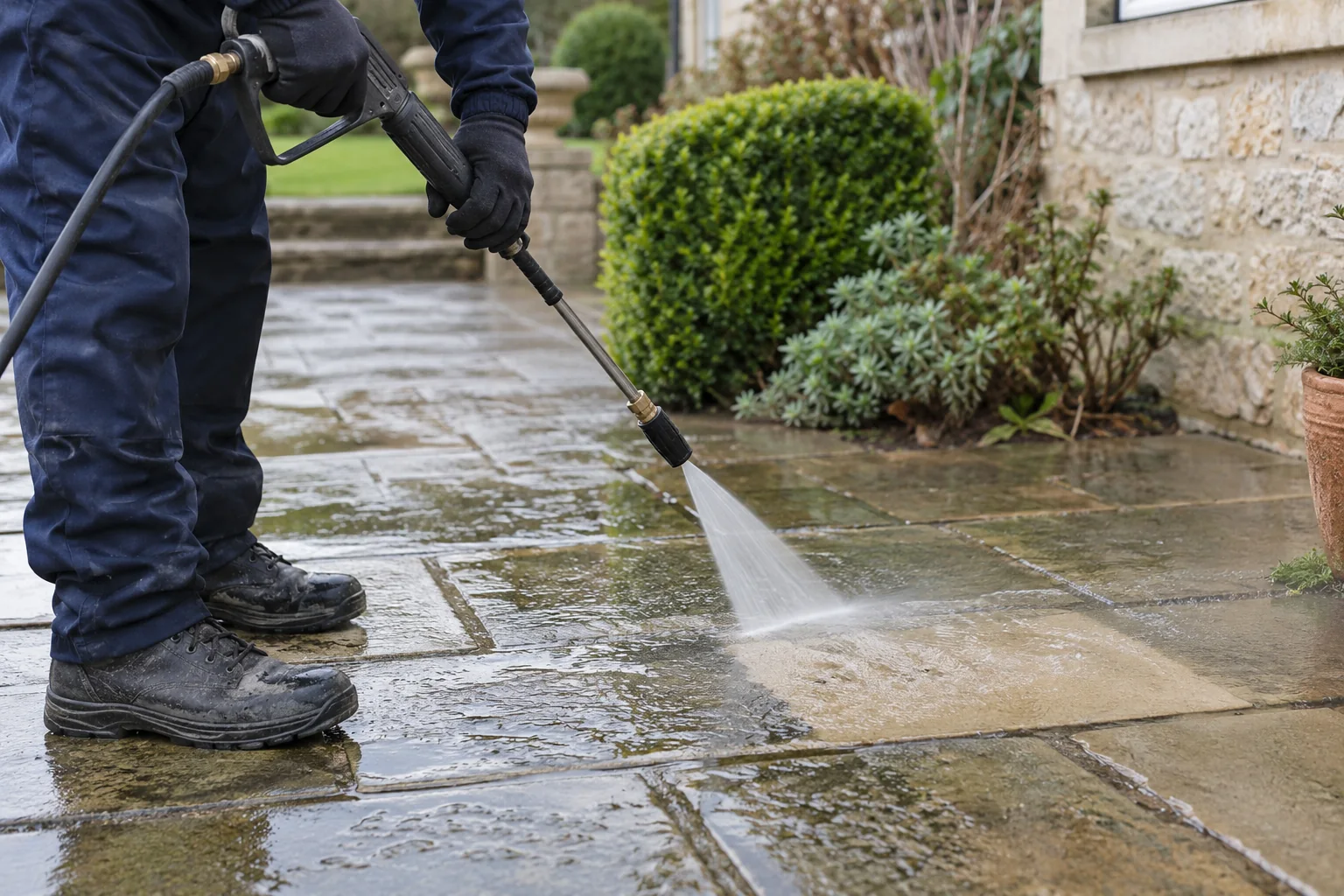
Block paving needs particular attention to joints. Washing may dislodge jointing sand, so discuss whether replacement sand is appropriate and whether that is a separate item. Sand should not simply be brushed onto wet paving. Timber decking can fur or splinter under aggressive treatment, while composite boards need an approach compatible with their manufacturer’s instructions. Painted walls, old brickwork, render and roofs require their own assessment and should never be added casually to a patio booking. Please describe every material you want included, including steps and raised borders.
| Surface | Important check | Scope to confirm |
|---|---|---|
| Natural stone | Porosity, finish and sound joints | Test area and suitable chemistry |
| Block paving | Jointing sand and stability | Washing versus later re-sanding |
| Concrete slabs | Surface wear or coating | Pressure and expected appearance |
| Timber or composite | Board condition and care guidance | Gentle cleaning suitability |
| Painted or rendered area | Coating adhesion and cracks | Separate assessment before inclusion |
Preparation
Prepare access, water and a sensible runoff route
A clear route from the parking position to the work area makes the appointment easier to plan. Mention narrow side passages, shared gates, steps, communal gardens and any route that passes through the home. An external tap may be helpful, but its availability, connection and flow should be confirmed rather than assumed. Tell us about water restrictions, low pressure or a tap that cannot be used. Equipment and access requirements belong in the booking conversation.
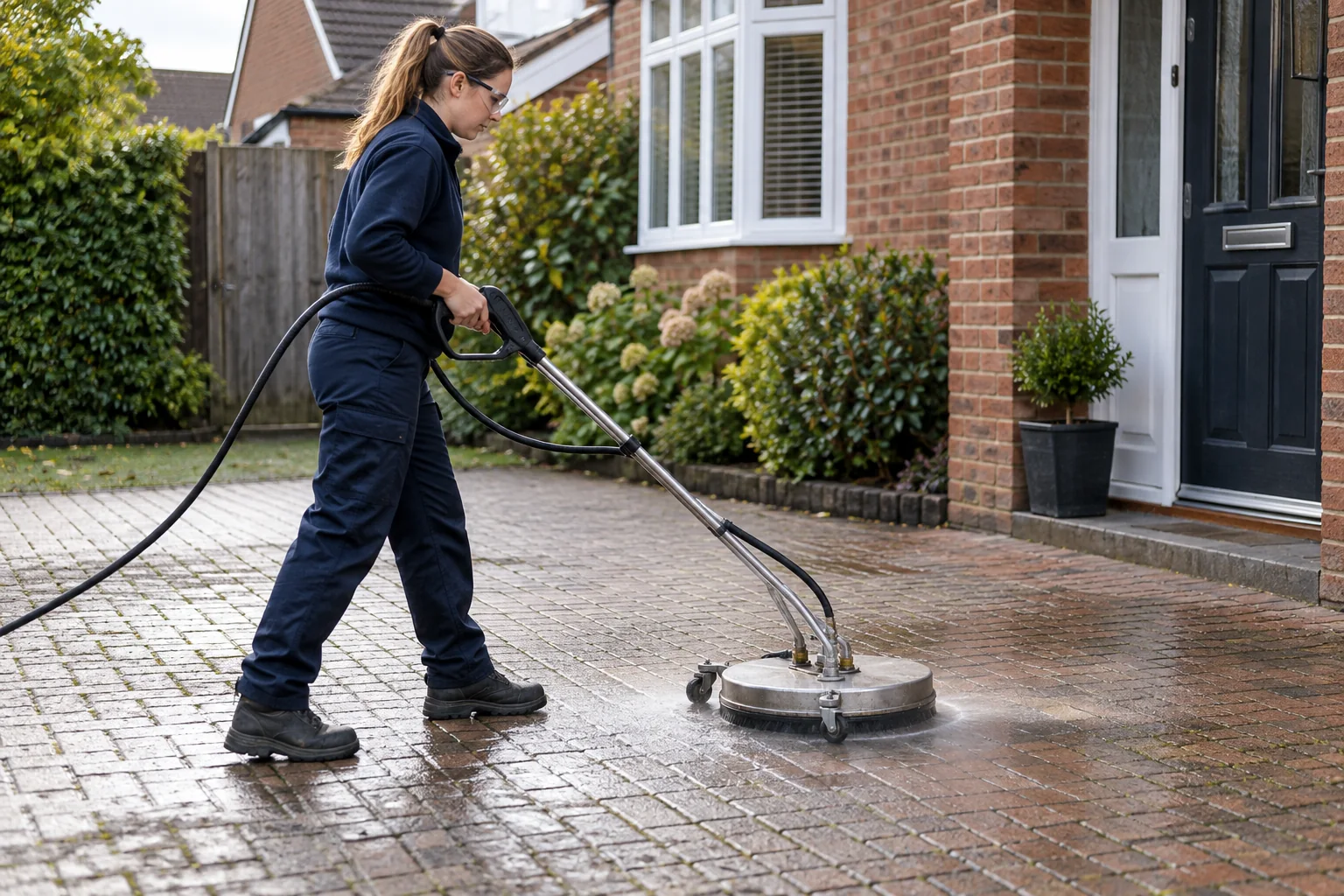
Loose furniture, toys, plant pots and fragile ornaments should be moved where it is safe for you to do so. Do not attempt to lift heavy planters or dismantle fittings yourself. Identify outside sockets, damaged covers, open air bricks and doors where water could enter. Runoff needs a suitable route; debris should not be pushed into a blocked drain or allowed to spread onto a neighbour’s property. Keep children and pets away from hoses, wet paving and the active work area. If large household items need moving first, discuss home removals separately.
| Detail | What to tell us | Why it matters |
|---|---|---|
| Access route | Gate width, steps and shared areas | Equipment and hose planning |
| Water supply | Tap location and known restrictions | Connection and workable flow |
| Drainage | Gullies, slopes or standing water | Runoff and debris control |
| Furniture | Heavy or fragile objects remaining | Responsibility for moving items |
| Neighbours | Shared boundaries and access permission | Avoid disruption and overspray |
Method
A controlled clean, not a race across the surface
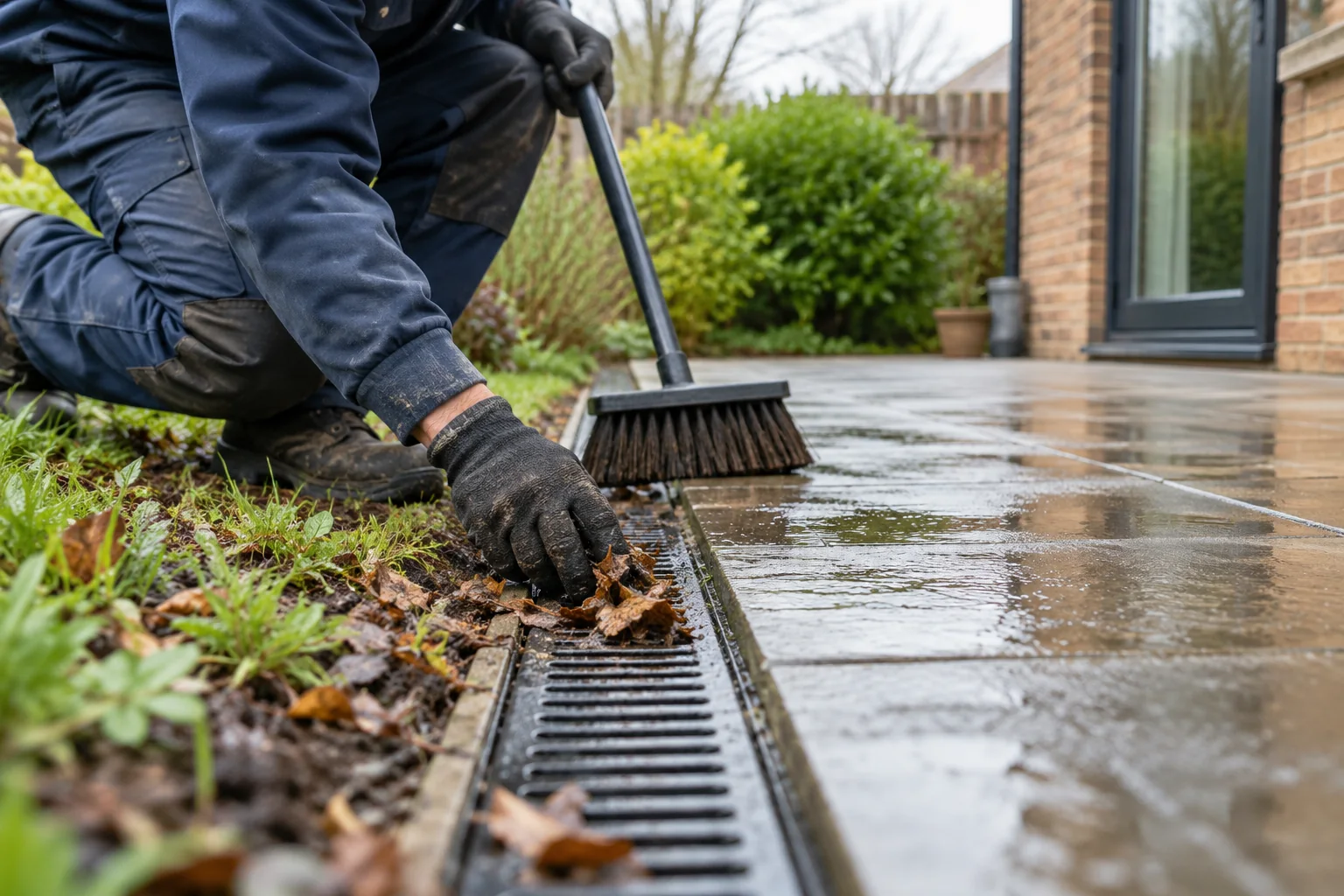
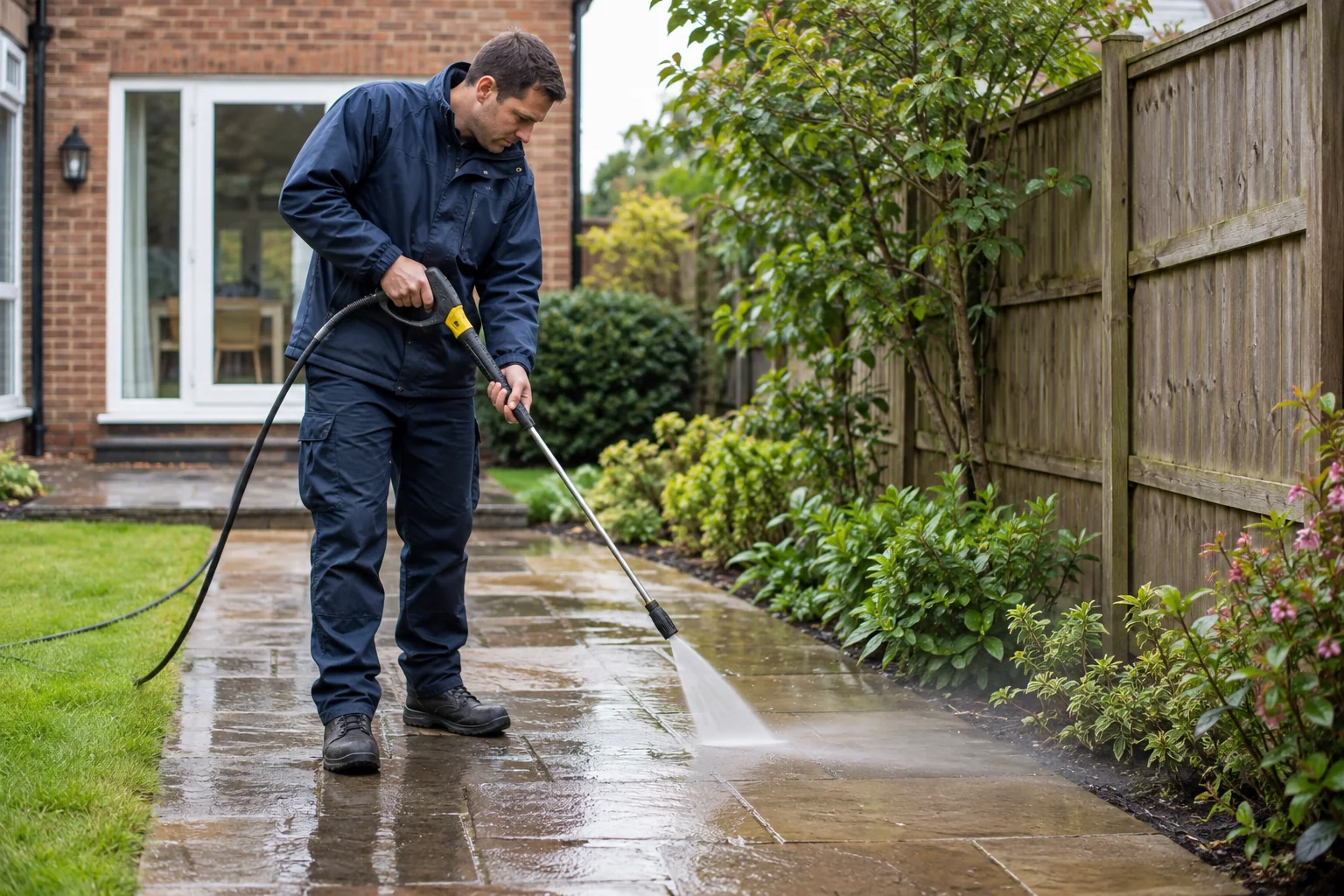
A considered sequence starts with identifying loose debris and sensitive edges, then testing the proposed approach where needed. Pressure, nozzle pattern, distance and angle all affect the force at the surface. Moving too close can mark a slab or remove its upper layer. Working methodically also reduces the chance of missed bands, uneven cleaning and dirt being driven back onto a completed area.
Some deposits respond to controlled water cleaning; others may need a compatible treatment with an appropriate dwell time. A cleaning product should never be chosen simply because it is described as strong. Nearby metals, plants, finishes and drainage all matter. If a chemical treatment is proposed, ask what it is intended to address and whether rinsing or exclusion precautions apply. No single method can promise complete removal of every stain. For glass near the work area, consider whether a later window cleaning visit would be useful after outdoor splashing and residue have settled.
| Stage | Purpose | What it does not mean |
|---|---|---|
| Initial inspection | Identify materials and defects | A structural survey |
| Test patch if appropriate | Check response and finish | A guarantee for every hidden defect |
| Controlled wash | Remove suitable surface soiling | Universal stain removal |
| Rinse and debris check | Leave the agreed area ready to dry | Drain repair or waste disposal by default |
| Review | Discuss remaining marks and aftercare | Automatic sealing or re-pointing |
Finishing
Drying, joints and realistic aftercare
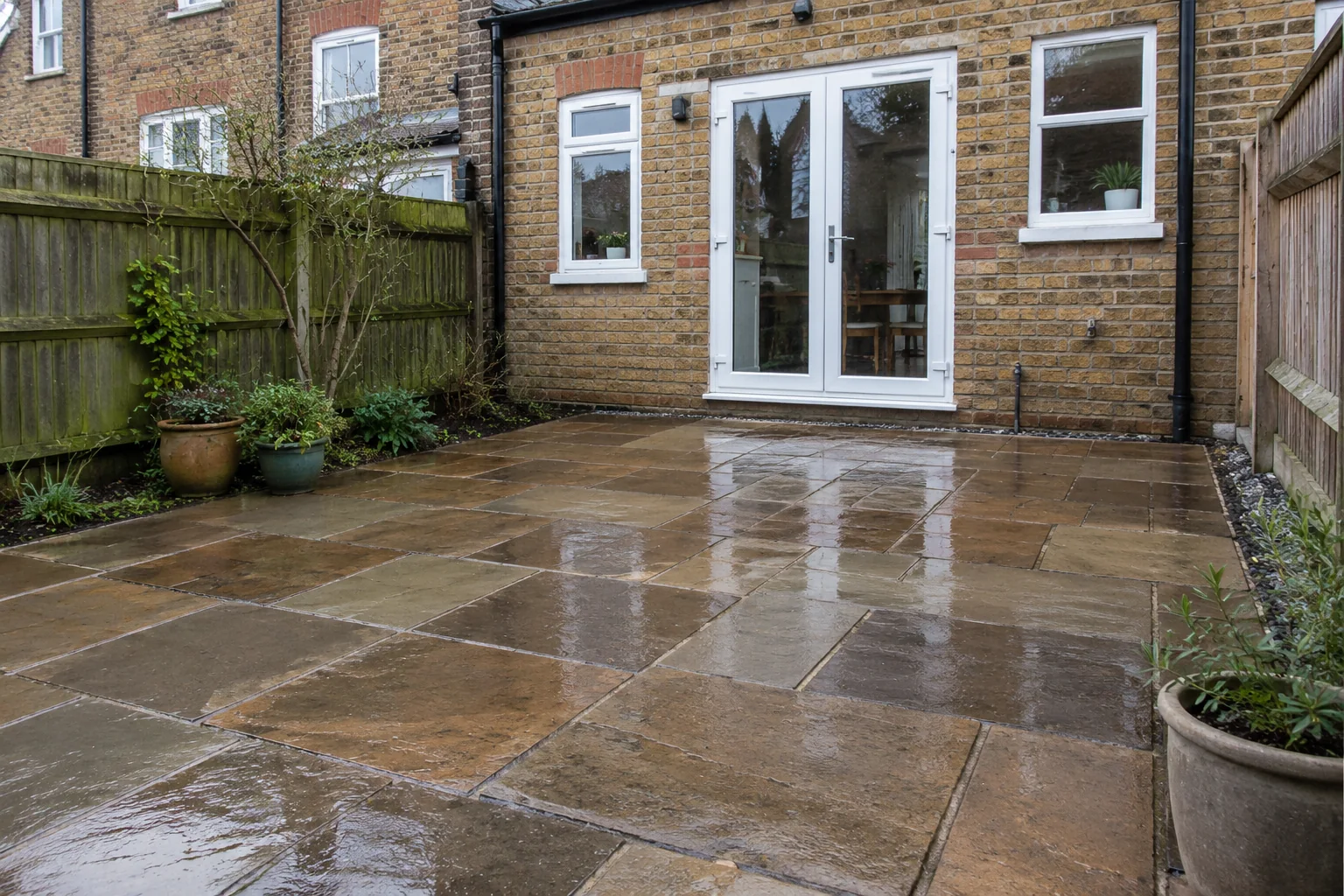
Wet stone often looks darker and more saturated than the same surface when dry. Review colour and remaining marks with that in mind. Water can temporarily reveal different porosity across old repairs, replacement slabs or sheltered areas. A clean surface may still have variations from age and exposure; those are different from removable grime. If the job includes steps or a frequently used path, ask when the area can be crossed and keep the route clear while equipment is removed.
Re-sanding, sealing, joint repair and biological-growth treatment are distinct operations. Their suitability depends on the surface and conditions, and they should be expressly listed if requested. A sealer applied too soon can trap moisture or create an unsuitable finish. Do not assume that washing alone provides lasting slip resistance: shade, leaves, drainage and weather continue to affect the surface. Sweep loose debris regularly, clear drainage responsibly and check for returning growth. A suitable ongoing maintenance routine is more useful than repeated aggressive washing whenever the patio changes colour.
| Situation | Practical next step | Confirm separately |
|---|---|---|
| Paving remains wet | Allow a drying period before judging colour | Access timing |
| Sand is missing from block joints | Assess re-sanding once conditions are suitable | Supply and application |
| Mortar is loose | Arrange an appropriate repair assessment | Re-pointing |
| Growth returns quickly | Review shade, debris and drainage | Further treatment |
| A coating is desired | Check compatibility and drying requirements | Sealing |
Your quotation
How a pressure washing quotation is built
The useful starting point is the actual area to be cleaned, supported by photographs and a description of its condition. A small courtyard with awkward access, multiple levels and fragile joints may need a different approach from a larger, straightforward drive. Include the number of steps, the paving type and the location of water and drainage. If you do not know the material, send clear close-up photographs rather than guessing.
Your quotation should identify the area, the agreed cleaning task and any proposed extras. Ask whether moving items, removing loose waste, treating oil marks, re-sanding or sealing is included or excluded. Parking arrangements, access restrictions and additional surfaces can affect the visit. Request clarification before confirming the appointment if the written scope does not match your photographs. Request a tailored quotation based on the actual outdoor space. You can ask for related work such as gutter cleaning, but each task needs its own access assessment and agreed scope.
| Information needed | How it affects planning | Your quotation should state |
|---|---|---|
| Approximate area and layout | Time, equipment and access | Which areas are included |
| Surface and condition | Suitable method and limitations | Known concerns or exclusions |
| Water and runoff | Feasibility and setup | Any requirements for the customer |
| Optional treatments | Extra materials or visits | Separate agreed items |
| Parking and shared access | Logistics and permissions | Relevant charges or arrangements |
Planning
Plan the visit around how you use the garden
Choose a period when furniture can remain out of the way and the area does not need to host an event immediately afterwards. Wet weather, freezing conditions or drainage problems may make a planned treatment unsuitable. Discuss rescheduling arrangements rather than assuming any date can support every stage of washing, drying, sanding and sealing. Keep photographs of existing defects and the agreed areas so that the final review has a clear reference.
The most helpful enquiry explains the problem in ordinary language: a shaded path that becomes slippery, a patio with stubborn barbecue marks, or paving that needs attention before a move. Include access and material information alongside those priorities. This gives the team a basis for recommending an appropriate next step, including explaining when a different specialist or a repair should come before cleaning.
For shared gardens and communal drives, establish who can approve the work and whether neighbours need notice. Photograph any nearby damaged paving, loose edging or fragile planting before the appointment. A clean should leave the agreed area easier to review, not create an expectation that every underlying problem has been repaired. If an area is already unsafe to use, restrict access and arrange the appropriate repair assessment rather than relying on cleaning to make it safe. These details help separate routine maintenance from work that needs a different trade.
Practical questions
The details worth asking.
Will washing remove every black spot?
Not necessarily. Some marks sit within porous stone or need a separate compatible treatment. Share close photographs and ask what result is realistic for your material; complete removal should not be assumed.
Is re-sanding included with block paving?
Only if it is stated in your quotation. Cleaning and replacing jointing sand are different stages, and the paving must be in a suitable condition before sand is applied.
Can the same visit include my roof?
A roof needs a separate access and material assessment. A patio booking should not be treated as authorisation to pressure wash roof coverings, fragile surfaces or elevated areas.
What if I do not have an outside tap?
Mention that when enquiring. Water connection, supply and any alternative arrangement need confirmation before a visit is booked; do not assume equipment can operate without a suitable supply.
Should I repair loose pointing first?
Tell us about it before booking. Unsound joints may need repair or may limit cleaning. A photograph can help identify the concern, but a cleaning enquiry is not a structural assessment.
Can I walk across the patio immediately?
Ask for guidance for the actual surface and conditions. Wet paving, equipment and hoses can create hazards, and any later treatment may have its own access restrictions.
Does pressure washing stop algae returning?
No permanent prevention should be assumed. Shade, moisture, leaves and drainage continue to influence growth after cleaning. Ongoing housekeeping and appropriate maintenance remain relevant.
Can I book for a rented home?
Yes, you can enquire, but confirm any landlord or managing-agent permission needed for external cleaning, shared access or alterations to joints and coatings. Provide the agreed checkout scope if relevant.