
Care starts with the fibres
Rug Cleaning in London
Arrange rug cleaning around the fibre, construction and condition of your rug. Share photographs for a suitable cleaning assessment and a clear quotation.
- Fibre and colourfastness assessment
- Care for loose rugs and runners
- Drying and handling discussed upfront

Assessment
Treat a loose rug as a textile, not just a floor area
A rug can contain several materials that behave differently when cleaned. The pile may be wool, a synthetic fibre, silk or viscose; the foundation, adhesive, fringe and previous repairs may introduce further sensitivities. A care label is useful, but it does not replace looking at the rug as a whole. Tell us its approximate size, any known fibre details and whether it has been professionally cleaned before. Photograph the front, reverse, label, fringe and any damaged or stained areas.
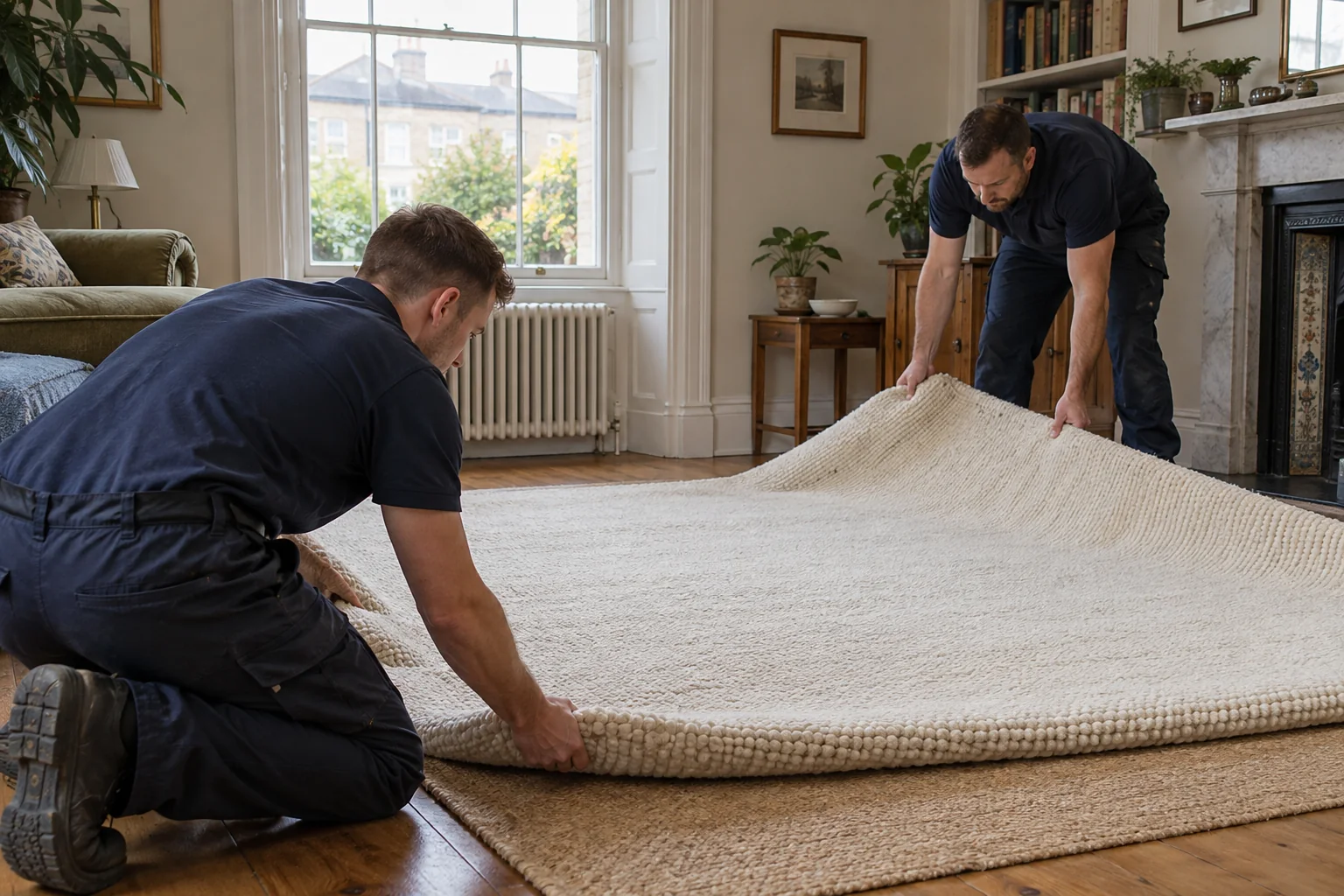
Loose rugs also need a handling plan. A rug resting on timber or laminate must not leave moisture trapped against the floor. Moving a heavy sofa or a large dining table is a separate practical question. Explain what stands on the rug and whether it can be safely cleared. Request carpet cleaning separately for fitted floor coverings; a rug’s construction and ability to be moved can call for a different treatment and drying arrangement.
| Detail | What to provide | Why it matters |
|---|---|---|
| Fibre | Label and any purchase information | Choice of moisture, chemistry and handling |
| Construction | Front, reverse and edge photographs | Foundation and backing sensitivity |
| Dimensions | Length and width including unusual shape | Work area and quotation |
| Condition | Stains, wear, curling and repairs | Realistic cleaning limits |
| Location | Floor underneath and nearby furniture | Protection and drying plan |
Materials
Why wool, viscose and plant fibres need different decisions
Wool can release a significant amount of dry soil while still looking reasonably tidy. It needs an approach that respects its texture, dyes and construction. Silk and some viscose rugs can show changes in pile direction, light reflection or texture, and they may be particularly sensitive to moisture or abrasion. A generic promise to clean every rug in the same way is therefore unhelpful. Where fibre identification is uncertain, it is better to discuss that uncertainty than to select an aggressive process.
Sisal, jute, seagrass and other plant fibres can develop water marks or dimensional changes if wetted inappropriately. A latex-backed rug may have a deteriorating backing that cleaning cannot reverse. Hand-knotted, tufted and machine-woven rugs have different foundations even when their surface patterns look alike. Fringes may be part of the foundation rather than decoration sewn on afterwards. Explain any previous shrinkage, dye movement or repair so that these risks inform the assessment rather than appearing as an unexpected complication.
| Rug type | Potential sensitivity | Discussion before work |
|---|---|---|
| Wool | Dyes, texture and drying | Suitable products and controlled moisture |
| Silk or viscose | Appearance, pile and water sensitivity | Specialist suitability and limits |
| Jute or sisal | Water marking and distortion | Whether wet treatment is suitable |
| Tufted with backing | Adhesive breakdown or delamination | Existing backing condition |
| Hand-knotted | Foundation, fringe and mixed dyes | Testing and handling requirements |
Preparation
Dry soil removal and testing come before stain ambitions
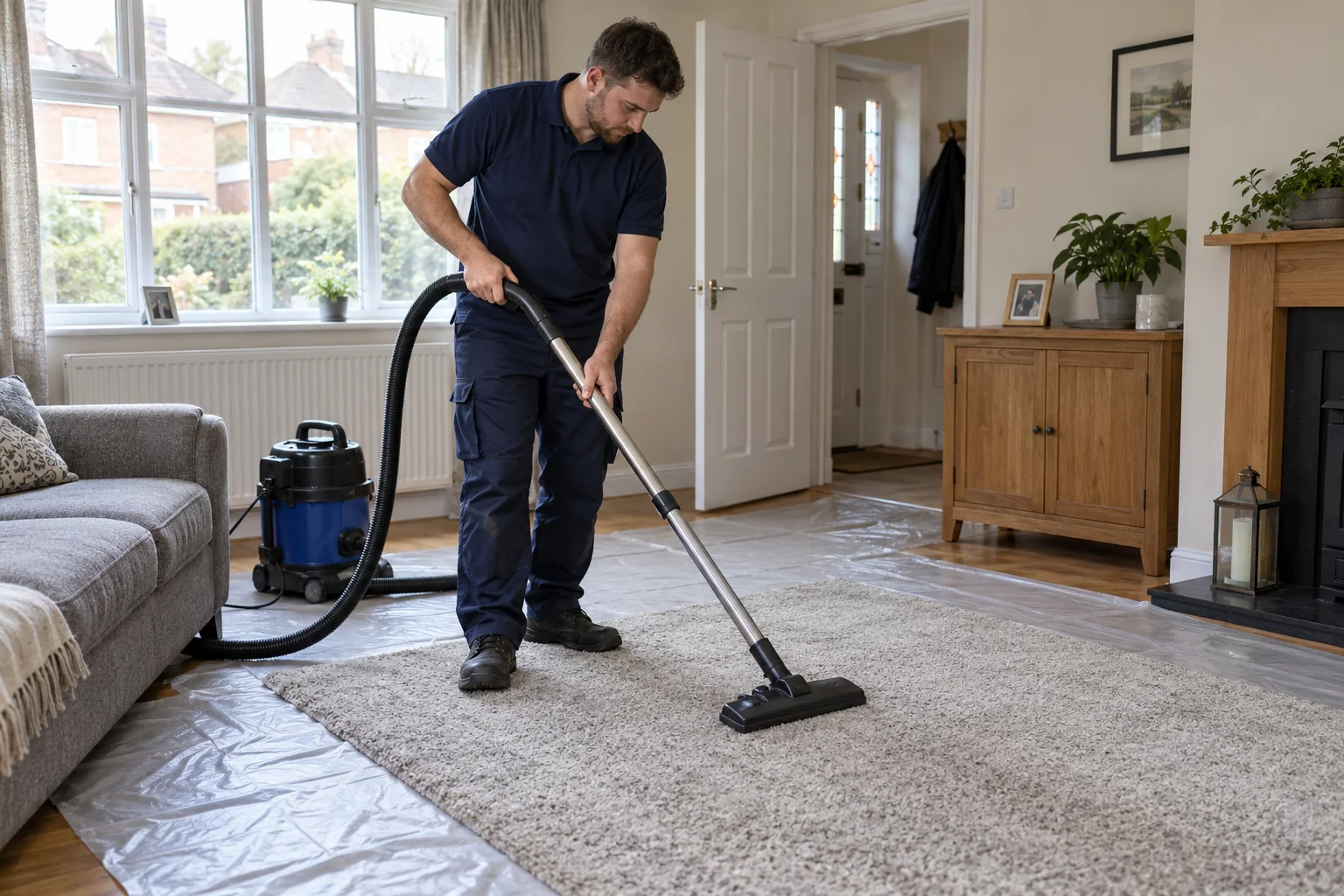
Loose grit can settle near the base of a rug’s pile, where walking works it against the fibres. A suitable dry-soil removal stage can be an important part of the overall process. The right technique depends on the construction and condition, especially where edges are fragile or fringes could catch in a rotating brush. Do not beat an old or delicate rug outdoors simply because a traditional method sounds harmless.
Before an overall clean, relevant tests may consider dye stability and how the fibre reacts to the proposed treatment. A test is a decision aid, not a guarantee against every hidden issue. Existing patchy colour can come from sun exposure, prior products, wear or uneven pile. Point out areas you have already treated and name the product if you can. Repeatedly adding household detergents can leave residue and make later treatment harder to evaluate. For a complete room refresh, discuss curtain cleaning as a separate textile task rather than using one product across different furnishings.
| Stage | Purpose | Customer contribution |
|---|---|---|
| Visual review | Record wear and existing damage | Show fragile edges and repairs |
| Dry soil removal | Reduce loose particulate material | Clear safe access around the rug |
| Relevant testing | Check response to the proposed treatment | Provide fibre and cleaning history |
| Floor protection | Avoid transfer to underlying surfaces | Identify sensitive flooring |
| Stain discussion | Set realistic priorities | Explain spills and previous products |
Method
Stains, odours and wear are different problems
A fresh spill, an old stain and a bleached patch are not the same thing. Cleaning can target removable contamination, but missing dye is a colour-restoration question. Sun fading and permanent wear will not disappear because the rug has been washed. Dye transfer from another item may also resist routine treatment. Be specific about what happened, how long the mark has been there and whether hot water or household chemicals have already been used.
Pet accidents need a careful discussion because contamination may extend into the foundation or the floor beneath. A surface fragrance can temporarily mask an odour without addressing its source. Complete odour removal cannot be assumed from photographs alone. Avoid applying bleach, concentrated vinegar or a mixture of cleaning products; these may alter dyes or fibres. If a rug is persistently damp, investigate the moisture source rather than booking repeated cleaning. The appropriate next step may include specialist advice, a different treatment scope or deciding that cleaning is unlikely to deliver the result you want.
| Concern | What cleaning may address | What may remain |
|---|---|---|
| Food or drink spill | Removable residue and some staining | Old or altered dye |
| Pet contamination | Treatable soil in the agreed area | Deep contamination or floor source |
| Sun fading | Accumulated surface soil | Permanent colour change |
| Flattened traffic lane | Soil affecting appearance | Wear and fibre loss |
| Old bleach mark | Residue if appropriate | Missing colour |
Finishing
Drying is part of the plan, not an afterthought
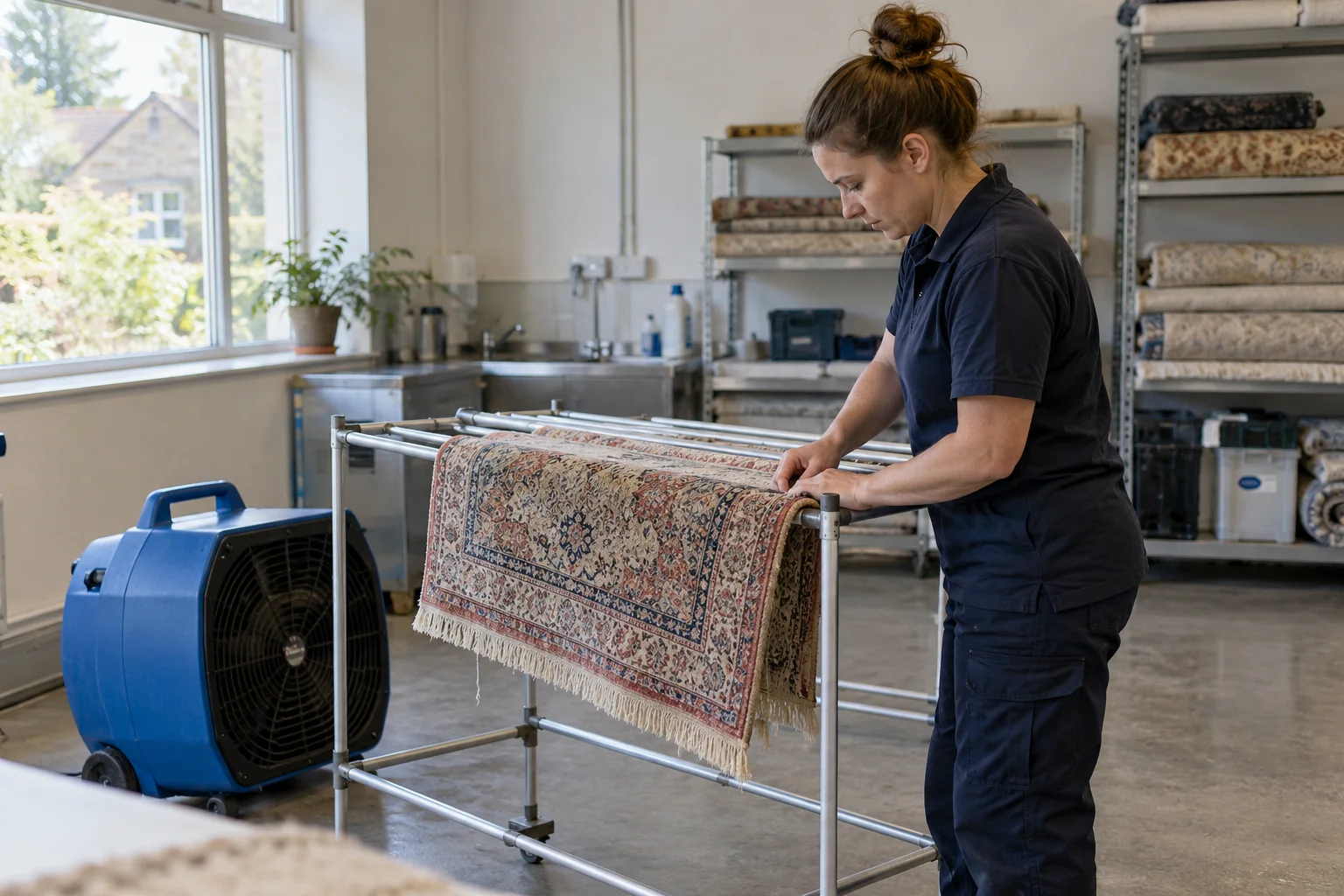
A rug should not be returned to ordinary use simply because its surface feels dry. The foundation or backing may retain moisture after the tips of the pile have dried. Fibre, thickness, ventilation, ambient conditions and the chosen process all affect drying. Ask what arrangement is proposed and how you will know when the rug can safely be placed back on its normal floor. Do not fold or roll a damp rug for convenience.
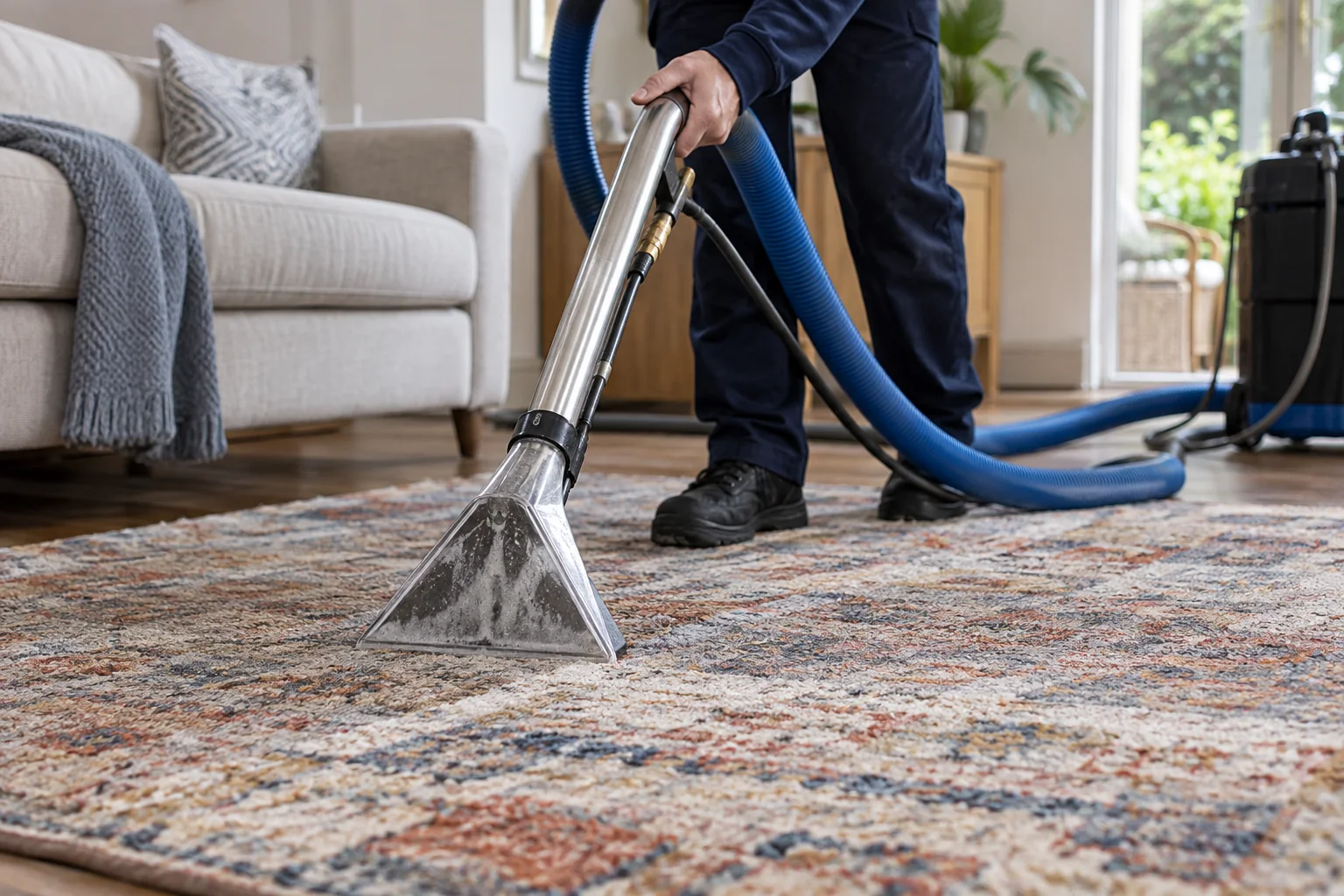
For an in-home process, discuss the space available, access to power if required and protection of nearby furniture and flooring. Some rugs may be better suited to a specialist off-site process; availability, collection and return must be confirmed in the quotation. If you are moving, allow time for the rug to be clean and fully dry before it is wrapped or taken into storage. Packaging a damp textile can create problems that no surface clean can prevent. Avoid high direct heat or improvised drying arrangements that could change the fibre or backing.
| Check | What to establish | Avoid |
|---|---|---|
| Drying location | Suitable supported space or facility | A damp rug on an unprotected floor |
| Air circulation | Ventilation appropriate to the setting | Sealing the rug in plastic too soon |
| Underlying floor | Dry and clean before replacement | Trapped moisture |
| Furniture | When items can be placed back | Heavy weight on a damp textile |
| Moving or storage | Fully dry before wrapping | Rolling a rug while damp |
Your quotation
A quotation should reflect the individual rug
Provide dimensions and photographs rather than relying on a description such as a large lounge rug. Mention fringes, unusual shapes, delicate fibres and any part that cannot be moved. The quotation may need to account for construction, soil level, stains, access and whether the rug can be treated at your property. Collection, off-site work, return delivery and protective treatments should be identified individually if proposed.
Request a rug-specific quotation based on the assessment. Ask for a written scope describing what is included, how special concerns will be assessed and what is excluded. A stain request should be recorded as a treatment objective rather than an absolute promise. If an inspection changes the suitable method, discuss the revised scope before work proceeds. When the rug is part of a move-out specification, coordinate with end of tenancy cleaning, particularly where furniture clearance and floor drying affect the order of work.
| Information | Planning consequence | Confirm in the quote |
|---|---|---|
| Size and number | Time and work area | Individual rugs included |
| Fibre and construction | Suitable treatment options | Any specialist assessment |
| Stains and odours | Testing and targeted work | Expected limitations |
| On-site or off-site | Handling and transport | Collection and return if applicable |
| Optional protection | Product suitability and additional work | Separate authorisation |
Planning
Keep the result looking natural between professional visits
Routine care should follow the rug maker’s guidance where available. Vacuum gently with an attachment suited to the fibre and avoid catching fringes. Rotate a rug when practical to distribute traffic and daylight exposure, and use an appropriate underlay that does not damage the floor beneath. Lift the edge periodically to check that the floor and backing remain dry and that an unsuitable pad is not leaving marks.
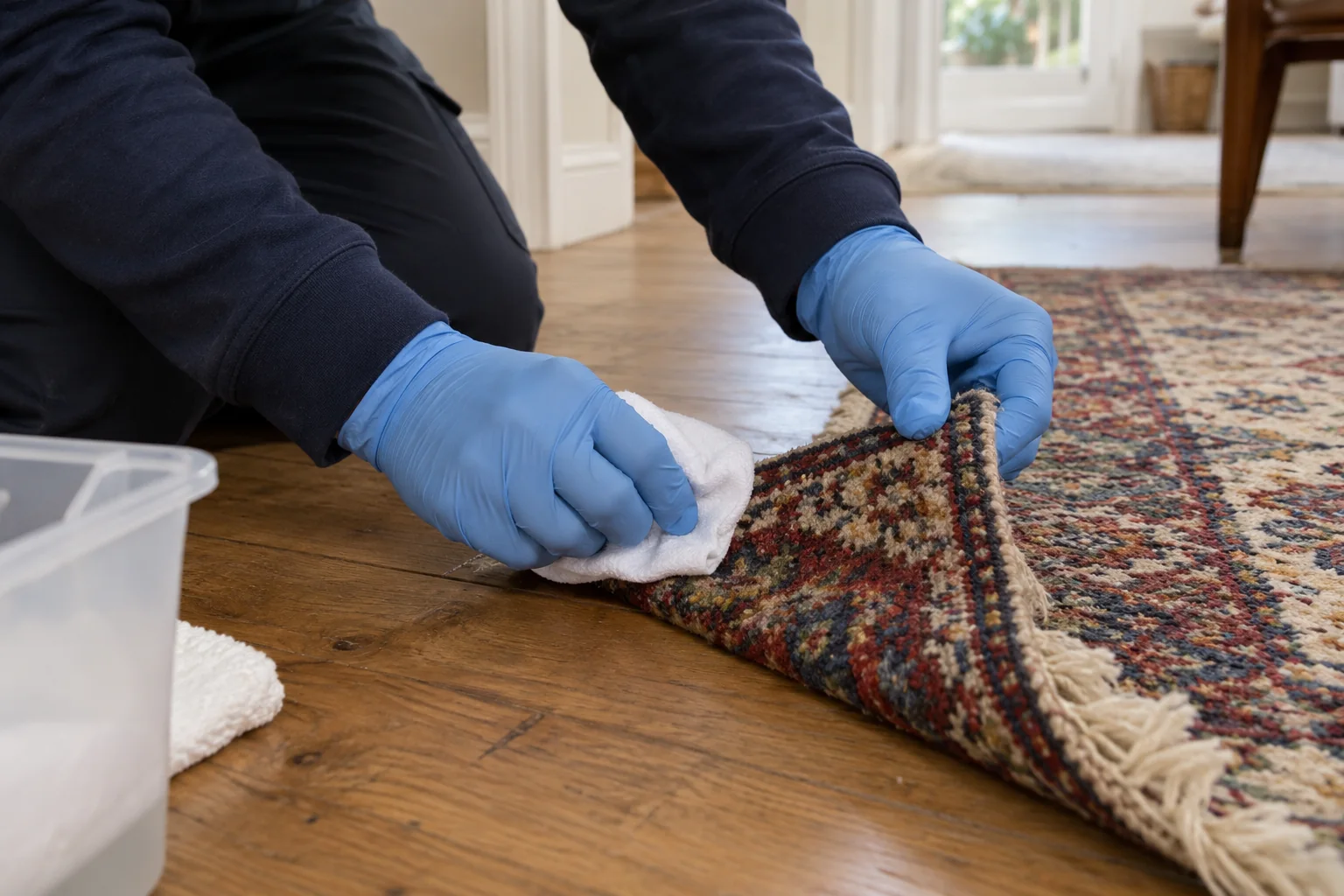
For a spill, remove loose material carefully and blot with a clean absorbent cloth rather than rubbing. Avoid making the wet area progressively larger through repeated improvised treatments. Seek advice for delicate or unknown fibres before adding water. Keep a record of any products used so that a later assessment has useful context. Cleanliness can improve the rug’s presentation, but it does not create a new textile: age, repairs and the character of natural fibres remain part of its appearance.
If the rug has sentimental or substantial financial value, mention that at the outset and explain any previous restoration. Keep purchase details, fibre information and specialist care instructions together. A high-value textile may justify a more cautious assessment or referral rather than an immediate booking. Photographs taken in daylight can also help distinguish a shadow in the pile from a change in colour. Avoid judging delicate fibres only under a single strong light: their appearance can change naturally with the viewing angle and direction of the pile.
Practical questions
The details worth asking.
Can you clean a rug without its label?
You can enquire without a label. Send clear photographs of the front, reverse and edges, and share any purchase information. Unknown fibre or construction may require further assessment before a method can be recommended.
Will every rug be steam cleaned?
No single process is appropriate for every rug. Moisture sensitivity, dyes, backing and condition affect the decision. Ask which method is proposed and why it suits the particular textile.
Can a rug dry on a wooden floor?
A drying arrangement must protect the floor beneath and avoid trapped moisture. Discuss the specific floor, rug and process; do not assume a surface that feels dry means the backing is also ready.
Can cleaning repair a moth-damaged patch?
Cleaning cannot replace missing fibres. An active pest issue and any repair need separate attention. Describe the damage before booking so that the next steps can be discussed appropriately.
What should I do after spilling wine?
Blot carefully with a clean absorbent cloth without rubbing. Avoid bleach or mixing products. Tell us what happened, what the fibre is if known and whether anything has already been applied.
Is fringe whitening part of a normal clean?
Fringe treatment needs to respect its fibre, dyes and relationship to the rug foundation. Aggressive whitening is not assumed or promised. Ask about the expected result for the actual condition.
Do you collect rugs for cleaning?
Ask whether collection and an off-site process are available and suitable for your rug. Transport, treatment, drying and return arrangements should be confirmed explicitly rather than assumed from a general cleaning enquiry.
When can I put the rug into storage?
Wait until it is fully dry throughout, including its foundation and backing. Discuss suitable wrapping and the storage environment. A clean rug can still develop problems if it is packed damp.