
Everyday care · Household routines
Housekeeping. A routine shaped around your home.
Housekeeping works best when the regular jobs have a clear order and the occasional jobs have a realistic place. Tell Move Out Mates which rooms need attention most, how the household uses them and whether you want help with linen or laundry. Build the visit around the work that matters.
- Choose essential tasks before optional household jobs.
- Discuss visit frequency and equipment arrangements.
- Keep a simple record of preferences and priorities.
The shape of the visit
Maintenance starts with a repeatable checklist.
Housekeeping is the ongoing care of an occupied home: cleaning kitchens and bathrooms, dealing with floor debris, dusting reachable surfaces and completing agreed household tasks. It is suited to people who want practical help keeping their home manageable rather than a complete property handover or a specialist treatment for a particular material.
Begin with the tasks that cannot wait, then add lower-priority work as the available time allows. A kitchen used for daily cooking may take priority over a spare room that is rarely occupied. A household with pets may prefer extra vacuuming time. The checklist should reflect those choices rather than treating every room as identical.
If accumulated dirt already needs extensive attention, a longer one-off deep clean may be the more suitable starting point. Ongoing housekeeping can then maintain the areas covered. A regular visit should not be described as automatically restoring heavily scaled fittings or removing old embedded stains in the same time as routine cleaning.
| Priority level | Examples to discuss | How to use it |
|---|---|---|
| Essential each visit | Kitchen surfaces, bathroom fittings and main floors | Place first on the agreed list |
| Household preference | Bed linen, light tidying or dishes | Specify time and supplies |
| Occasional rotation | Reachable skirting, door marks or spare-room dust | Rotate when essential work allows |
| Separate assessment | Embedded textile stains or heavy appliance grease | Discuss specialist or longer work |
The most-used rooms
Spend time where soil returns fastest.
In the kitchen, everyday housekeeping can cover worktops, the sink, cupboard fronts and appliance exteriors according to the agreed list. Washing-up and dishwasher handling need to be named so they do not unexpectedly consume the time intended for cleaning. Leave instructions for delicate cookware and appliances that require a particular care method.
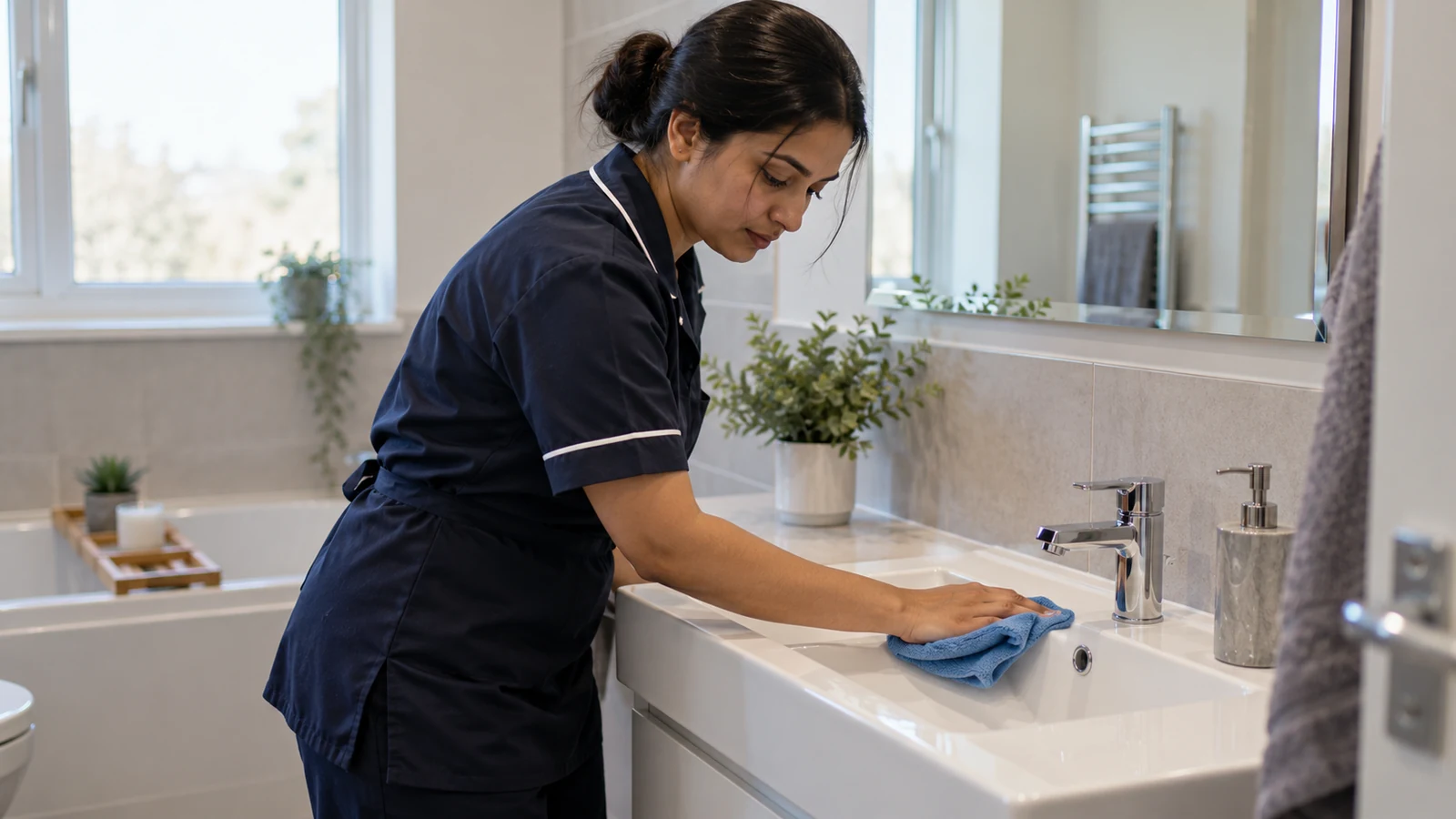
Bathroom work should distinguish ordinary surface soil from heavy mineral buildup or damaged seals. Appropriate cleaning depends on the finish: a natural-stone vanity, chrome tap and painted cabinet do not all tolerate the same products. In general practice, products are used according to the label, with toilet cloths kept separate from those used elsewhere.
Cleaning does not repair failed grout or a leak, and an old water mark may remain even after loose residue has been removed. Tell the team about vulnerable surfaces and existing damage. Do not request stronger products simply because a mark persists; the suitable response may be to stop and ask what the material can tolerate.
| Area | Routine work to discuss | Usually a separate question |
|---|---|---|
| Worktops and sink | Compatible wiping and ordinary residue removal | Deep staining or damaged surfaces |
| Appliance exteriors | Handles and accessible outside surfaces | Oven interiors and dismantling |
| Bathroom fittings | Basin, bath, shower and toilet surfaces | Severe scale or repair needs |
| Mirrors and accessible glass | Suitable surface cleaning | External glazing or high windows |
| Bins | Emptying into the agreed household route | Excess waste or disposal trips |
Comfort without moving everything
Reachable surfaces, useful floors and clear limits.
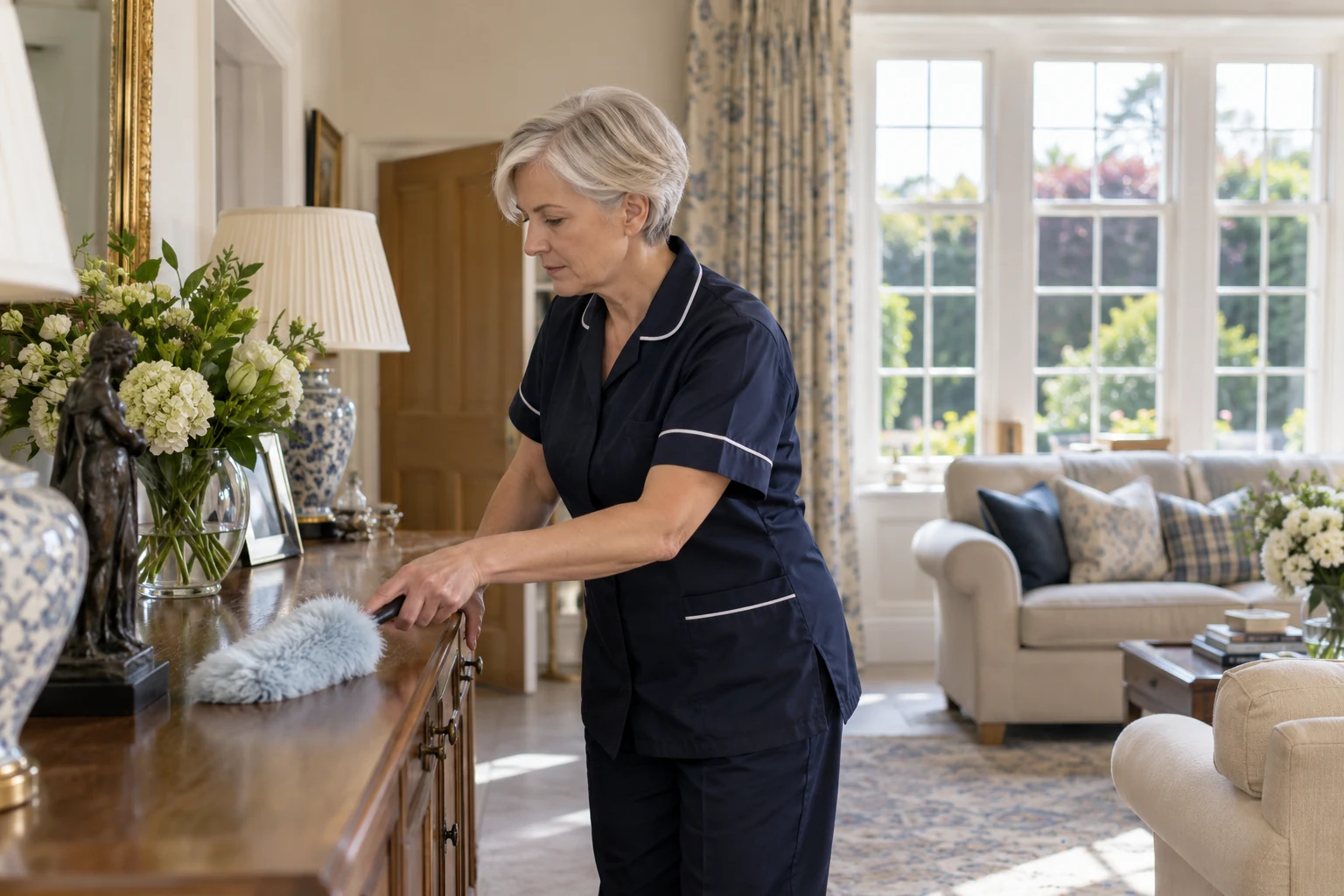
Living rooms and bedrooms usually combine dusting, vacuuming and floor care. Explain whether you prefer items lifted and replaced or certain ornaments left untouched. A brief discussion about fragile objects is more useful than assuming the cleaner can safely handle every displayed piece. Valuable or delicate items can be set aside before the visit.
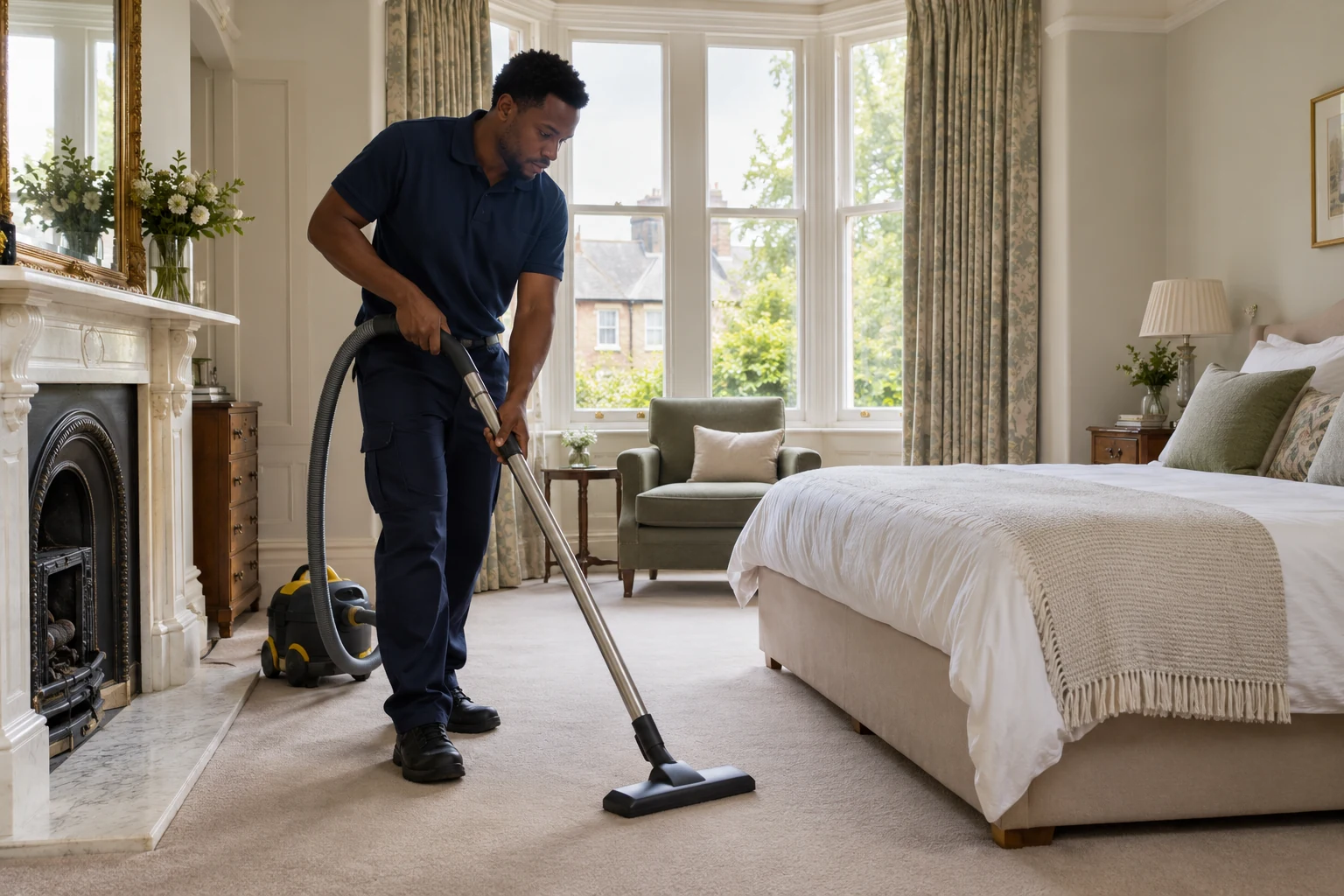
Vacuuming under accessible lightweight furniture is different from moving a large wardrobe or disconnecting electronics. Specify what can be moved and keep a route to the areas you want cleaned. For timber, laminate and other moisture-sensitive floors, the product and amount of water should suit the manufacturer’s care guidance.
Ordinary vacuuming removes loose surface debris from soft furnishings, but it does not replace specialist carpet cleaning or rug cleaning. Tell the team about recent spills, delicate fibres and any previous treatment so these can be discussed as separate work instead of scrubbed during a general visit.

| Task | Useful instruction | Boundary to agree |
|---|---|---|
| Dusting | Identify fragile items and no-touch areas | No assumption that valuables are handled |
| Vacuuming | Name priority rooms and pet-hair areas | Heavy furniture movement is separate |
| Mopping | Explain floor material and care preferences | Avoid excessive moisture on sensitive finishes |
| Bed making | Leave a complete clean linen set | Laundry is not implied by changing sheets |
| Light tidying | Provide known locations for items | Personal paperwork should not be reorganised |
Laundry, ironing and small jobs
Add household support with enough time to do it.
Laundry and ironing can be discussed alongside cleaning, but they need a clear brief. Separate items by their care instructions and identify anything that must not go in a tumble dryer. The cleaner should not have to guess whether a delicate garment is machine washable or whether a loose item belongs in a particular drawer.
A laundry cycle can take longer than the remaining visit even when loading the machine takes only minutes. Decide who will transfer or remove items if the cycle finishes later. Ironing also needs a suitable board, a safe appliance and realistic time; a large basket can reduce the cleaning completed elsewhere.
Housekeeping is not a substitute for personal care, childcare, pet supervision or professional home organisation. If you want belongings sorted, explain exactly what can be handled and where things belong. Disposal decisions remain with you, particularly for documents, medicines, sentimental items and anything whose value is unclear.
| Request | Prepare in advance | Clarify before booking |
|---|---|---|
| Laundry | Sorted items and care instructions | Who supplies products and finishes cycles |
| Ironing | Suitable board, iron and safe workspace | Time allowance and delicate items |
| Linen change | Complete set for each bed | Whether washing is also requested |
| Dishes | Instructions for delicate cookware | Whether handwashing or dishwasher use |
| Light organising | Named locations and clear boundaries | No assumed disposal of personal belongings |
A schedule the home can support
Frequency and condition need to match.
Weekly and fortnightly visits create different workloads. More time between appointments can mean more kitchen residue, floor soil and bathroom buildup, particularly in a busy home. The right schedule depends on occupancy and use rather than a universal number of hours for every property. Confirm which recurring dates are available and how changes should be requested.
The first appointment is an opportunity to see whether the priorities fit the booked time. If essential work regularly remains unfinished, review the list or duration instead of adding more tasks without an adjustment. You might rotate the spare room or postpone optional ironing while keeping the bathroom and main living areas consistent.
For a guest rental, holiday let changeovers have additional demands around arrival deadlines, replacement linen and restocking. For a property being vacated, end-of-tenancy cleaning addresses a handover scope. Choosing the appropriate service makes the brief clearer than asking an ordinary housekeeping visit to cover every situation.
Make the visit easy to start
Preferences, access and supplies belong in the brief.
Leave clear access to surfaces and floors, and put away private paperwork. Mention pets, alarm instructions and any rooms that should remain closed. If you work from home, identify meeting times or a quiet room so vacuuming can be planned sensibly. Cleaning access should not depend on the housekeeper guessing which door can be opened.
Confirm equipment and detergent arrangements before the visit. Tell the team what is available at home and ask what can be supplied for the agreed tasks. Explain allergies, fragrance preferences and materials needing particular care without assuming that every product is suitable for every home.
When asking for a quote, provide the property layout, room priorities, visit frequency and any laundry or ironing request. Call 020 3746 3110 to discuss the tasks and applicable price. Ask about the booking duration, changes and cancellation terms before confirming the schedule.
| Service | From price | What to agree | Additional information |
|---|---|---|---|
| Housekeeping visit | Task-based quote | Rooms, priorities and duration | Condition and frequency affect workload |
| Laundry or ironing | Confirm time allocation | Tasks, equipment and care instructions | Reduces time available for other work |
| Products and equipment | Confirm with booking | Who supplies suitable items | Do not assume every supply is included |
| Occasional extra tasks | Agree before the visit | Named tasks and additional time | Some work needs specialist assessment |
Practical questions
The details worth asking.
Should I tidy before the housekeeper arrives?
Clear the surfaces and floor areas you want cleaned and put away private or delicate items. Light tidying can be discussed, but extensive sorting uses time that would otherwise go towards cleaning.
Can the housekeeper focus on bathrooms and floors?
Yes, those can be stated as your requested priorities. Agree the list and available time so optional tasks do not displace the areas you most need completed.
Will the same person attend every visit?
Ask about the arrangement when confirming recurring appointments. Cleaner continuity and replacement availability should be discussed directly rather than assumed from the housekeeping service name.
Do I need to buy products?
Confirm the supply arrangement for your booking. Tell the team about surface requirements and product preferences so suitable equipment and detergents are available before work starts.
Can ironing be added to a normal clean?
Discuss it in advance and allow time. Provide care instructions and confirm access to a safe iron and board; a large ironing load can change how much cleaning fits the visit.
What should I do while working from home?
Name a quiet room and any meeting times. Agree access and the order of noisy tasks so the housekeeper can work without repeatedly interrupting or entering private spaces.
Will a routine visit remove heavy shower limescale?
Ordinary bathroom maintenance and extensive scale removal are different workloads. Describe the condition beforehand and identify the surface so a suitable scope and product approach can be discussed.
How can I change the checklist over time?
Keep a short priority list and discuss changes before the appointment. If new tasks take longer, review the duration or rotate lower-priority jobs rather than expecting every addition to fit automatically.