
Drapes and linings / A closer look
Curtain cleaning. Care for every layer.
Curtains collect dust through folds, hems and lining, while their different layers can react differently to treatment. A useful clean starts by understanding the whole curtain, including the parts hidden from the room.
- Face fabric, lining, trim and existing condition assessed together
- Cleaning method selected around textile care information
- Length, fullness and safe access included in the enquiry
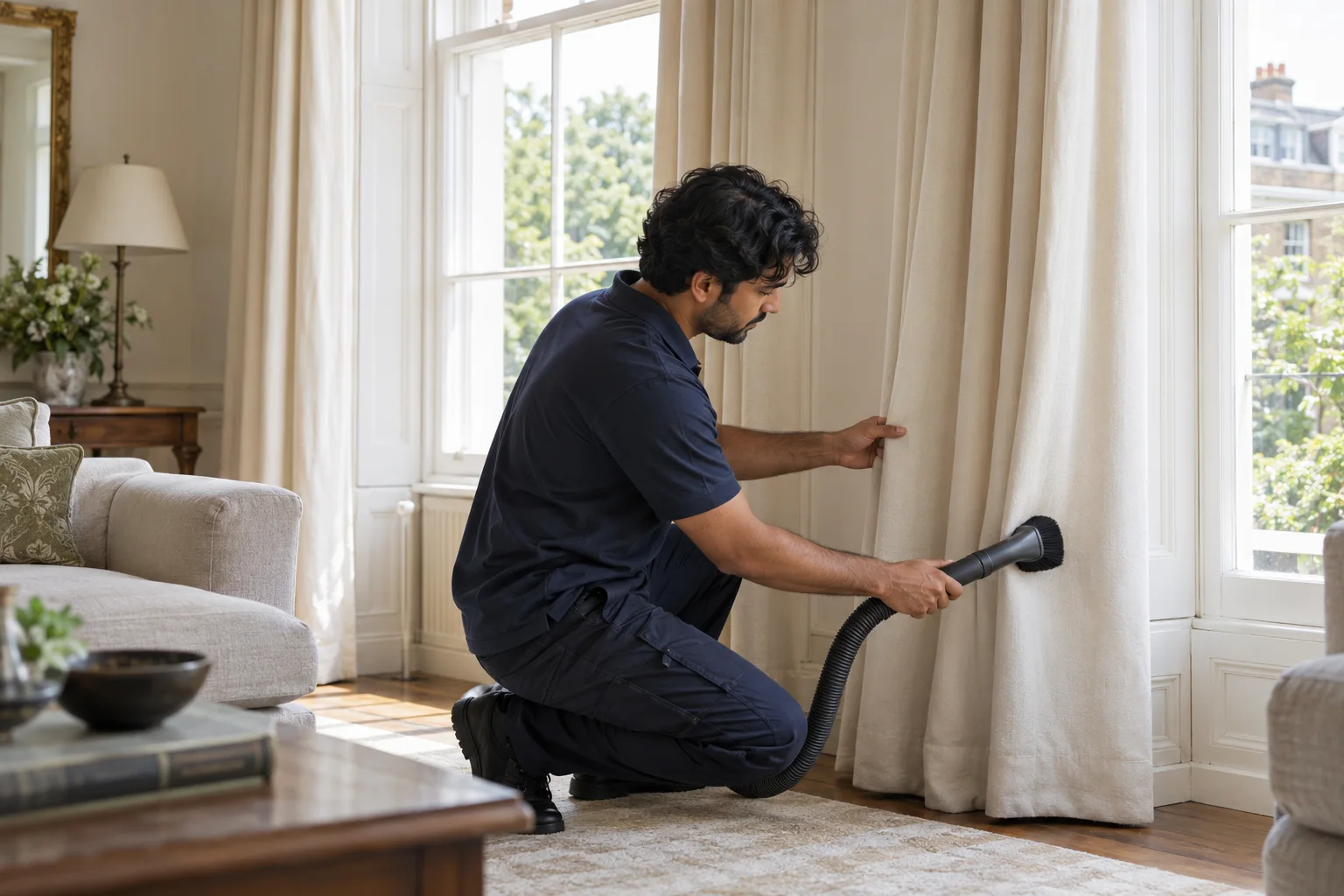
The face fabric is only half the brief.
A full-length curtain can include a decorative face, lining, blackout coating, interlining and stitched trims. Those materials do not always respond alike to heat, moisture or cleaning products. This is why a sensible curtain-cleaning enquiry needs more than the room count or the visible colour. Move Out Mates offers curtain cleaning, with the proposed treatment shaped by the item’s material and current condition.
The service can suit a room refresh, preparation before new occupants arrive, or attention to accumulated dust at lower hems and folds. It should not be confused with repairing seams, replacing linings or restoring sun-damaged textile. For a wider window refresh, blind cleaning covers a separate group of materials and mechanisms. Even where both sit at the same window, they need distinct assessments.
| Component | What to identify | Why it matters |
|---|---|---|
| Face fabric | Fibre, weave, dye and care label | Determines compatible cleaning options |
| Lining or interlining | Material, stitching and relative condition | Layers may respond differently |
| Blackout backing | Coating type and existing cracking | Moisture or handling may expose weakness |
| Trims and headings | Beads, tapes, pleats and hooks | Can limit handling and finishing |
Check the side nearest the glass.
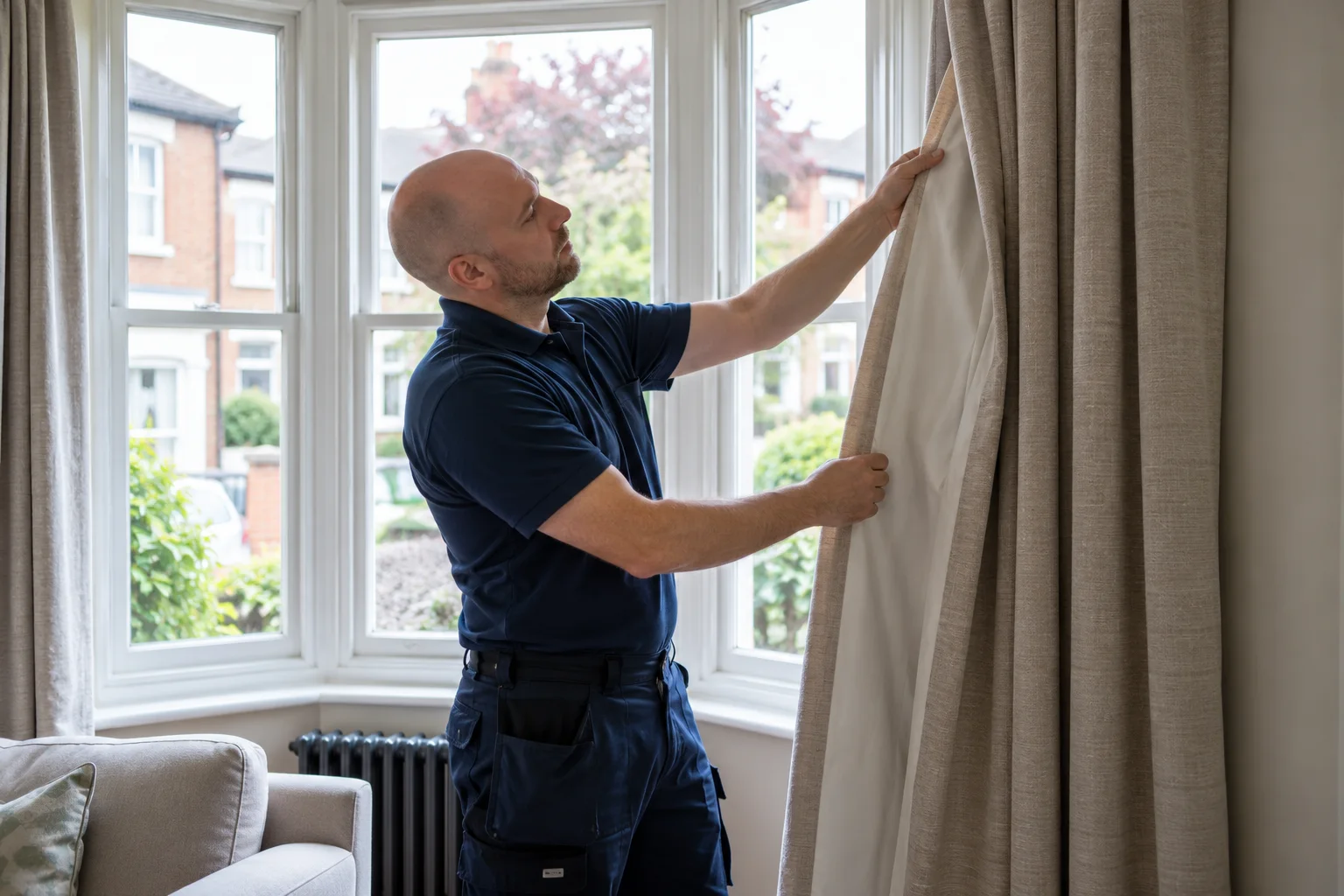
Curtains can look sound from the room while the window-facing lining is weakened by sunlight. Lower hems may carry water marks from condensation, and the leading edge may be touched daily. Tell us about fraying, tears, loose stitching, fading and any earlier shrinkage. Photographs of both sides and the label are useful, particularly when the curtains are bespoke or have no easy replacement.
A professional assessment can include a discreet test before a treatment is chosen. Colour transfer, surface texture and the relationship between face and lining all matter. No test removes every risk associated with old or fragile material. Where the fabric cannot safely accept the proposed process, a limited dry dust-removal approach or referral to another specialist may be more appropriate than pursuing a deeper clean.
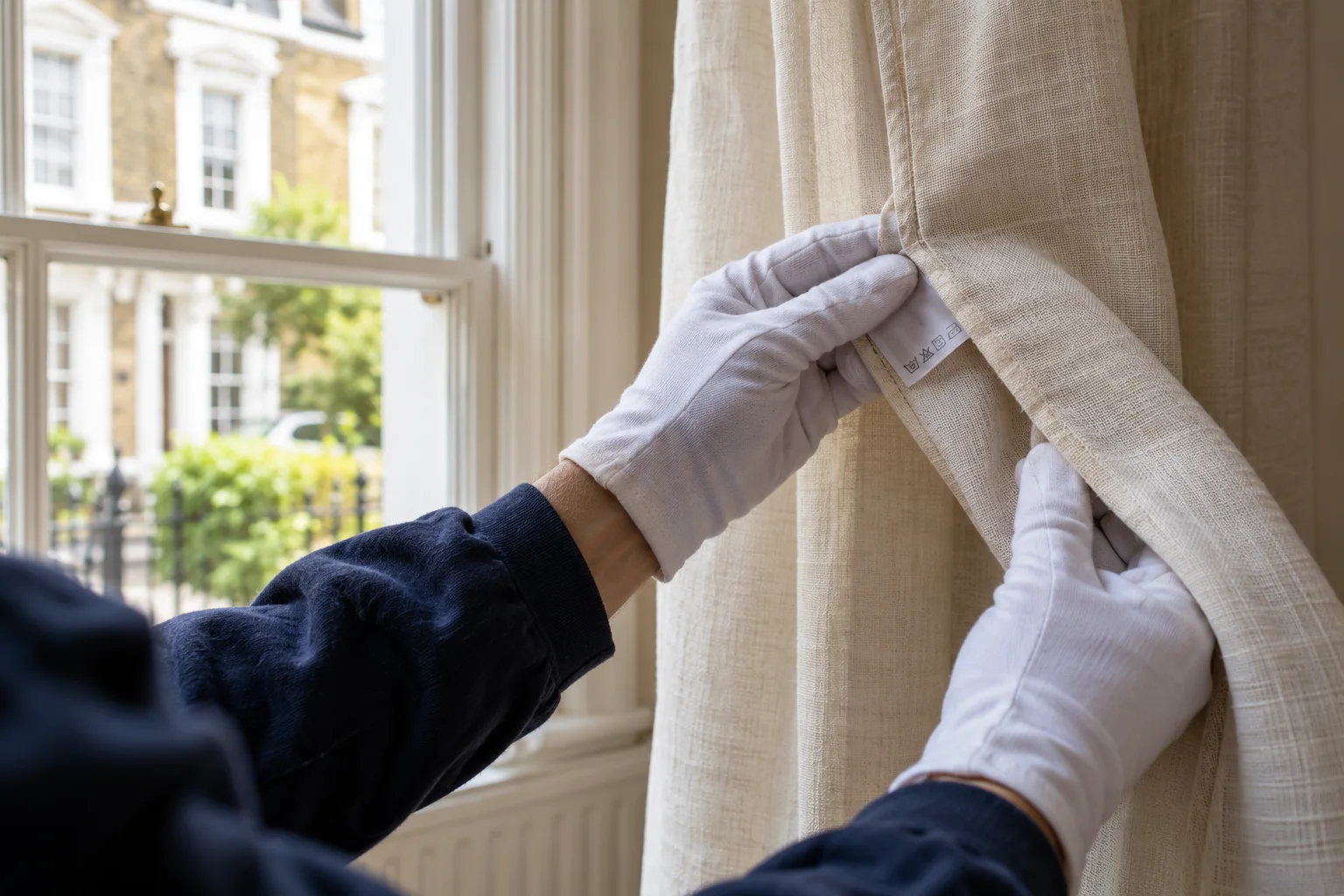
Choose a method around the textile.
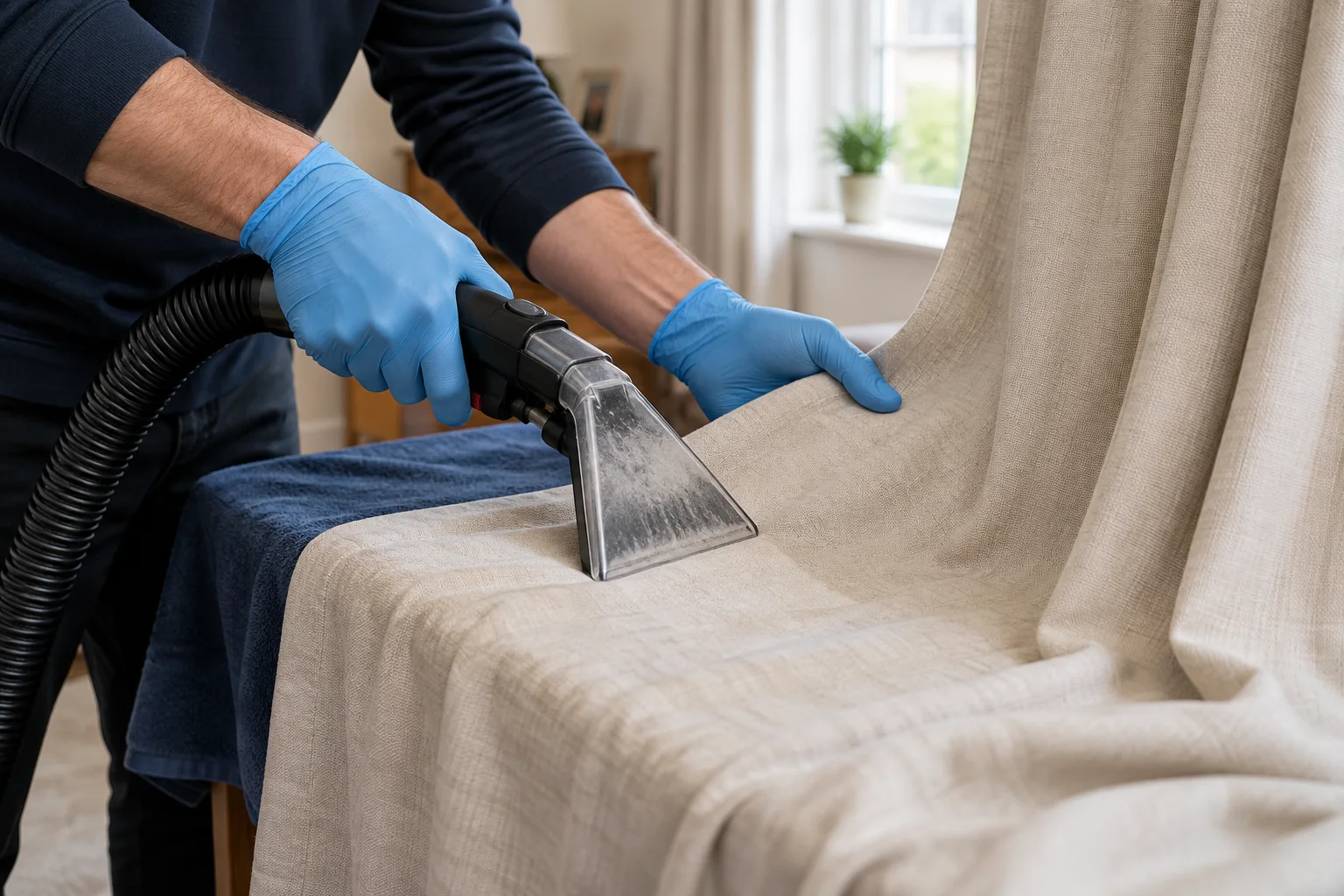
In general textile-cleaning practice, low-suction vacuuming can remove accessible surface dust. Suitable washable synthetic fabrics may be candidates for a controlled wet extraction method, while other textiles require specialist dry care. The label and condition guide that decision. “Dry” is not a single universal treatment, and “steam” should not be used as a loose promise that heat is safe on every curtain.
Ask which method is proposed for your actual items, whether they can stay hanging and what parts are included. Do not assume take-down, collection, off-site cleaning or rehanging are available within the same booking. Those tasks create their own handling, transport and access requirements. The useful agreement states the proposed process clearly, including any areas or components that will be left untreated.
| Approach | Potential use | Important check |
|---|---|---|
| Gentle dry vacuuming | Accessible loose dust on suitable textile | Fabric strength and suction tolerance |
| Controlled extraction | Some compatible washable fabrics | Dyes, lining, backing and moisture response |
| Specialist dry care | Items requiring a water-restricted process | Exact textile and available specialist method |
| Restricted or declined treatment | Fragile or incompatible material | Preserving the item may take priority over stain removal |
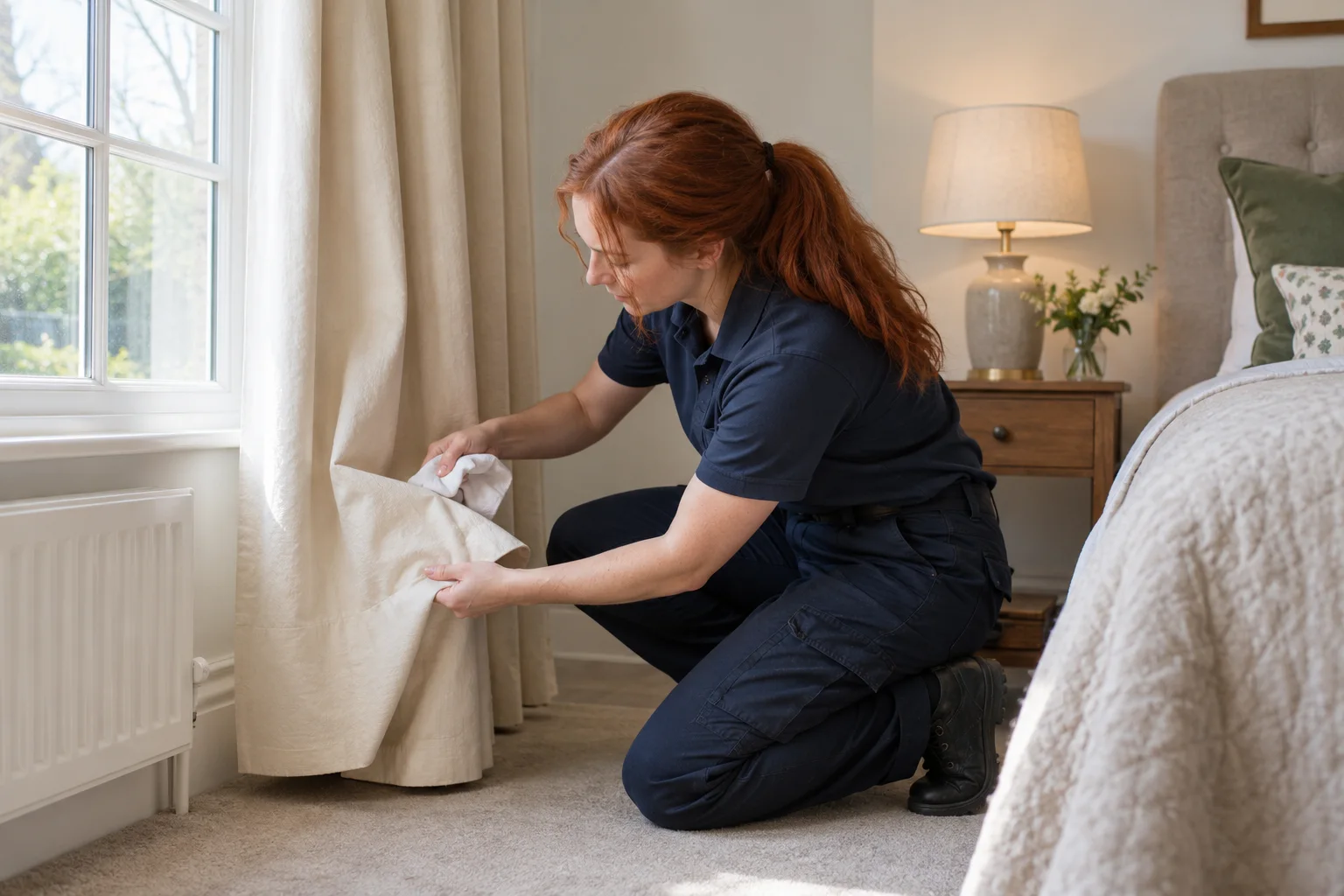
Separate removable soil from fabric change.
Dust at the hem may lift with suitable cleaning; a pale strip caused by sunlight will remain a colour change. Marks from drinks, smoke, water and previous stain products can each need different handling. Tell us what caused the mark, if known, and whether anyone has already treated it. Rubbing a delicate fabric or using an unsuitable home product can alter the surface before a cleaner sees it.
Odour improvement also depends on the source. Where a room has ongoing damp, smoke exposure or another continuing cause, treating the curtain alone cannot resolve the surrounding issue. Extensive spotting or visible deterioration should be disclosed before booking. Curtain cleaning is a textile service, not a building-damp diagnosis or a medical treatment, and no allergy or complete odour-removal outcome is promised.
| Visible issue | What to report | Possible limit |
|---|---|---|
| Dusty hem or fold | Where the curtain touches the floor | Embedded soil can need more than light vacuuming |
| Water ring | Leak or condensation history | A water mark may be permanent |
| Sun-faded edge | Which side faces direct light | Cleaning cannot replace lost dye |
| Local spill | Substance, timing and previous products | Stain removal depends on the fabric response |
Measure the curtains you want treated.
Count each pair or individual panel and give the approximate drop and width. The width of the closed window alone can understate the amount of material because pleats and fullness add textile. Say whether the curtains are half length, full length or pooled on the floor, and whether they are lined. A photograph showing the entire installation helps explain heavy headings, deep folds and access around furniture.
If some rooms have only light dust while others have heavily marked curtains, identify them separately. This avoids applying one assumption to every item in the property. For fitted carpets nearby, carpet cleaning can be discussed as an additional service, with its own area measurements and drying arrangements. Agree the sequence so clean textile is protected while other work is carried out.

| Item detail | Useful description | Planning value |
|---|---|---|
| Count | Pairs, single panels and separate linings | Prevents confusion over the number of items |
| Dimensions | Approximate drop and fabric width | Shows the amount of textile |
| Construction | Lined, interlined, blackout or decorated | Indicates material complexity |
| Condition and access | Photos of marks, rails and surrounding furniture | Helps scope safe handling and likely limits |
Give the window a working space.
Clear ornaments, plants and fragile objects from sills and nearby tables. Leave room for equipment and for the cleaner to reach the full curtain without leaning over a sofa or bed. Tell us about high rails, unusual pelmets, deep bays and restricted floor space. Safe access should be resolved at booking stage; standing on household furniture is not a substitute for a suitable plan.
Leave the curtains hanging unless removal has been explicitly agreed. Keep any original labels or care paperwork available, even if the information relates to the fabric before it was made up. If access depends on a keyholder, arrange enough time for the inspection and any questions. Keep pets away from the work area and discuss product sensitivities before the appointment rather than after a process has started.
| Before arrival | Action | Why it helps |
|---|---|---|
| Clear the surroundings | Move ornaments and loose fragile items | Protects belongings and opens access |
| Describe the fitting | Photograph rail height, pelmet and bay layout | Supports a safe method of reaching the textile |
| Keep care information | Have labels and fabric details ready | Helps choose a compatible approach |
| Avoid premature removal | Leave panels fitted unless told otherwise | Prevents unnecessary handling and fitting problems |
Quote the method and the handling.
Curtain quotations need to distinguish the amount of textile from the way it will be treated. A large interlined pair can demand very different handling from light unlined panels. Ask whether the estimate is per pair, panel, measured area or another basis, and whether any minimum appointment charge applies. The confirmed scope should also identify take-down, rehanging, travel or specialist work if those are required.
For a useful individual quotation, an enquiry with measurements, labels and photographs gives us a better basis for discussing your particular items. Active cleaning time also differs from the total period until the curtains are dry or ready to hang normally. If the room is needed immediately after the visit, mention that constraint before the treatment plan is confirmed.
| Quote component | What to establish | Potential difference |
|---|---|---|
| Cleaning unit | Pair, panel or measured area | Changes how the total is calculated |
| Material and method | Suitable treatment after assessment | Specialist processes may differ in cost |
| Handling | Whether take-down or rehanging is required | May be outside the core cleaning |
| Appointment arrangements | Access, minimum charge and drying needs | Affects the complete booking plan |
Let the textile settle properly.
After a treatment involving moisture, follow the advice for ventilation and drying before gathering the curtains tightly, tying them back or closing them against cold glass. Drying depends on fabric weight, lining, room temperature and airflow, so a fixed finish time cannot suit every installation. Do not add a hot iron or steamer as an improvised final step without checking compatibility with the face fabric and backing.
Between visits, gentle maintenance that follows the manufacturer’s guidance can reduce loose dust. Keep hems clear of wet floors and avoid spraying glass-cleaning products onto the fabric. If the surrounding panes also need work, arrange window cleaning with the curtain position in mind. For a fuller room refresh, discuss deep cleaning. Call 020 3746 3110 or send curtain details to start the enquiry.
Practical questions
The details worth asking.
Can you clean curtains without taking them down?
Some items may be suitable for an in-place process, but this depends on fabric, lining, condition and access. Ask which method is proposed for your curtains. Take-down, off-site work and rehanging should be confirmed separately if required.
Why do you need photographs of the lining?
The side facing the glass can show sun damage, water marks or fragile fabric that is not visible from the room. It may also have a different fibre or backing from the face material, affecting treatment suitability.
Will a blackout coating tolerate wet cleaning?
Not automatically. Coatings vary and may already be cracked, sticky or deteriorated. Share the label and close photographs. A cleaner may limit or decline a wet process if it risks affecting the backing.
Can cleaning correct curtains that have shrunk?
Cleaning does not reliably restore dimensions lost in a previous treatment. Tell us about existing uneven hems or earlier shrinkage so they can be recorded and considered when choosing any further process.
Should I measure the window or the fabric?
Provide the curtain drop and approximate fabric width, plus the number of panels or pairs. The window width alone misses the extra material gathered into pleats and folds, which can significantly affect the cleaning workload.
Can you guarantee removal of a water mark?
No. Water marks may involve dye movement, fibre change or contamination that has reached multiple layers. Explain the source and age of the mark; an assessment can clarify whether a suitable treatment is worth attempting.
Can I close damp curtains immediately after cleaning?
Follow the aftercare for the actual treatment. Avoid trapping damp fabric in tight folds or against cold glass until advised. Drying time varies with fabric weight, lining, airflow and room conditions.
Are rail repairs included?
Curtain cleaning does not automatically include rail, bracket, hook or track repairs. Mention loose or damaged fittings before the visit because they may affect safe handling and need attention from a suitable fitting service.