
Flat-pack furniture / A considered setup
Furniture assembly. From boxes to usable rooms.
The useful result is furniture that fits the room and follows its instructions. Share the exact items, delivery plan and intended position so assembly can be arranged around the parts, space and fixing requirements involved.
- Beds, wardrobes, desks, tables and shelving discussed by item
- Manufacturer instructions and component checks guide the work
- Wall fixing, moving and packaging arrangements clarified in advance
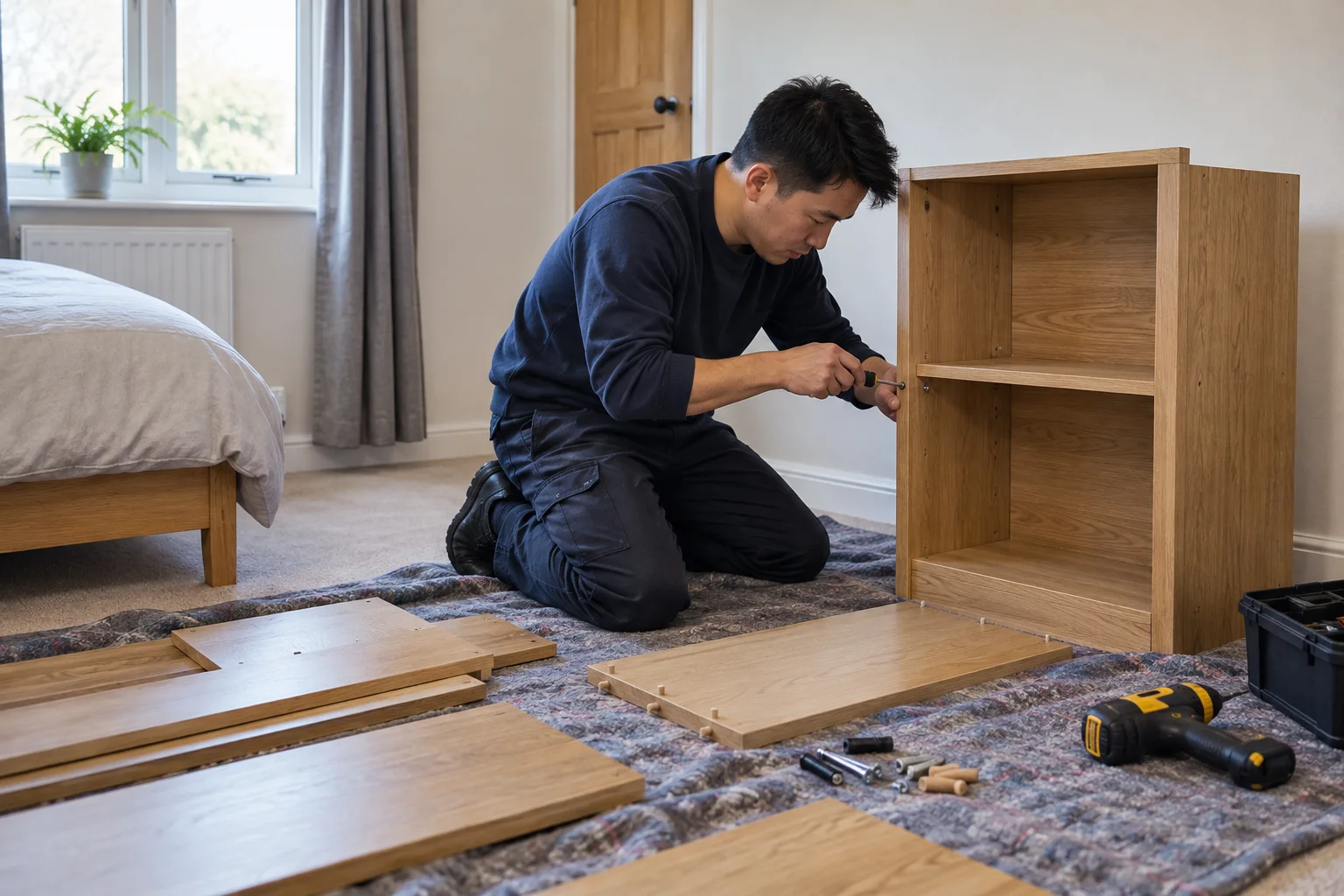
Begin with the model, not “a wardrobe”.
Two wardrobes can arrive in a similar number of boxes and require very different work. Hinged or sliding doors, internal drawers, lighting and the height of the frame all influence assembly. A bed with storage mechanisms is not equivalent to a simple frame. Move Out Mates offers furniture assembly for a range of common home items; the exact product list is the most useful starting point for a quote.
Send the retailer’s product link, model name, quantity and photographs if the item is already unpacked. The existing service covers items such as bookcases, beds, wardrobes, desks and dining furniture, following the manufacturer’s assembly instructions. Tell us whether the furniture is new or being reassembled after a move. Used fittings, swollen panels or earlier modifications can change whether an item can be put together satisfactorily.
| Item | Useful product detail | Reason |
|---|---|---|
| Wardrobe | Height, door type and internal fittings | Affects space, handling and assembly sequence |
| Bed | Frame size and storage or lifting mechanism | Moving components can add complexity |
| Desk | Frame, drawers and any powered adjustment | Different mechanisms need different instructions |
| Bookcase or drawers | Dimensions and fixing requirements | Position and restraint need planning |
Check the finished item and the assembly space.
Measure the intended position before booking. Include skirting boards, radiator projection, door swings and socket locations rather than measuring only the flat wall. Tall furniture may need clearance to be raised from a horizontal build, depending on the instructions. Sliding-door units and large beds also need enough room to work around them during assembly. A product that fits once upright may still be difficult to assemble in a crowded room.
Clear the route from the delivery point to the room and tell us about stairs, tight landings or lift restrictions. Assembly should take place in the final room where practical, because a completed unit may not fit through the doorway afterwards. If you need boxes or old furniture moved between properties, discuss home removals as a separate handling service rather than assuming delivery is part of assembly.
A parts check prevents the wrong start.
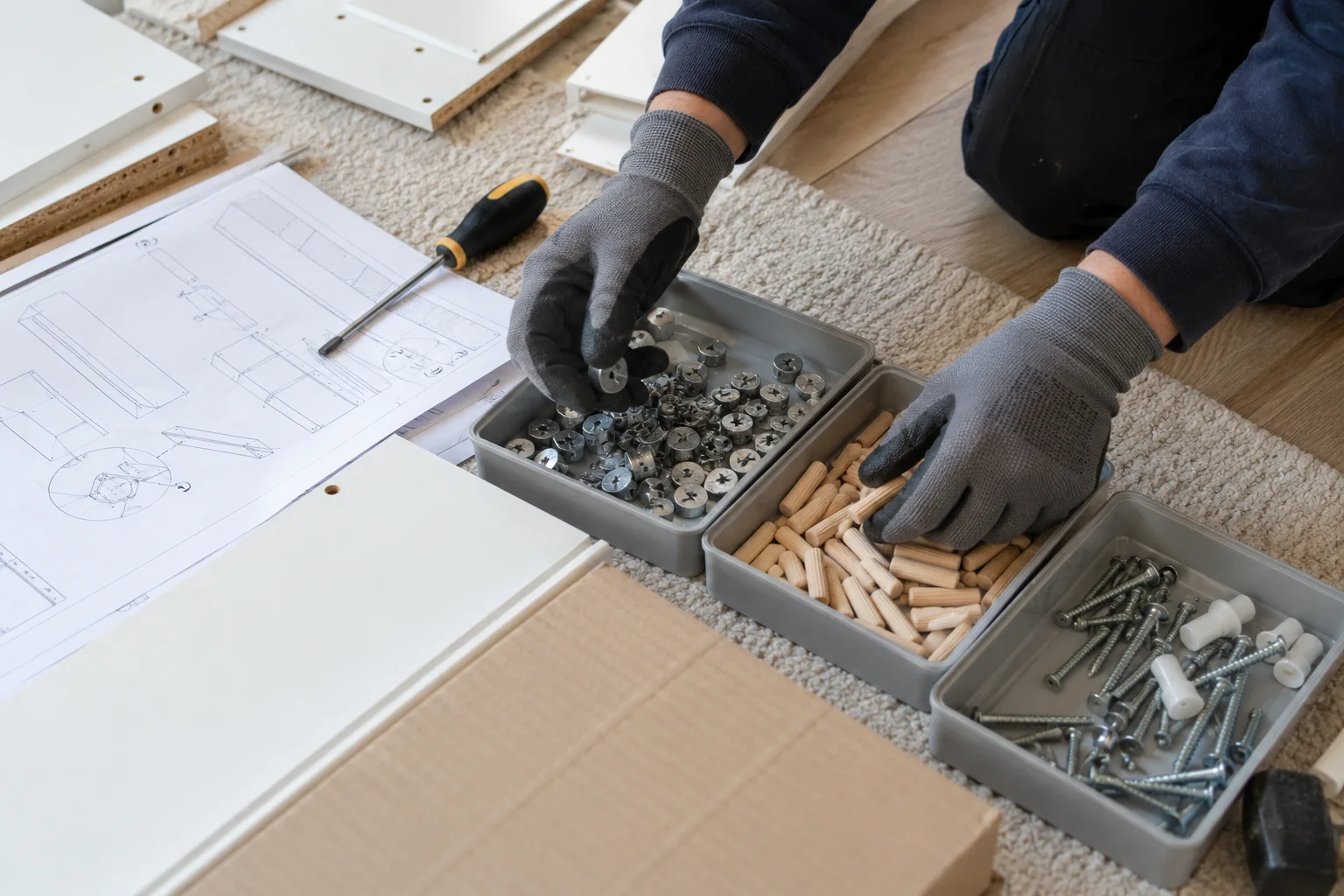
Keep all boxes for each model together, including small separate hardware packs. Manufacturer packaging often divides one item across several numbered cartons. Check the delivery note before the appointment and report obvious damage to the retailer. If a box is missing, an assembler may be unable to proceed even when most large panels are present. Do not discard labelled packaging until the product has been checked.
The practical first stage is identifying panels, fittings and instructions, then checking that the intended assembly can proceed. Dowels, cam locks and similar-looking screws are not always interchangeable. Missing specialist fittings should be obtained from the supplier rather than replaced by an improvised fastener without an appropriate assessment. If a problem interrupts the work, agree how the item will be left and what a further visit would involve.
| Component group | Customer check | Why it matters |
|---|---|---|
| Cartons | All numbered boxes for each product are present | One missing box can stop the build |
| Fittings | Hardware packs kept with the matching item | Small components are often model-specific |
| Instructions | Printed guide or current product document | Provides the intended order and fixings |
| Damaged parts | Photograph and notify the retailer | Cleaning or assembly cannot repair a split panel |
Follow the sequence, then check the moving parts.
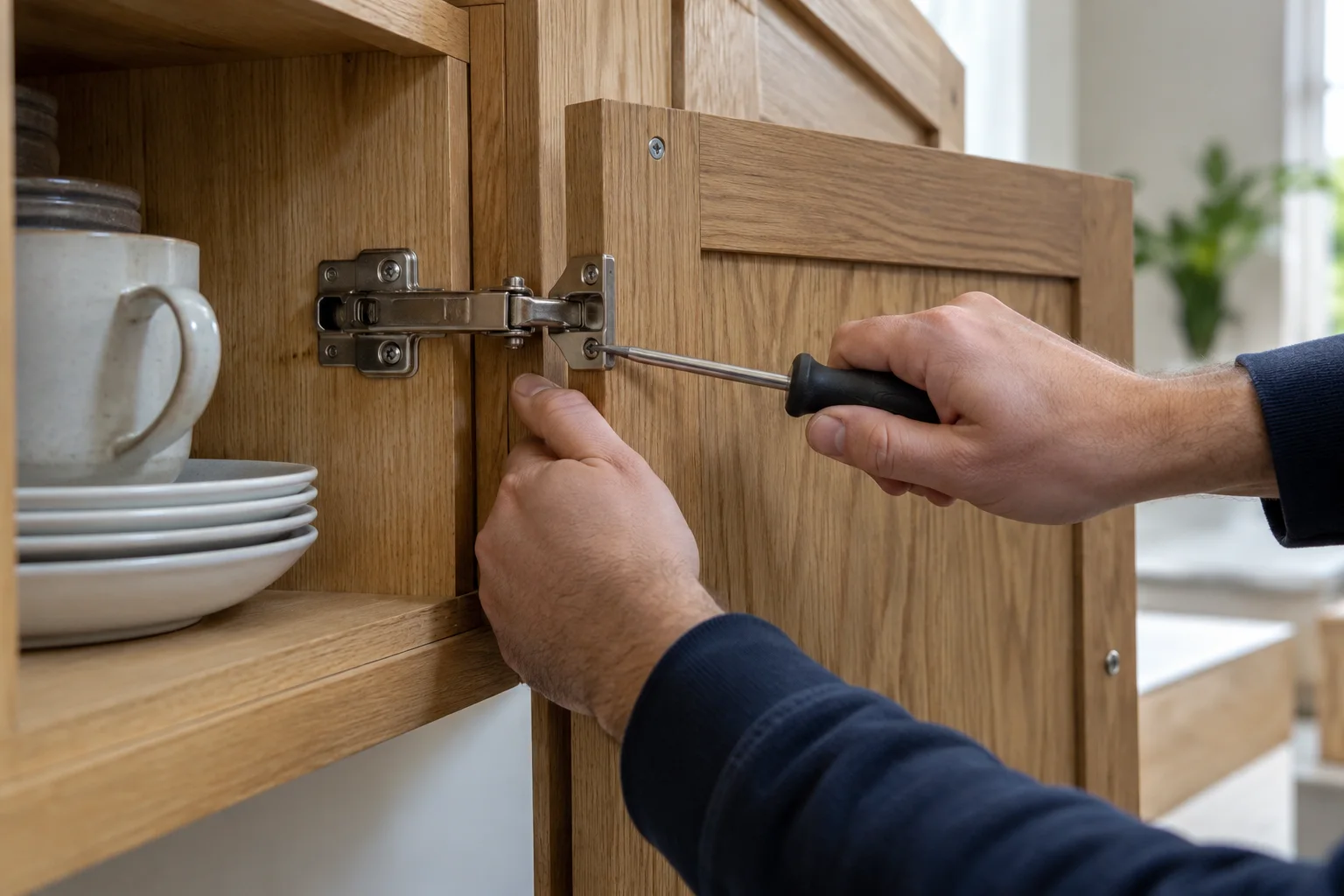
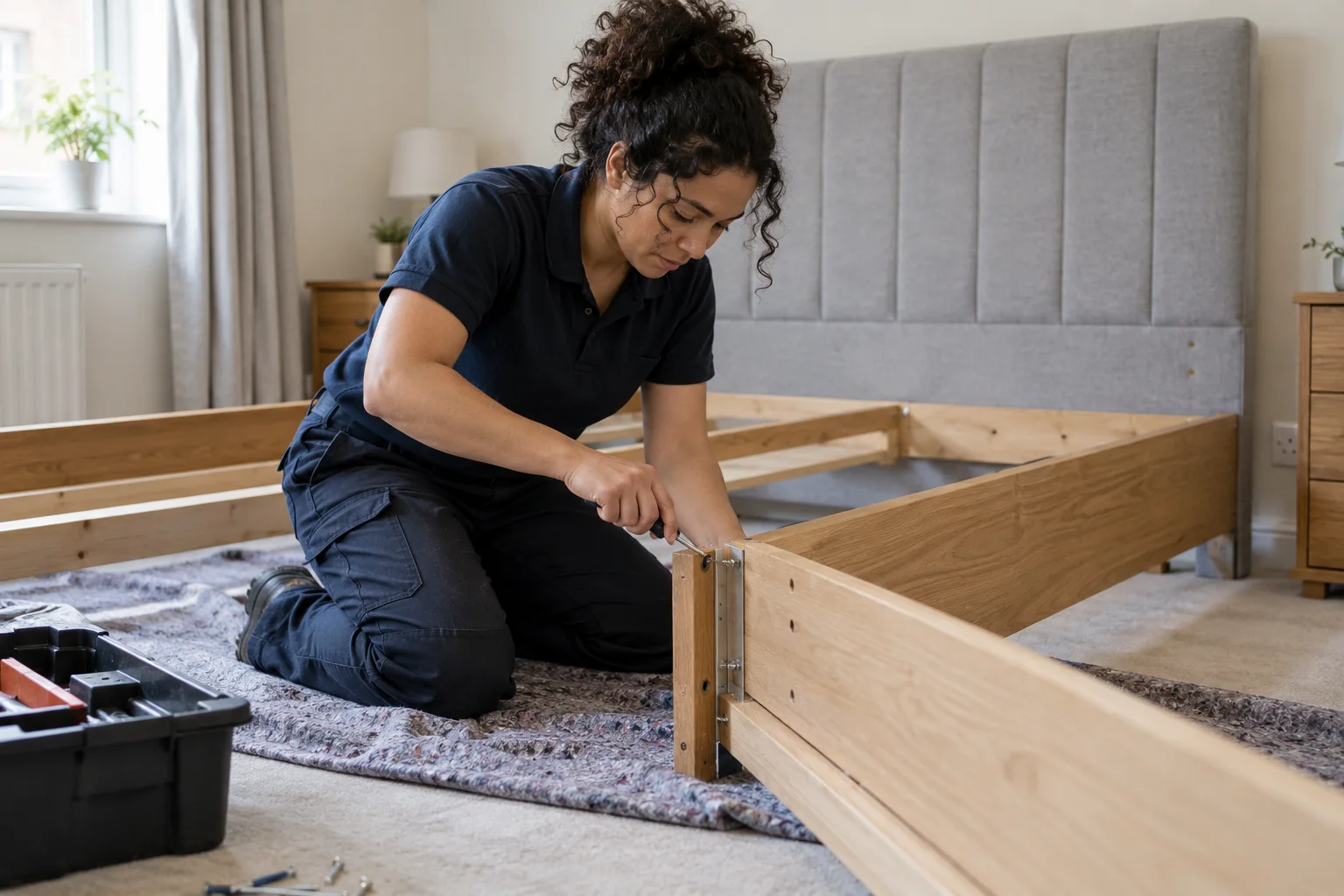
A methodical assembly normally protects the working floor, lays components out and follows the manufacturer’s order. Frames are joined before doors and drawers are adjusted; moving mechanisms are fitted according to the supplied instructions. Tools are selected for the fastener and material rather than using power by default. Over-tightening into chipboard can damage a fixing even if the joint initially feels tight.
The existing Move Out Mates service information states that assemblers bring tools. Confirm any unusual requirement when enquiring, particularly specialist mechanisms, very large panels or proprietary fittings. At the end, doors and drawers should be checked for their intended movement and alignment, and any outstanding issue discussed. Assembly is not custom joinery: changing panel sizes, cutting worktops or adapting an item to a different design needs separate agreement and may be outside the service.
| Stage | Purpose | Point to clarify |
|---|---|---|
| Layout and floor protection | Keep components organised and surfaces protected | Enough clear space in the final room |
| Frame assembly | Follow the intended joining order | Correct model-specific fittings |
| Doors, drawers or mechanisms | Fit and adjust moving components | Instructions and any existing damage |
| Completion review | Check the agreed item and remaining tasks | Outstanding restraints or missing parts |
Wall fixing deserves its own discussion.
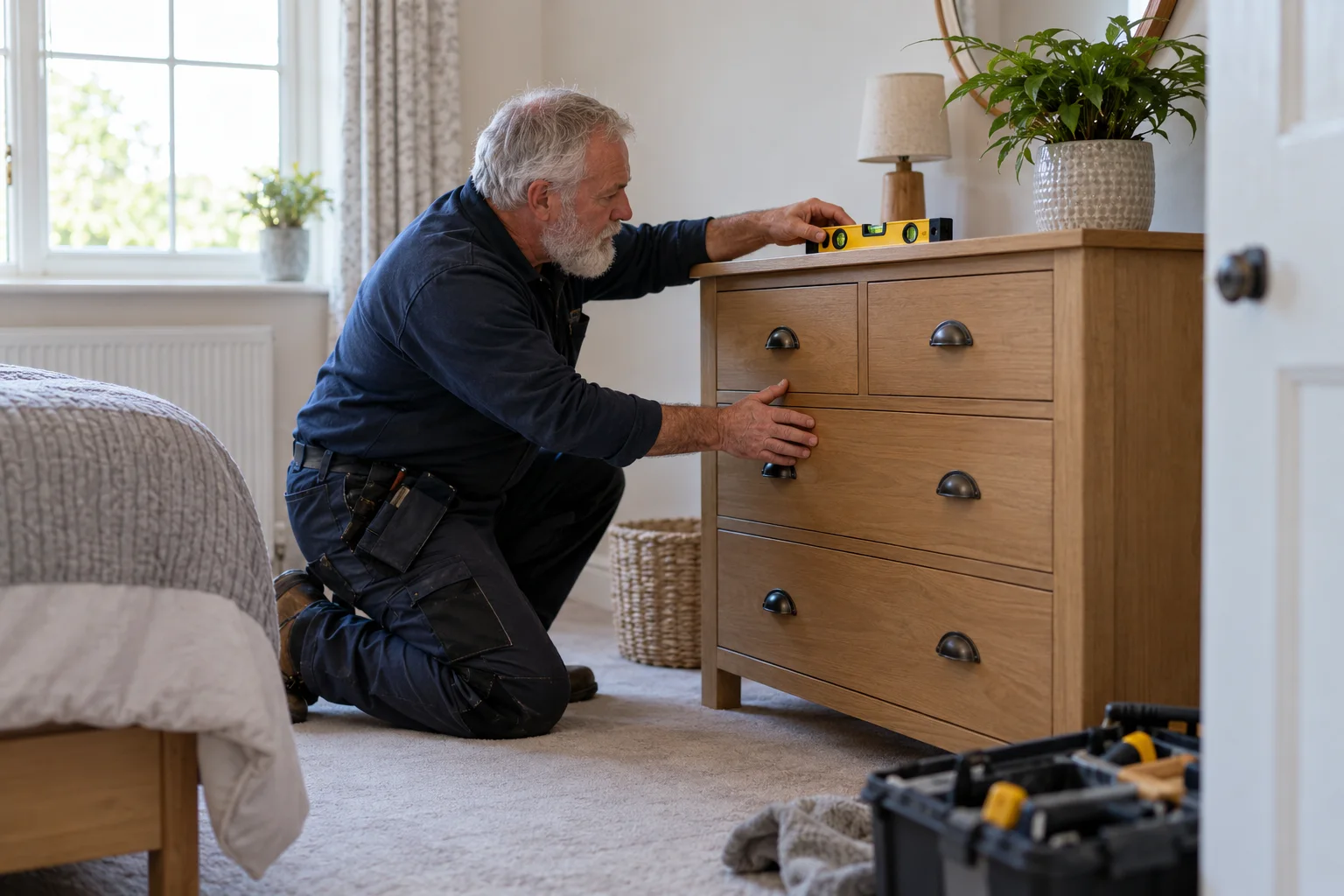
Many tall or storage items have manufacturer instructions requiring attachment to a wall. Do not treat a finished-looking cabinet as ready for use if a required restraint remains outstanding. Tell us about the wall type, tenancy restrictions and the intended location before booking. Plasterboard, masonry and other constructions need appropriate fixings; the screws supplied with furniture may not suit every wall.
Confirm whether wall attachment is included and whether the proposed location can be assessed safely. Permission from a landlord may be needed where you are renting. Unknown services in the wall, unsuitable substrates or a location that prevents correct fixing can limit the work. An assembler should explain an unresolved requirement rather than silently omit it. Keep drawers unloaded and follow the manufacturer’s use restrictions until all required work is complete.
| Requirement | Information to provide | Boundary |
|---|---|---|
| Manufacturer restraint | Instruction showing required wall attachment | Do not assume it is optional |
| Wall construction | Known masonry, plasterboard or other substrate | Fixing must suit the actual wall |
| Permission | Owner or landlord agreement where relevant | Resolve before drilling is planned |
| Final position | Skirting, clearances and intended access | Moving later can affect the restraint |
Let the room be a workspace for a while.
Remove small valuables, rugs, fragile decorations and loose cables from the working area. Keep children and pets away from tools, unassembled panels and small fittings. Make sure there is adequate light and ordinary power access if needed. If several rooms are involved, decide the priority order and keep each product’s cartons in the correct room where safely possible. This avoids spending the appointment identifying scattered parts.
Choose an appointment after the delivery has actually arrived, allowing time to check the cartons. A delivery estimate is not the same as confirmed possession of all parts. If the room has just been decorated or cleaned, let us know about curing paint or damp carpet. Carpet cleaning should have enough drying time before large furniture is returned to the floor, while room cleaning can be planned around the build.
| Preparation | Customer action | Benefit |
|---|---|---|
| Confirm delivery | Check every carton and product reference | Avoids booking around missing parts |
| Clear the room | Provide floor area around the intended position | Creates room to build safely |
| Organise products | Keep fittings and instructions with each item | Prevents mixed components |
| Agree priorities | List the order of items and any deadline | Helps plan a multi-item appointment |
Complexity is more useful than a box count.
A quotation should identify the exact furniture, quantity and expected work rather than rely on “three boxes”. Send product links and describe any dismantling, reassembly, wall attachment or movement needed. Access and assembly space also affect planning. A small straightforward item may take a limited appointment, while a complex wardrobe or several rooms can require considerably longer. The estimate should be based on your models rather than an arbitrary universal duration.
For your particular furniture, ask for the charging basis, any minimum booking, and how additional time or extra items would be handled. If a component is missing on the day, do not assume sourcing it or making a return visit is included. Keeping the scope explicit lets you compare quotations for the same work and understand what remains to arrange.
| Quote factor | Detail to send | Planning effect |
|---|---|---|
| Product specification | Retailer link, model, options and quantity | Defines the actual assembly |
| Condition | New flat-pack or previously assembled item | Reassembly may involve worn fittings |
| Extra work | Dismantling, restraints, movement or disposal request | Needs explicit scope and availability |
| Property access | Floor level, stairs, parking and workspace | Affects handling and setup |
Agree the handover and the packaging.
Check the completed furniture with the assembler where possible. Review door alignment, drawer travel and any required restraints or outstanding parts. Keep the instructions and spare fittings for future adjustment or a later move. Follow the manufacturer’s loading limits and do not modify a mechanism or remove a restraint after the visit. Furniture assembly does not certify a defective product or override its original care instructions.
Clarify packaging collection and disposal before booking. Tidying the immediate working area and removing bulky cardboard from the property are different tasks. If the furniture will be stored rather than used, see storage and consider whether keeping an item flat-packed is the better option. For your assembly enquiry, send the product list or call 020 3746 3110 with the delivery date and room details.
Practical questions
The details worth asking.
What information do you need about a flat-pack wardrobe?
Send the product link, model, dimensions, door type and internal options, plus the number of cartons delivered. Photographs of the room and intended position help assess assembly clearance and any required wall attachment.
Can you assemble furniture before all boxes arrive?
Usually the complete set of model-specific parts and fittings is needed. An incomplete delivery may prevent progress or leave an unsafe unfinished item. Check all cartons against the delivery note before arranging the appointment.
Is wall attachment automatically included?
Confirm it explicitly. Some products require restraints, and the suitable fixing depends on the wall and permissions. An item requiring attachment should not be treated as ready for normal use while that requirement remains unresolved.
Can you repair split panels during assembly?
Assembly is not a substitute for replacing damaged components. Photograph damage and contact the supplier. A split panel or failed fixing can affect the product’s strength, so an improvised repair should not be assumed acceptable.
Will you collect furniture from the shop?
Do not assume collection or delivery is included with assembly. Explain any transport requirement in advance so availability and a separate scope can be discussed. The assembly appointment should follow confirmed arrival of the required items.
Can you reassemble an old bed after a move?
Enquire with the model and condition, including missing bolts, earlier repairs or damaged joints. Previously assembled furniture can have worn fittings, so suitability and the work needed should be assessed rather than assumed from its appearance.
Do you remove all the packaging?
Confirm disposal arrangements in your quote. Keeping the immediate workspace tidy is different from transporting bulky cardboard or old furniture away from the property. Keep product labels and packaging until the item has been checked.
How much space do you need to build a tall unit?
It depends on the product’s instructions and whether it is built horizontally or upright. Send ceiling height and room photographs, including obstructions. A unit fitting in its final position does not automatically mean there is enough assembly clearance.