
The Moving Journal / Practical notes
Small-space storage ideas that leave the room usable
The best storage solution does not merely hide contents. It leaves doors opening, walkways clear and the things you use easy to find.
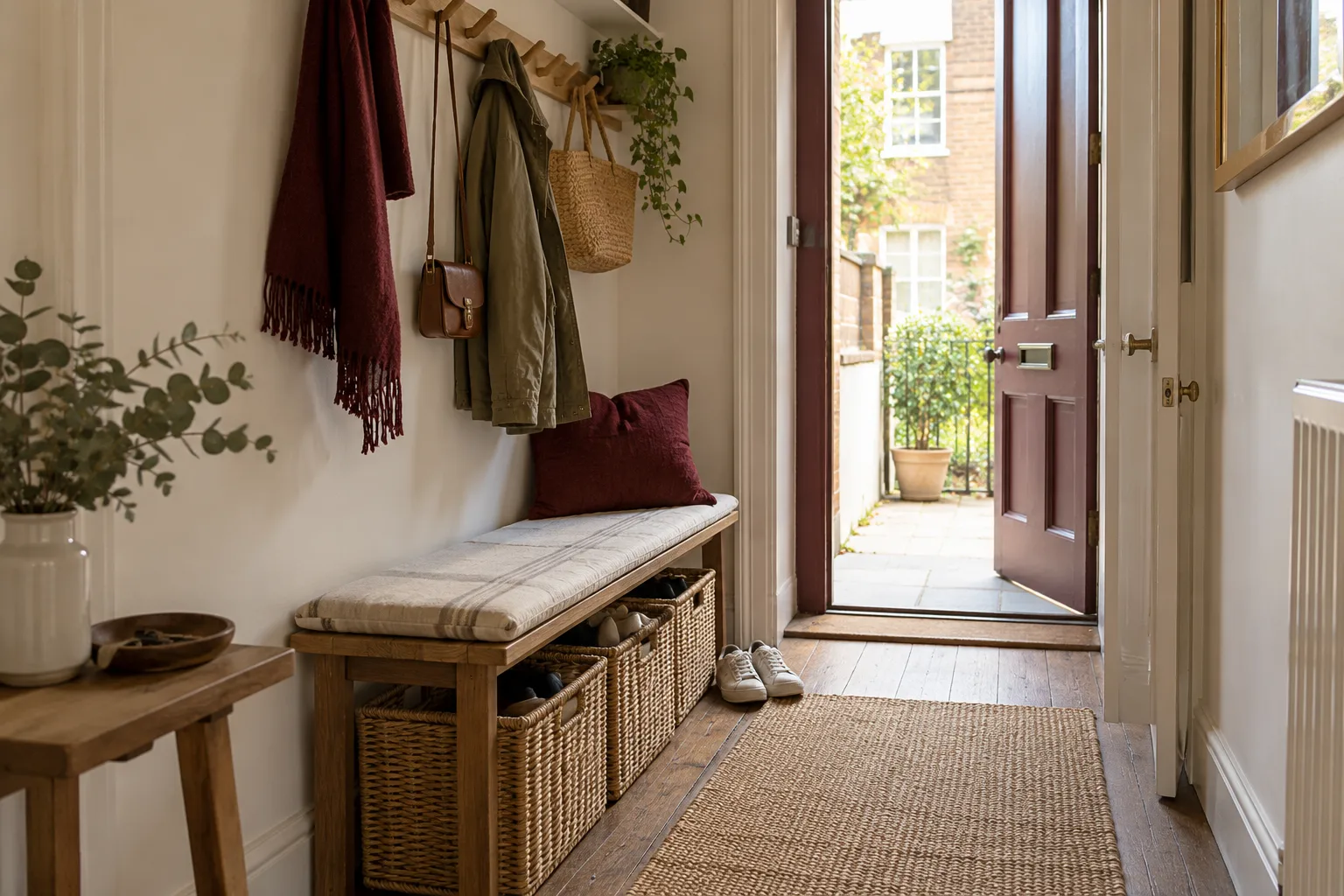
Measure the access as well as the gap.
Before buying a unit, measure doors, drawers, furniture depth and the route past it. A cupboard that fits a wall can still prevent a door from opening fully. Keep access to utilities, ventilation and necessary escape routes unobstructed.
Sort what needs to stay in the room. Keep frequently used contents within comfortable reach and avoid making heavy lifting part of the daily routine. Group small items in suitable containers rather than filling every empty surface.
Choose storage around the job it performs.
A bench with accessible baskets may suit a hallway better than a deep cupboard. Adjustable shelving can be useful when contents change, provided it is securely installed for the wall and intended load. Follow the furniture instructions and check permission before making fixings in a rented property.
If a piece needs assembling or securing, discuss furniture assembly with the details of the unit and wall. Do not assume a decorative shelf can take the weight of books or equipment.
| Location | Useful approach | Keep clear |
|---|---|---|
| Entrance | Shallow accessible storage | Door swing and walkway |
| Bedroom | Organised under-bed or wardrobe space | Ventilation and easy retrieval |
| Living room | A unit sized to the contents | Sockets and normal circulation |
| High shelves | Light, occasional-use items | Safe access and load limits |
Store outside the home only with a plan.
For furniture or seasonal contents you genuinely intend to use later, storage may be worth comparing with the cost and space of keeping everything at home. Make an inventory and consider access, term and protection rather than choosing solely by a small headline price.
The storage-unit guide covers questions to ask. Review stored contents periodically so a temporary arrangement does not become a substitute for deciding what to keep.