
Move Out Mates / Kensington
End of Tenancy Cleaning in Kensington
For a Kensington tenancy with delicate finishes or fitted cabinetry, the cleaning conversation should begin with materials and access, not an assumption that a premium-looking home can be scrubbed more aggressively.
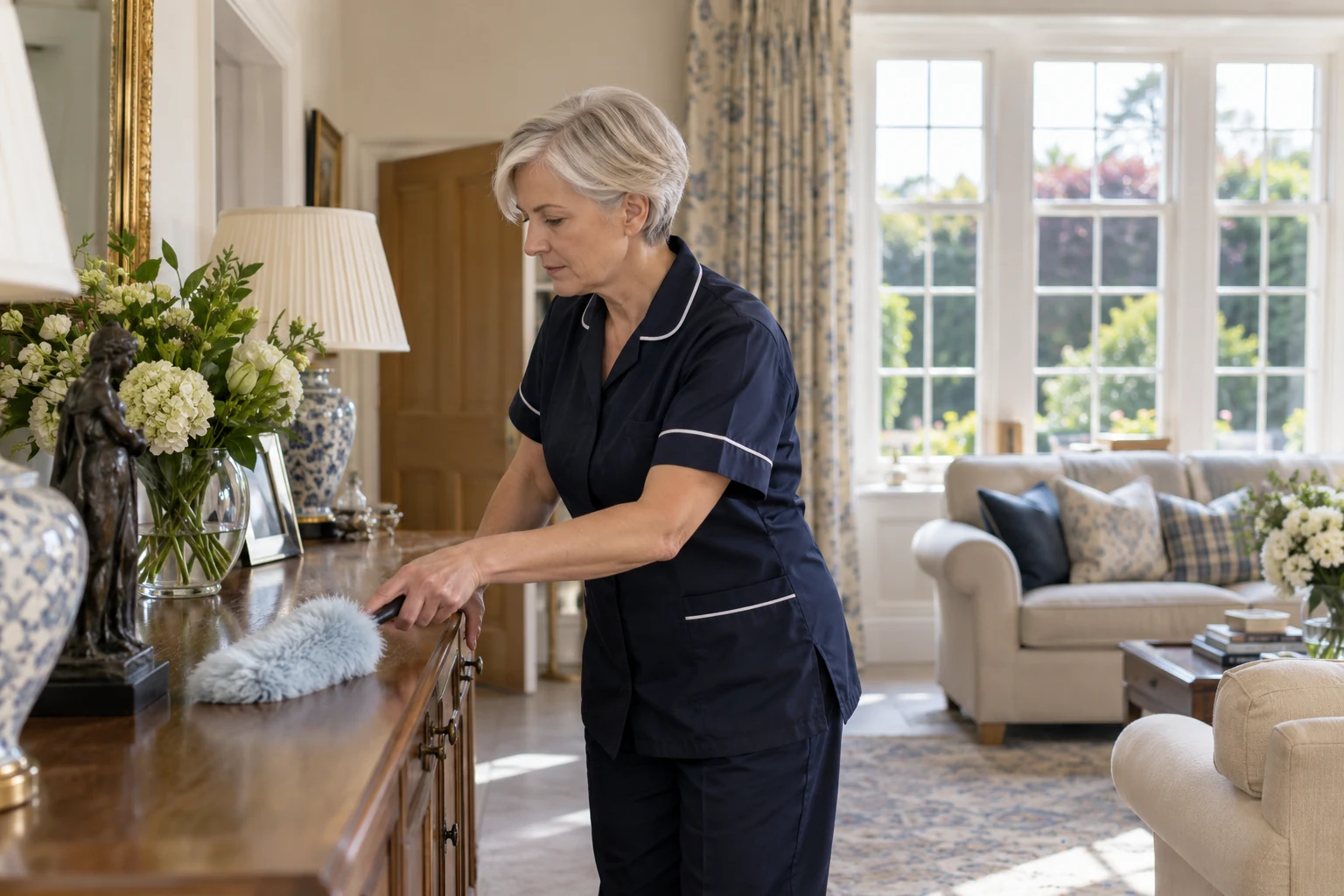
Read the condition schedule before choosing a method
At the first call, give the exact address and full postcode; W8 covers central Kensington, while the complete code identifies the property. Send the inventory, current photographs, room and bathroom count, and checkout deadline. Point out stone, timber, specialist coatings or older painted surfaces if you know they are present. A written scope can then distinguish ordinary residue from wear, repair and specialist restoration before a visit is confirmed.
The check-in inventory may describe the finish of floors, worktops, doors and bathroom fittings. Compare those notes with the property after your possessions have moved. Identify grease and limescale that might be treated, then separately record scratches, etching, chipped stone or deteriorating sealant. A cleaner should not chase a permanent mark with a product that could harm the material. If a surface has a manufacturer or landlord care instruction, share it with the team before the booking rather than during the final checkout hour.
List the fitted cupboards and appliances that are to remain. Ask whether their accessible interiors should be cleaned once empty and whether any delicate hardware needs special care. A heavily furnished room can hide floor edges, but moving large supplied furniture may not be safe or included. Photograph the areas you are concerned about and ask the agent how they will be assessed. The inventory is a record of condition, not a promise that every feature can be restored by cleaning.
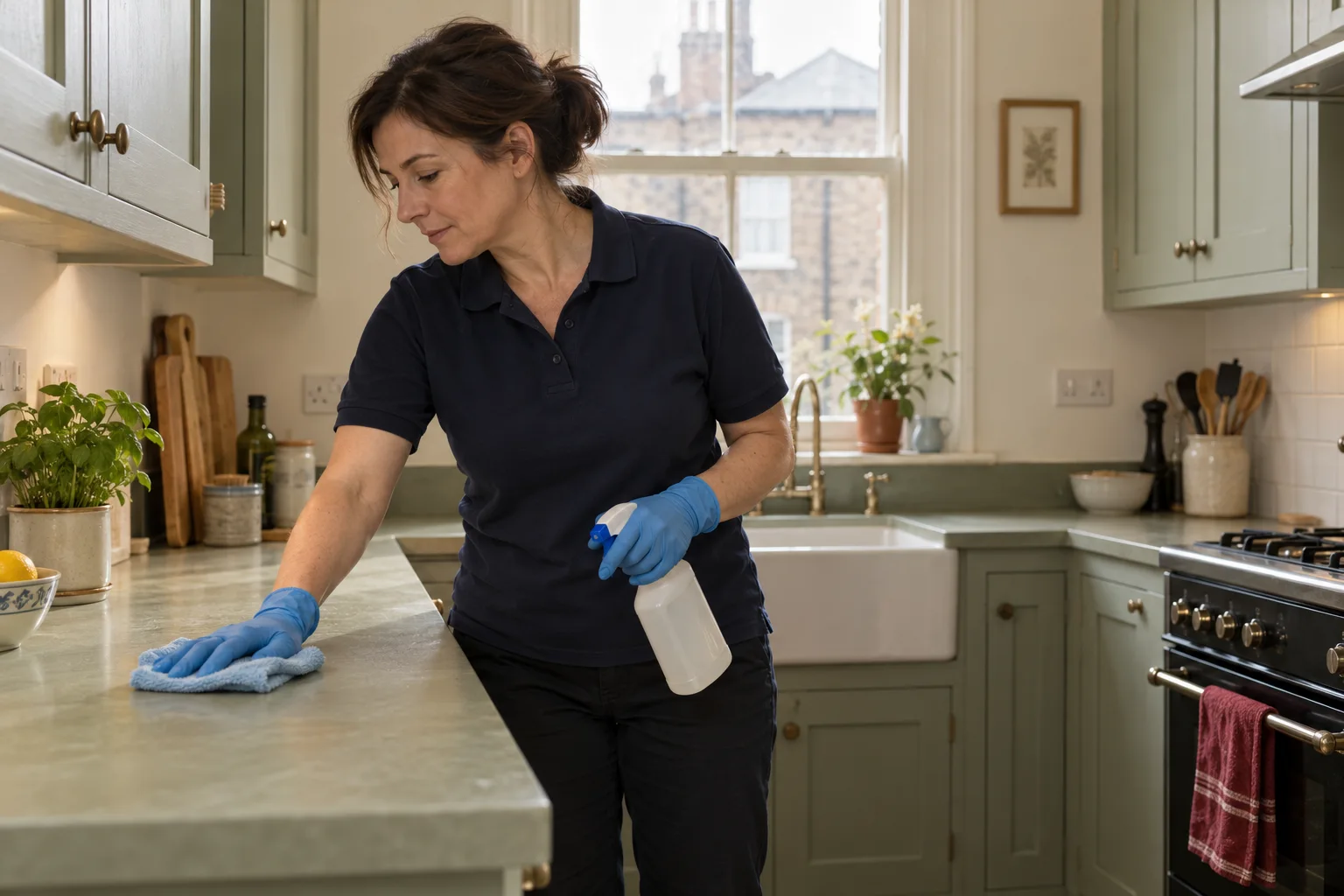
Make the quotation precise enough for a key holder
State how many rooms and bathrooms there are, what furniture remains and which appliance interiors need attention. Ask for the written price to identify accessible cupboards, internal glazing, fixtures and suitable floor work. If a rug, curtain, upholstery item or exterior window needs treatment, raise it as a separate service and ask about the method. Published starting prices are guides; the final quotation depends on size, condition, access and extras. A clear list is particularly useful if an agent or housekeeper will open the property for the visit.
Discuss a visibly stained surface before authorising work. Etched marble, worn timber and failed sealant do not become new through stronger scrubbing. The cleaner can explain whether a safe cleaning attempt is appropriate and where a specialist or repair may be needed. If additional work is proposed after inspection, the task and cost should be approved before it begins. This avoids a later disagreement over whether a change was included in the original price.
Prepare a careful handover rather than a rushed one
Remove your possessions, food and rubbish, then empty the storage spaces included in the scope. Leave water and electricity on. Keep landlord-supplied items in place and label any object whose ownership might be unclear. If the building has a concierge, entrance instructions or lift rules, confirm the actual process rather than assuming what applies to other Kensington properties. A full postcode helps locate the building; it does not establish parking or access rights by itself.
Arrange one person to admit the team, explain any vulnerable feature and answer questions. If you cannot be there, give that person the written scope and a way to reach you before approving extra work. Avoid scheduling removals after the clean, because furniture movement can mark finished floors and carry dirt back into rooms. The best starting condition is an empty, accessible property with a clear record of any old damage.
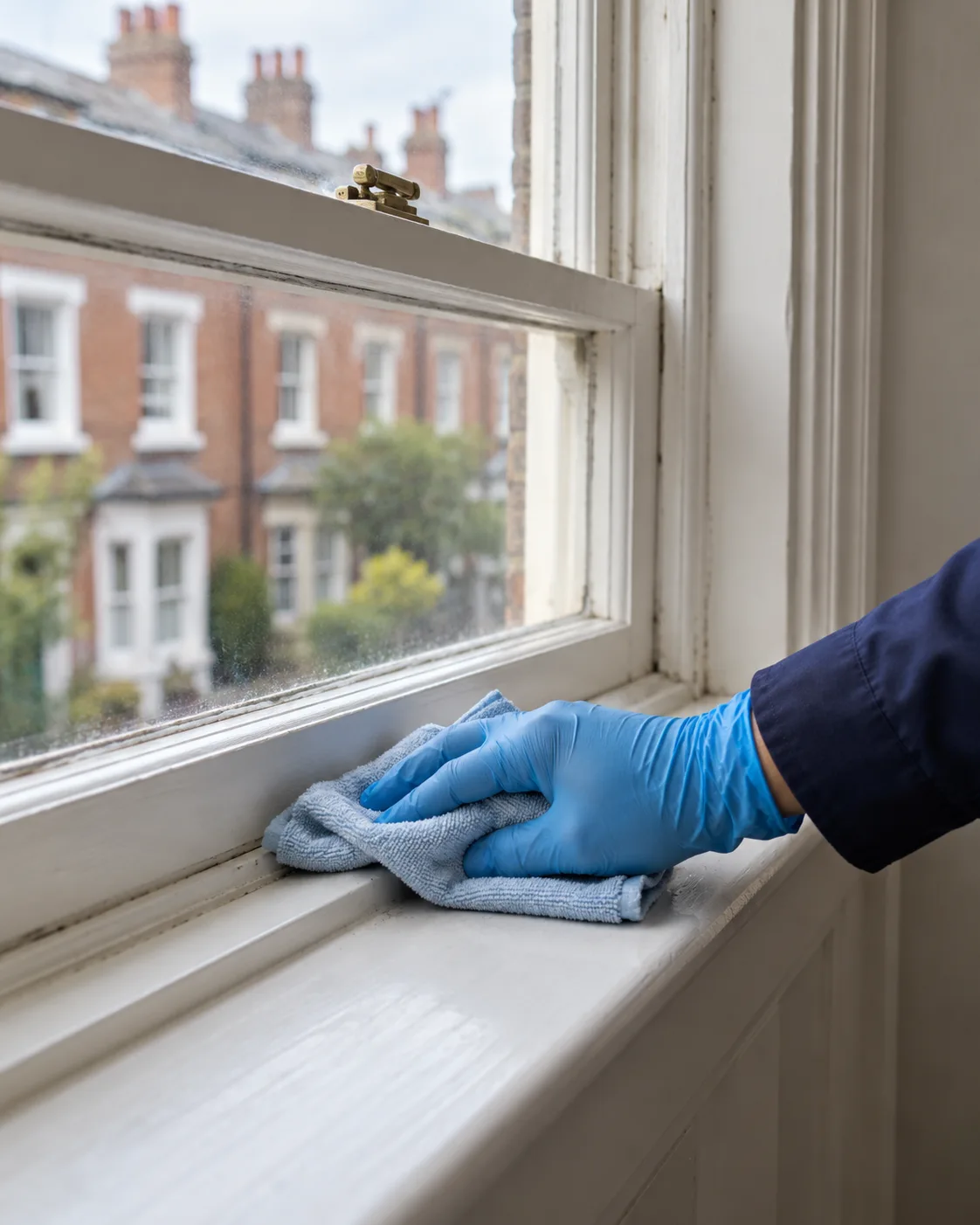
Cleaning proceeds by finish and accessibility
The team should compare the booked tasks with the accessible rooms. Kitchen and bathroom residue may need suitable product contact and rinsing, while other rooms require attention to reachable doors, skirting, internal glass, fixtures and floors. The precise order depends on material, ventilation and drying. It should be adapted to the property rather than imposed as a fixed sequence. A careful method on natural stone or timber is more valuable than a claim that every mark can be removed quickly.
If a cupboard is locked, an appliance unsafe or furniture too heavy to move, the limitation should be reported. Cleaners should not dismantle fitted equipment or perform repairs under a broad ‘deep clean’ label. When an unexpected condition appears, ask for the proposed remedy and any price change. Some issues may belong with a specialist or the landlord, and deciding that before work proceeds can protect the property’s finishes.
Inspect the result against the agreed scope
Before surrendering the keys, open agreed cupboards and appliances, look at bathroom fittings and inspect accessible floors and internal glass. Photograph a particular missed cleaning surface while the property is still available and report it promptly. Do not confuse a still-visible etch or scratch with dirt. Compare the condition with the check-in record and note any repair question for the agent separately. A precise walk-through is more useful than a broad statement that the home should look perfect.
Keep the quotation, any approved variation, final photographs and checkout report. They show what was requested and checked but cannot guarantee a deposit outcome. For a Kensington property with varied finishes, an honest record of the methods and limits is especially useful if a later report mentions a mark that cleaning could not safely remove.
Questions about this handover
Kensington tenancy cleaning: practical answers.
What care details should I send for a Kensington stone worktop?
Share the inventory’s material description and any manufacturer guidance, plus photographs of residue and existing etching. The team can consider a suitable cleaning method. Acidic or abrasive products could damage some stone despite a visible mark.
Can cleaners restore worn lacquer on Kensington fitted joinery?
Cleaning can remove appropriate surface dirt but cannot rebuild a worn coating. Photograph the finish before the visit and ask the agent whether restoration is needed. Aggressive rubbing may expose more damage, so the distinction matters.
How should a fragile Kensington decorative item be handled before cleaning?
Ask the owner or agent whether it should be moved by an authorised person or left untouched. Record that decision in the scope. A cleaning team should not risk lifting a delicate supplied item merely to reach a small surface beneath it.
Is a Kensington natural-stone bathroom included in the standard price?
List it as a bathroom, but disclose its materials and condition so the method and price can be assessed. A general bathroom count does not communicate specialist care. Failed sealant or etched stone may require work beyond cleaning.
What if a Kensington caretaker opens the property for the team?
Give them the correct written scope and your contact for a specific change. Confirm key return and building entry rules. A caretaker can provide access without being authorised to approve extra charges or decide how delicate items are treated.
Can I ask for inside cupboards in a Kensington furnished flat?
Yes, name the cupboards and ensure they are empty. If a fitted unit contains landlord objects, identify them and agree whether they may be moved. Cleaning accessible interiors differs from dismantling bespoke cabinetry or shifting heavy furniture.
How should an existing scratch on Kensington timber flooring be recorded?
Take a clear photograph after furniture moves and compare it with the check-in inventory. Suitable cleaning may remove dirt around it but not the scratch itself. Keep it as a condition issue for the agent, separate from floor-cleaning quality.
Should a Kensington cleaner use a stronger chemical if a mark remains?
Only a method safe for the identified material should be considered, and no unqualified result can be promised. Ask what the mark appears to be and whether a specialist or repair is needed. Protecting the finish takes priority over chasing an impossible appearance.
What should I inspect before returning Kensington keys?
Check the agreed appliance interiors, cupboards, bathrooms, internal glass and floors against the written quote. Photograph a precise missed task promptly. Record etched or worn materials separately so the checkout does not confuse restoration with cleaning.