
Move Out Mates / Chelsea
End of Tenancy Cleaning in Chelsea
A furnished tenancy can end with a disagreement about a sofa that looks worn rather than dirty. If you are leaving a Chelsea property where landlord-owned upholstery remains, identify the fabric and its check-in condition before treating it as part of the standard clean.
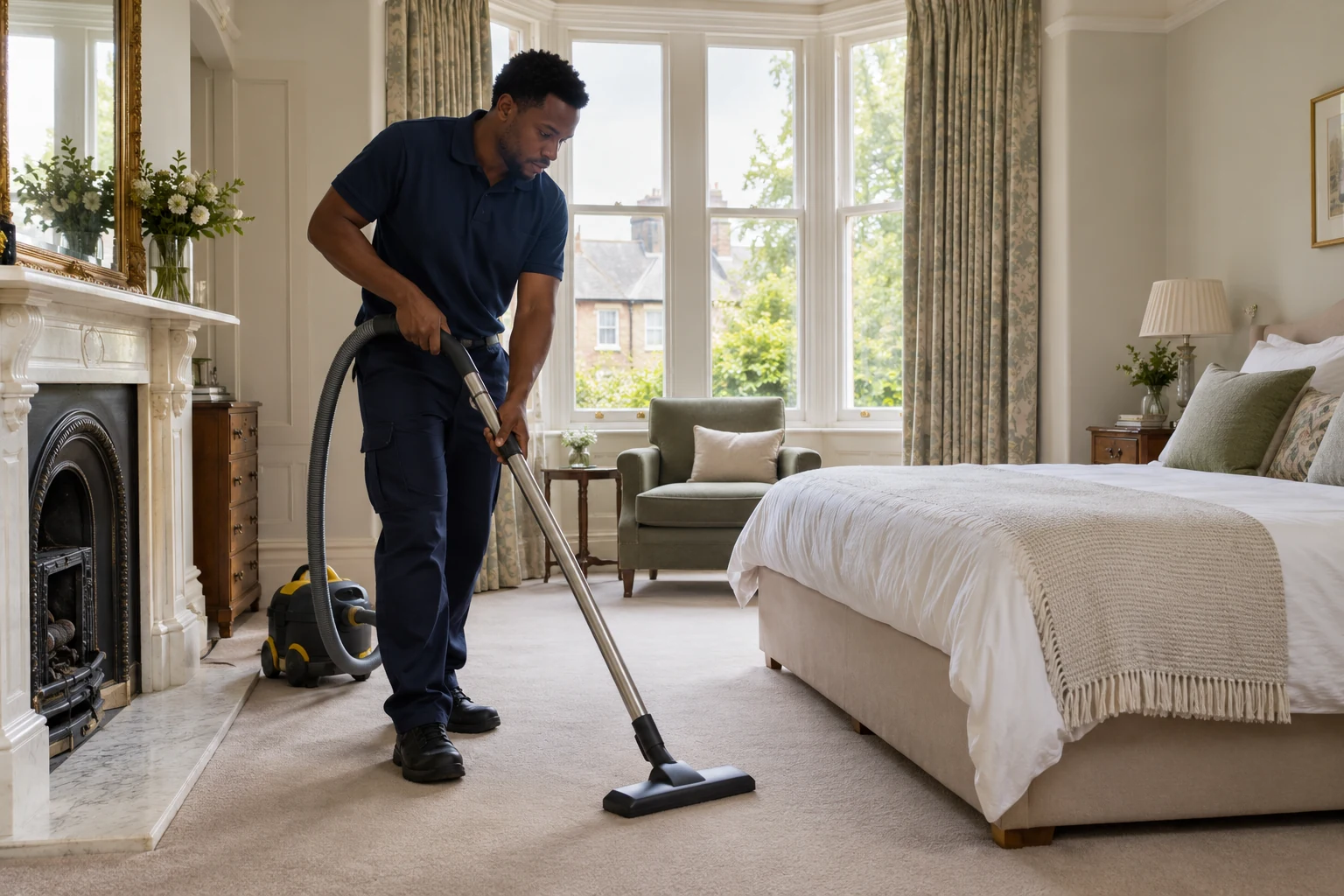
Check what furniture belongs to the inventory
Chelsea is associated with SW3; supply the full postcode for the actual address and access. Send photographs of the furniture, the room and any specific marks when you first call. We can quote the ordinary tenancy cleaning and discuss whether a separate fabric assessment is appropriate, without promising to reverse wear or remove an unknown stain.
Use the landlord’s inventory to list sofas, chairs, mattresses, rugs and curtains that will stay. Photograph any existing mark beside the check-in image if one is available. Upholstery can hold loose dust, a fresh spill, an old stain or worn pile; those are different issues. If a cover has a care label, share it. Do not assume fabric can be wet cleaned because a household product worked on another piece of furniture. Suitability needs to be discussed for the actual item.
If you have already used a stain remover or attempted spot cleaning, say what it was and when. Previous treatment can change both the appearance and the safe next step. A cleaner may advise that an item needs specialist assessment or that a mark is unlikely to disappear. Recording that honestly helps you decide whether to book the extra service or discuss the condition with the agent. Standard room cleaning should not be described as furniture restoration. Do not remove a landlord-owned cushion cover for washing simply because it has a zip. The care label, filling and fabric can make removal or machine washing unsuitable. If the item needs more than surface care, discuss it explicitly and retain the inventory image. A safe decision before the visit is better than an improvised treatment to satisfy a broad instruction.
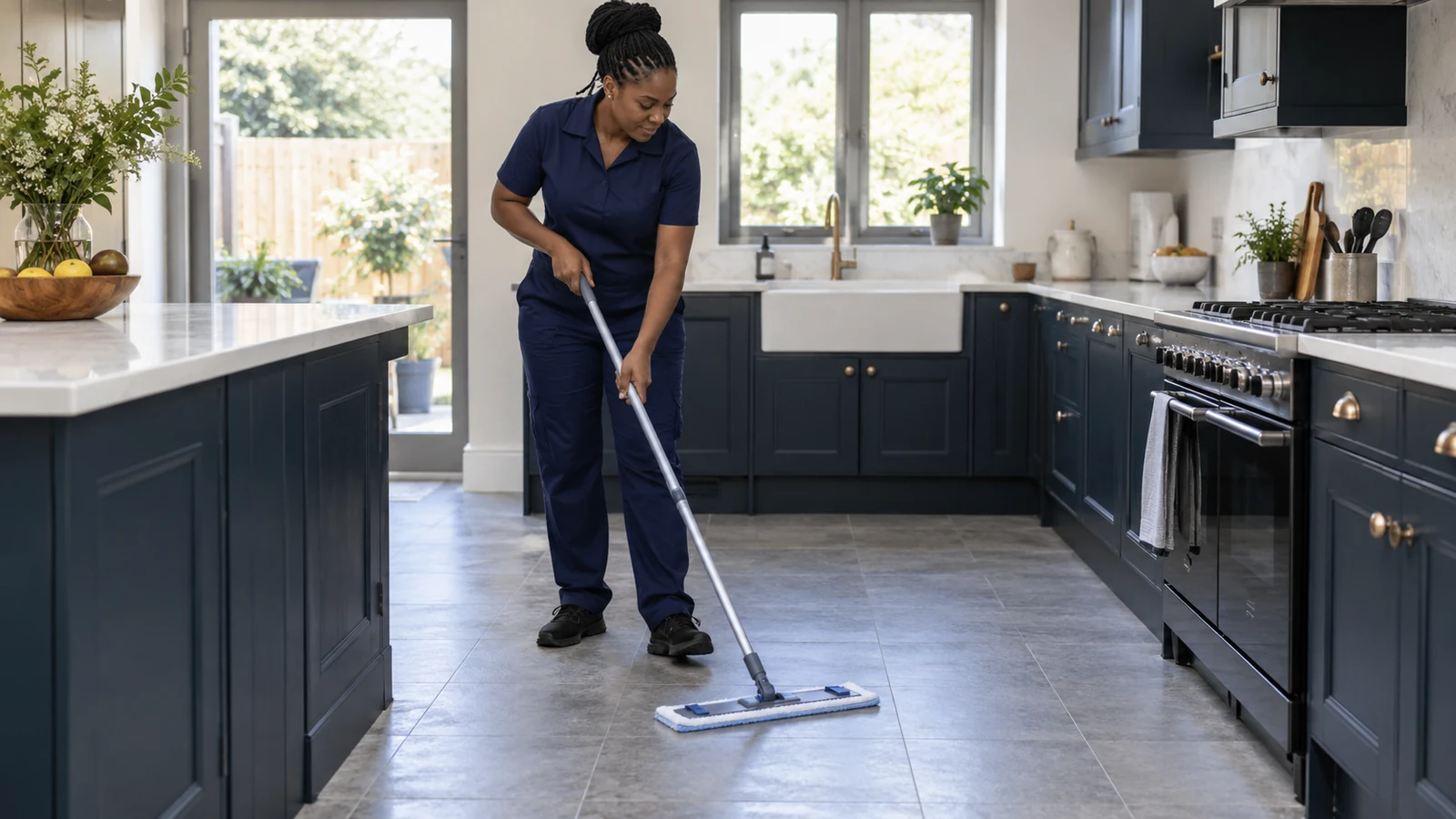
Keep the whole-property quote separate from fabric decisions
Give the SW3 address details, property size, date and photographs of the kitchen, bathrooms and floors as well as furnishings. Specify whether oven and fridge interiors, emptied cabinets and accessible internal windows are required. The written quotation should identify the ordinary tasks, any proposed specialist upholstery or rug work and any exclusion. Final pricing depends on actual condition, access and extras, not only room count. This separation lets you approve the necessary work without assuming one quoted figure covers every furnished item.
Check the tenancy agreement for specific cleaning obligations and compare them with the check-in inventory. An agent’s broad request to clean all furniture may not explain the treatment or whether the issue is ordinary wear. Ask for detail and photographs if you are uncertain. Carpet extraction, curtain cleaning and upholstery cleaning may each involve different assessment. No service can guarantee an agent’s later deposit decision from the presence of a receipt alone.
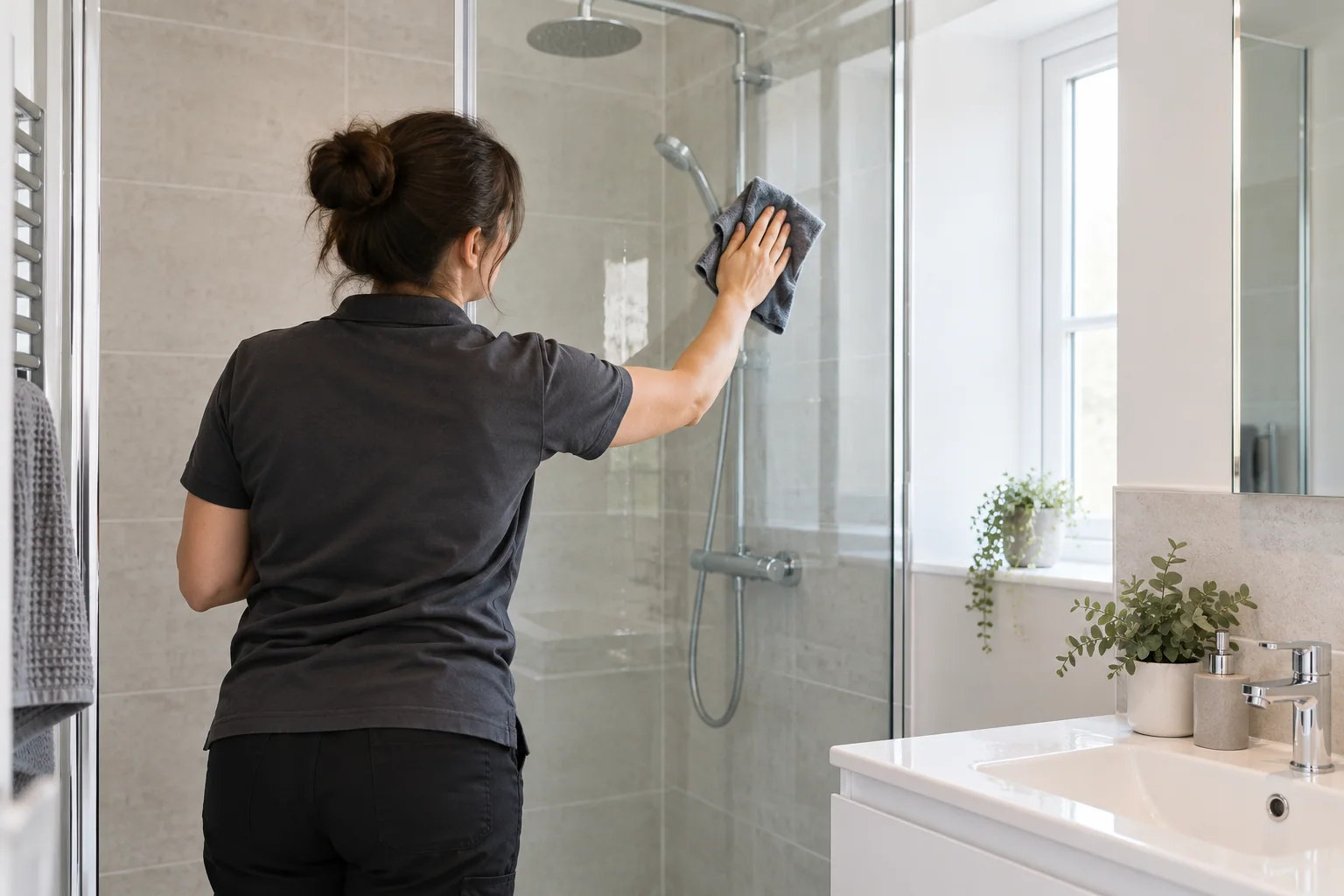
Give the visit clear, safe access
Move your belongings, food and rubbish out first. Empty storage and appliances requested for interior cleaning, and keep water and power available. Identify which landlord furniture will remain exactly where it is. Do not ask the cleaner to drag a heavy sofa across a delicate floor to reach underneath without an agreed safe arrangement. If access beneath an item matters to the inventory, plan how it will be provided before the appointment.
Explain any concierge, key or entry instructions for the particular building and name someone reachable on the day. Mark existing damage to furniture or flooring in your own dated photographs. The team should not have to decide at the door whether a mark is old, whether a fabric is colourfast or whether an item can be moved. Those questions can be reviewed before the scope is accepted.
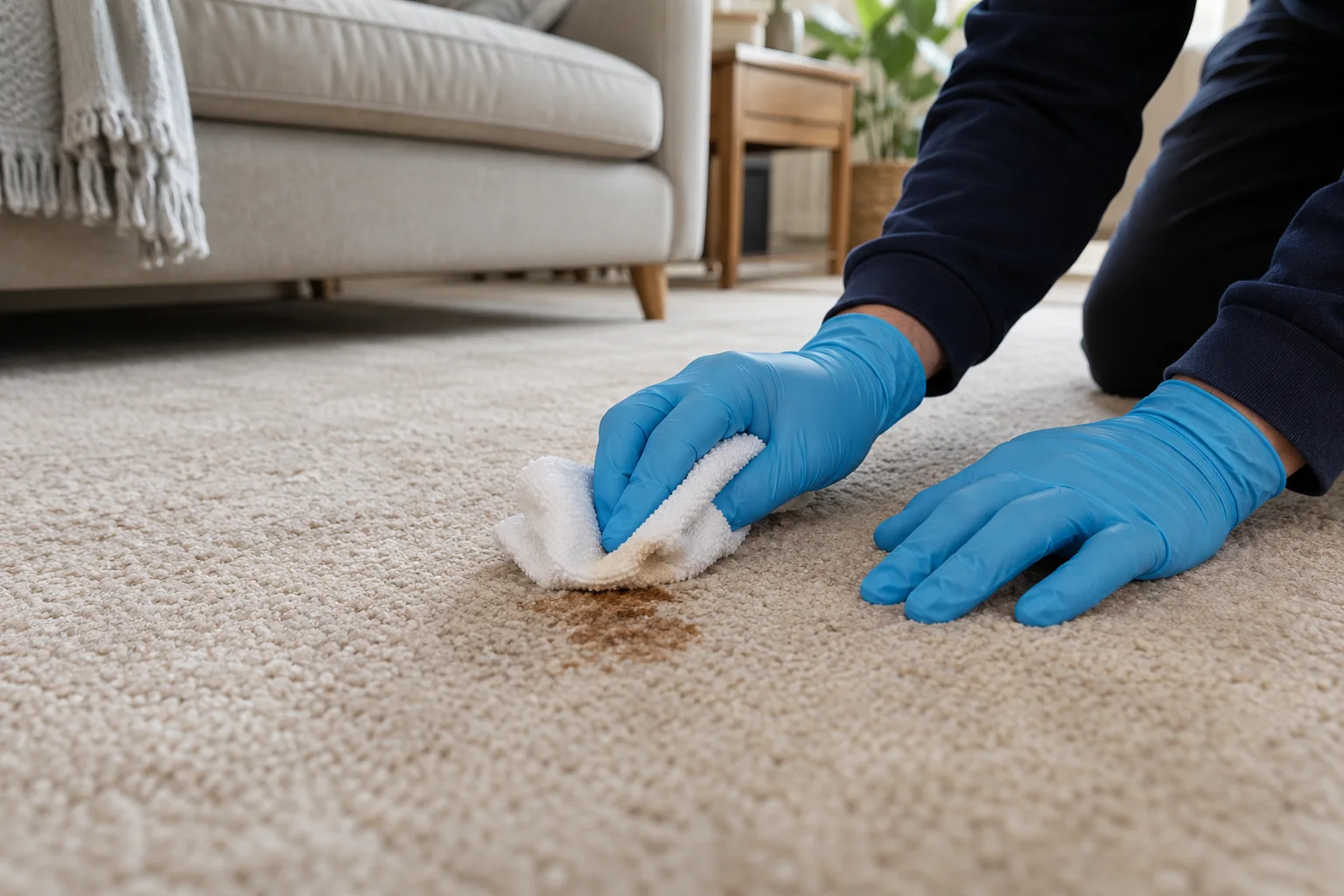
Address ordinary cleaning before specialist treatment
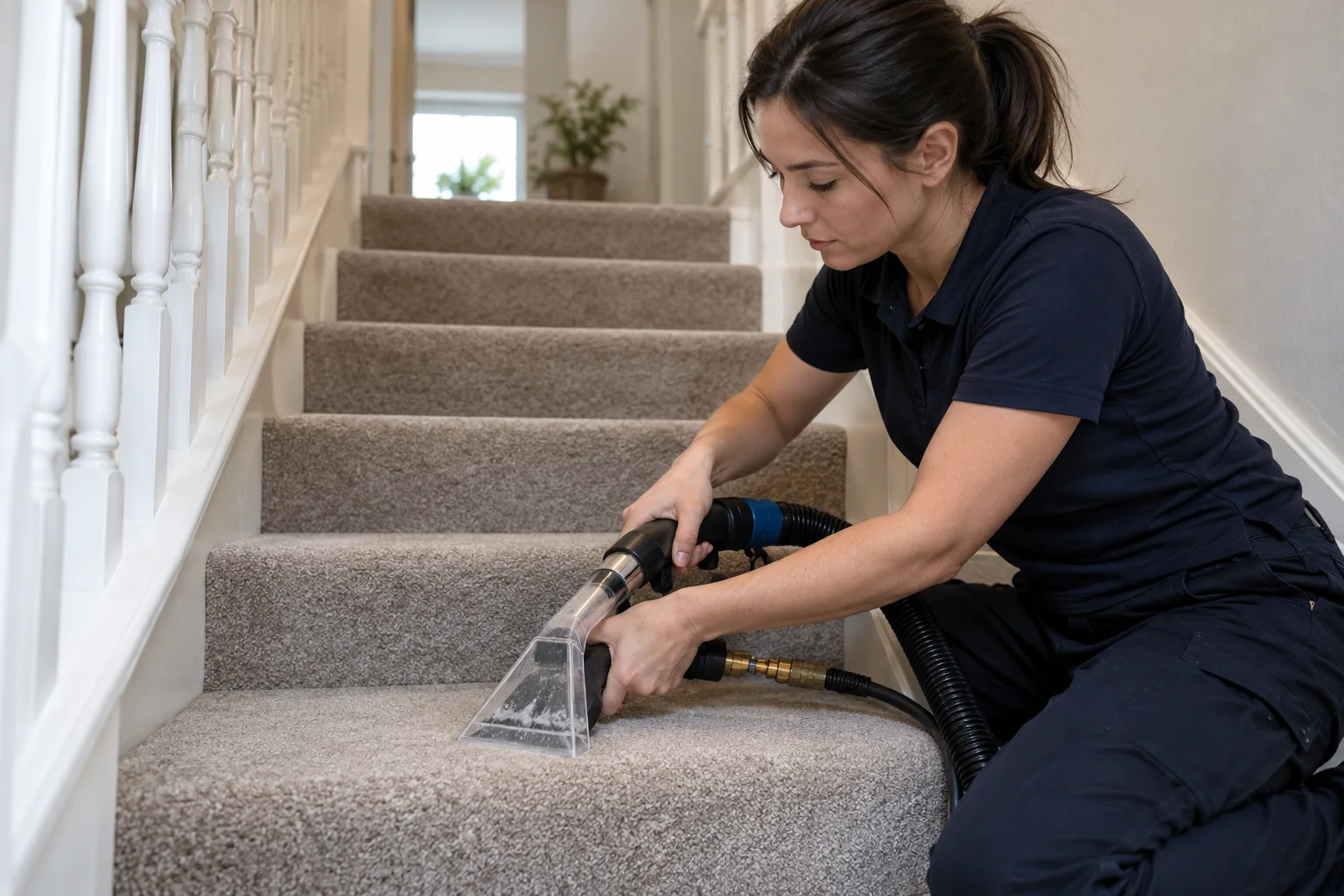
The general visit may work through accessible higher surfaces, empty cupboards, kitchen grease, listed appliance interiors, bathroom scale and suitable floor cleaning. Fabric treatment, if separately agreed, follows the assessment and care requirements for that item; the exact method cannot be assumed from a photograph or promised for every material. Keep the distinction visible in the booking. A sofa may be vacuumed as part of a separate arrangement without being deeply extracted or restored.
An old stain can remain because pigment has bonded with a fibre or prior treatment has affected the dye. Worn arms and flattened pile also remain after soil is removed. If a stronger product risks damage, the right decision may be to stop and explain the limitation. That is more useful to the tenant than a claim that every upholstered item will look new at handover. Repairs and replacement are separate matters for the landlord and tenant to discuss.

Inspect furnishings and rooms as separate evidence
After the clean, check the kitchen, bathrooms, storage and floors against the ordinary scope. Photograph the furnished items from the same angle used before treatment where possible, and note which extra service was actually booked. If a cupboard or fixture named in the quote appears missed, report it promptly with a location and clear image. If a sofa mark remains, compare it with the stated assessment and limitation rather than assuming an unpromised restoration has failed.
Keep the check-in inventory, fabric care information, quotation, invoice and dated photographs together. An agent’s later comment about a chair may concern dirt, damage or reasonable wear. Your record helps identify which. Give yourself time before key return to inspect both the property and its contents. A furnished tenancy is easier to hand over when the cleaning of the rooms and the condition of individual items are documented separately.
Questions about this handover
Chelsea tenancy cleaning: practical answers.
Is upholstery cleaning included with a furnished Chelsea flat?
Not automatically. List the landlord-owned items and send fabric or care-label details. Ordinary room cleaning, upholstery treatment and restoration have different methods and prices; ask for each needed item in writing.
Can a Chelsea sofa stain be guaranteed to disappear?
No responsible assessment should promise that from a photograph alone. Fibre, age of the stain and products already used matter. Treatment may improve the mark while wear, dye change or a deep stain remains.
Should I remove Chelsea cushion covers for washing?
Not simply because they have a zip. Check the care label and ask whether removal or washing is suitable for the fabric and filling. An unsuitable wash can shrink or distort landlord-owned upholstery.
How do I record worn upholstery in Chelsea?
Compare the item with check-in inventory photographs, then take dated images in consistent light. Flattened pile or fraying is different from removable surface dirt. Keep it separate from the ordinary cleaning quote.
Does a Chelsea rug need separate treatment?
Tell us its material and whether it is loose or fitted. Vacuuming, stain treatment and specialist rug cleaning are not equivalent. Delicate fibres may need a separate assessment before any wet method.
What if heavy furniture hides the Chelsea floor?
Identify what stays with the property and discuss safe access before the visit. Do not expect cleaners to drag a sofa over a delicate finish. Photograph any newly exposed marks when your own furniture leaves.
Are Chelsea curtains part of the tenancy clean?
Ask explicitly and share any care label. Reachable dusting differs from taking curtains down or laundering them. An agent’s broad “furnished flat” instruction does not define safe fabric treatment.
What should the Chelsea written quote separate?
It should identify ordinary kitchen, bathroom, storage and floor tasks, then each chosen fabric or rug service separately. That lets you approve the actual work and compare it with the inventory without assuming everything is included.
What should I inspect after a Chelsea furnished clean?
Check rooms and appliance interiors against the general scope, then photograph each treated item from similar angles to the before images. Record any remaining material limitation rather than treating every visible mark as an omitted clean.