
Move Out Mates / Dalston
End of Tenancy Cleaning in Dalston
A removable wall decal or hook can leave an adhesive patch that looks simple until it pulls paint away. If you used temporary fixings in a Dalston rental, remove them cautiously before the final clean and photograph any residue or damaged coating.
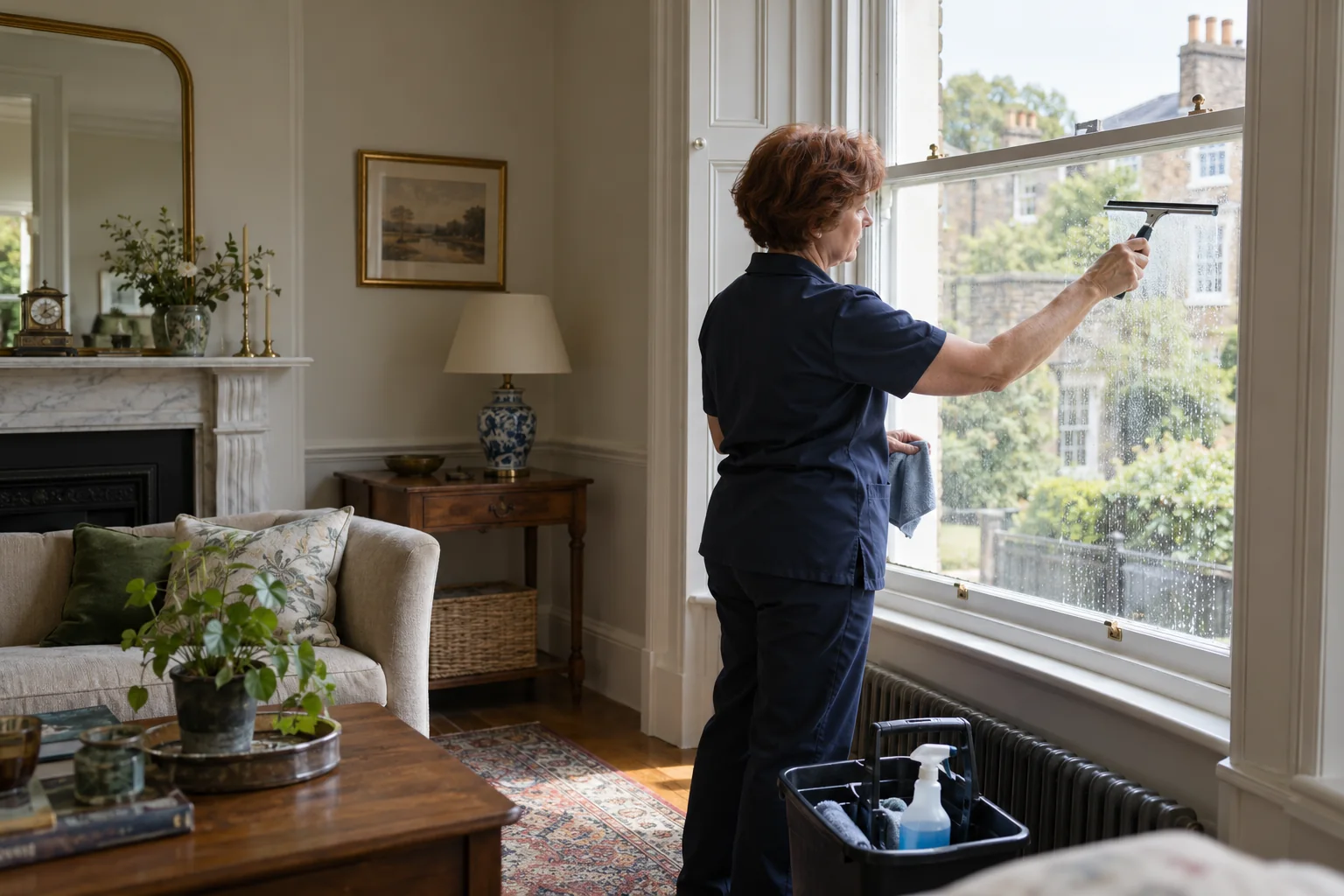
Separate adhesive from damaged decoration
Dalston is in E8; give the full postcode when you first call, together with the room count, moving date and pictures of the affected surfaces. We can quote ordinary end-of-tenancy cleaning and discuss whether a residue is safe to address, while making clear that repainting or repairing a torn finish is a different task.
Show each patch in a close photograph and one wider view of its wall, door or cabinet. Say what the fixing was and whether you have used heat, solvent or a scraping tool already. A little adhesive on sound glass may be a different job from glue on painted plaster. If the coating has lifted, cleaning cannot put it back. Compare the surface with the check-in inventory and ask the landlord or agent how a repair should be handled rather than expecting a cleaner to disguise it. Make a small list of every temporary fixing you installed before the removal day. A single wall image can miss an adhesive hook behind a door or tape on a window frame. Check these places when the rooms are empty. If the inventory contains detailed photographs, compare the same surfaces. This prevents one small remnant from being discovered only at the agent appointment.
Do not apply a strong product immediately before check-out because a mark looks small. Solvents can spread staining, soften paint or harm a varnished surface. If the material or finish is unknown, that uncertainty belongs in the quotation. A safe assessment or decision to leave the mark for repair may protect the property better than a determined attempt to remove every trace at any cost.
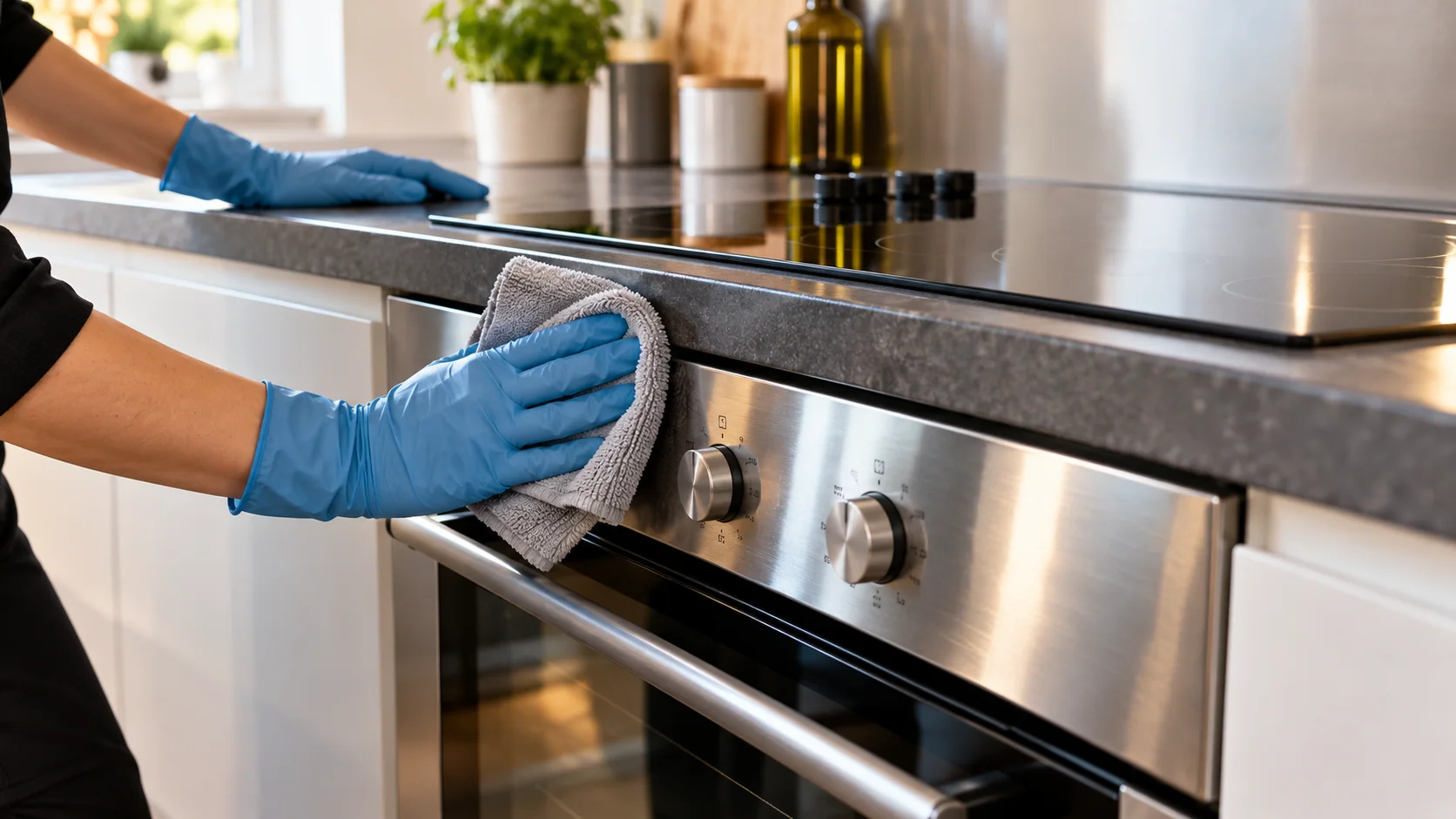
Build the ordinary cleaning scope around the issue
Give the E8 address details, bedrooms, bathrooms, appliance list, proposed date and photographs of the kitchen and floors as well as the adhesive patches. State whether storage interiors will be empty and whether furniture remains. Ask for a written quotation covering accessible kitchen surfaces, oven or fridge interiors where needed, bathroom fittings, internal windows if relevant and suitable floor care. The final price depends on property size, condition, access and agreed extras.
If carpets or upholstery have stains, discuss them separately from wall residue. Vacuuming, extraction and fabric stain treatment are not interchangeable. A tenant may need both a general clean and a repair to decoration; neither should be hidden in the other’s price. The written scope allows you to compare the cleaning tasks with the tenancy agreement and decide whether another provider or landlord approval is needed for the damaged finish.
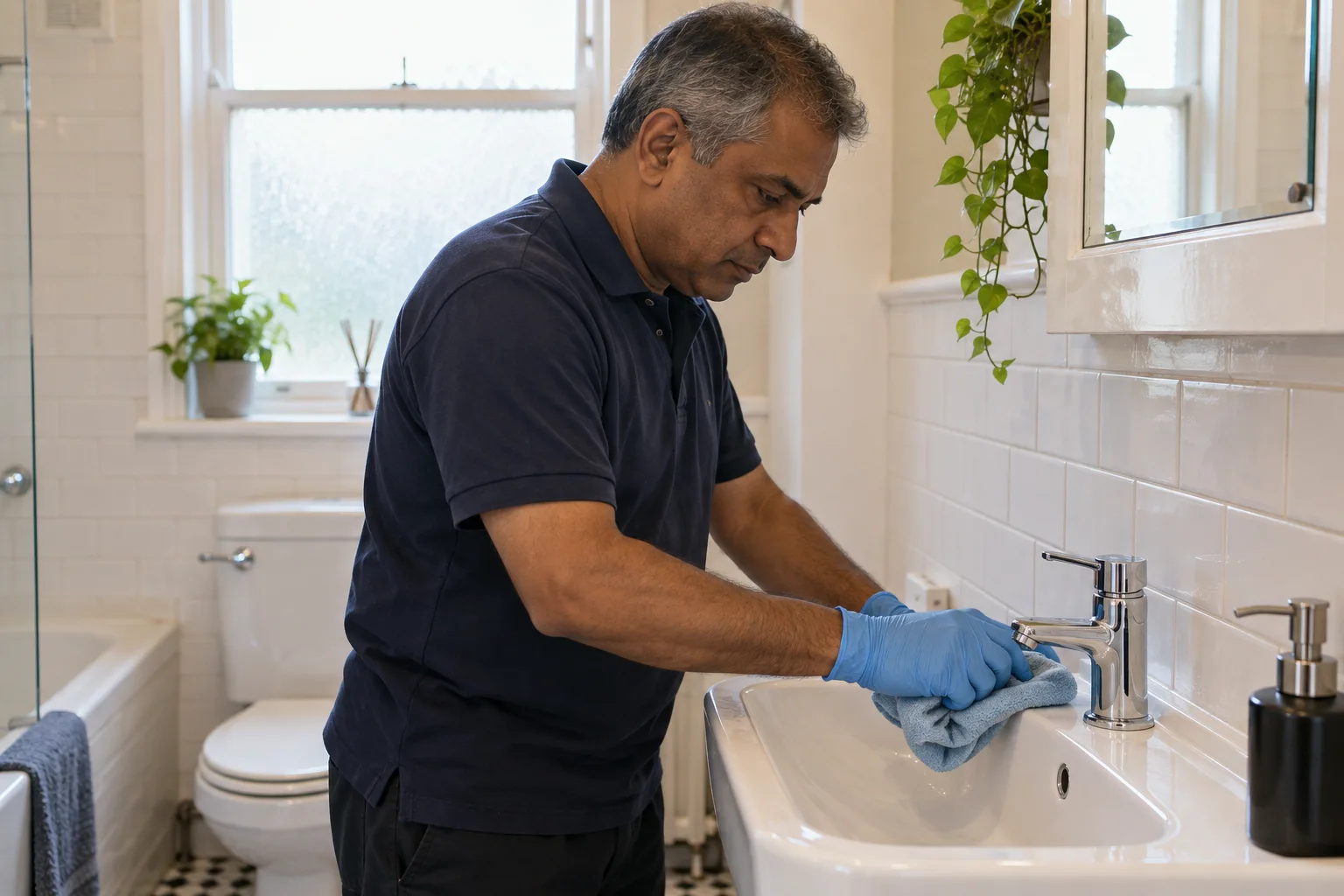
Prepare a room the cleaner can actually reach
Remove boxes, food, rubbish and personal items, then empty cabinets and drawers included in the work. Leave water and power available and confirm keys or intercom access. If you are still packing, keep the cleaning date after the last removal wherever possible. An adhesive patch partly hidden by shelving and a floor covered in bags cannot be inspected or treated as though the flat were vacant.
Mark the questionable surfaces on a short room list or show them during an arrival walk-through. Point out any already lifted paint and disclose a product you tried. A cleaner should not have to infer whether a patch is sticky residue or failed decoration. Keep dated before photographs for your own check-out file. They help explain why one mark may remain after the surrounding surfaces have been cleaned properly.
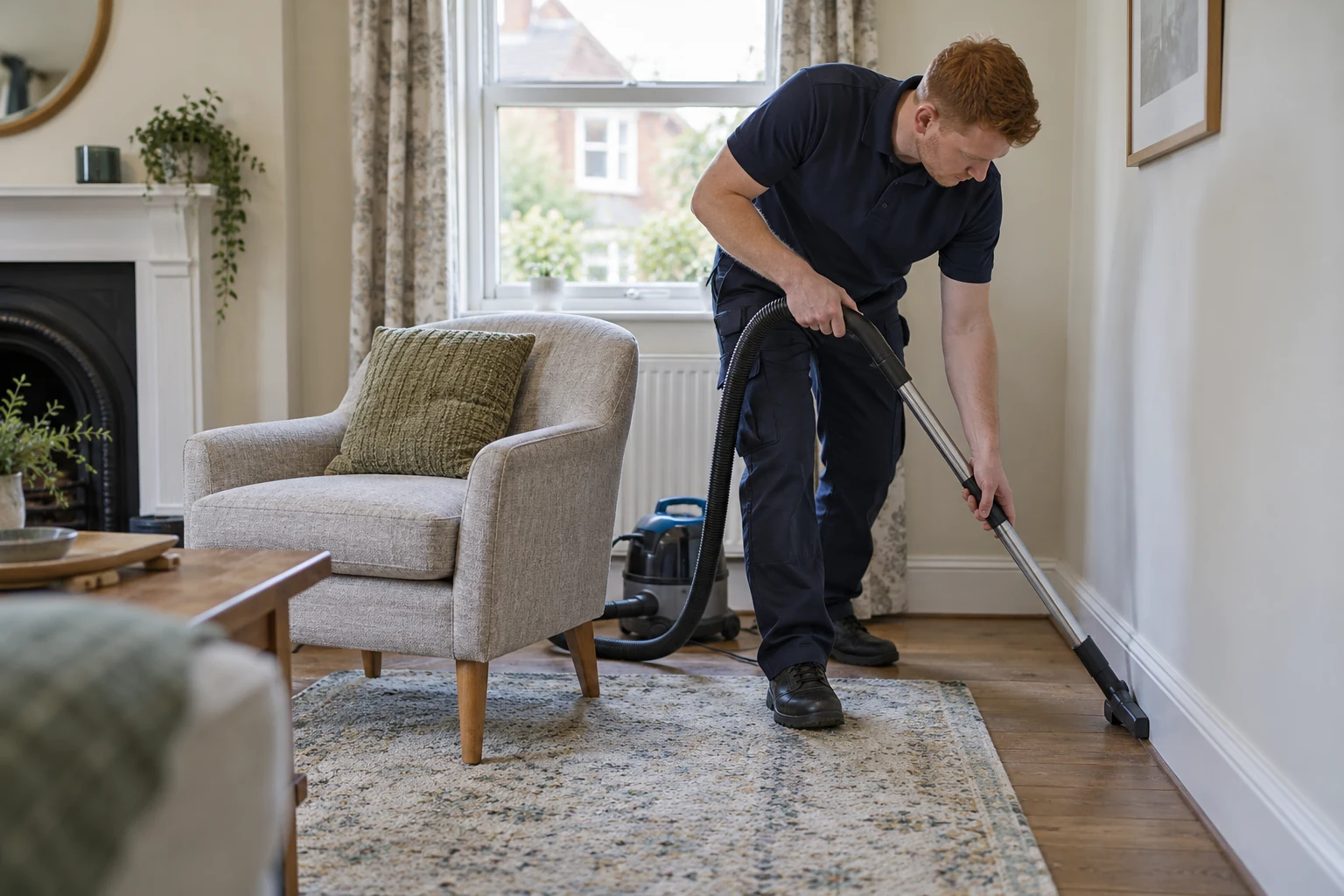
Let the visit follow the written scope
Accessible dusting and empty storage can be addressed before kitchen grease, listed appliance interiors and bathroom scale. Floors normally follow higher work. If a residue spot is included for assessment, the method should suit the surface, and the team may stop if removal risks damage. This sequence gives ordinary cleaning its due attention rather than allowing a difficult adhesive patch to consume the whole visit. The precise order can change with the property’s condition.
A visible patch after treatment may be adhesive that cannot safely be removed, a colour difference under the former decal or torn paint. These do not all have the same remedy. Cleaning does not repaint a wall or replace a finish. Document the limitation and discuss repair with the landlord or agent where necessary. An accurate explanation is more valuable at check-out than an unsupported guarantee that a wall will appear untouched.

Photograph the handover, not just the problem spot
After the clean, inspect agreed cupboards, appliance interiors, bathrooms, accessible internal glass and floors. Photograph each room, then take a close image of any remaining adhesive or damage from a similar angle to the before image. Report an apparent missed cleaning task with its exact location promptly. Keep a residual material defect separate in your notes so the two concerns are not confused.
Store the check-in inventory, quote, receipt, any landlord correspondence and dated photos together before returning keys. If the agent later identifies a mark, you can show what it was, what cleaning was attempted and whether paint repair was outside the booking. A deposit decision depends on evidence and tenancy terms, not on a cleaning company’s general statement. This record gives you the practical detail to discuss the actual issue.
Questions about this handover
Dalston tenancy cleaning: practical answers.
Can adhesive hooks be removed during a Dalston tenancy clean?
Show their locations and the surface material before booking. Removing adhesive from sound glass differs from working on painted plaster. Torn paint is a repair issue, not dirt.
Should I use solvent on a Dalston wall decal mark?
Do not apply an unknown strong solvent just before check-out. It can spread residue or strip paint. Tell us what fixing and products were used so a safe treatment or limitation can be considered.
What if a Dalston sticker leaves a lighter patch?
The exposed paint may differ from surrounding paint because of wear or light. Cleaning will not necessarily even the colour. Photograph the patch and compare it with the inventory before deciding whether repair is needed.
Are Dalston window stickers part of glass cleaning?
Ask specifically and show both sticker and frame. Adhesive on glass may be treatable, while a coated pane or painted edge needs care. The written scope should identify the attempt.
Who repairs holes left by shelves in Dalston?
Discuss making good with the landlord or agent. A cleaner can address surrounding dust but cannot fill or repaint holes as an ordinary tenancy-cleaning task. Ask whether permission is needed before any repainting.
How should I find hidden Dalston fixings?
Walk through empty rooms, checking behind doors, on cupboards and near former workspaces. Note each location on a small list and send photos before the quotation is finalised.
Can a Dalston cleaner move shelving to reach a mark?
Only with a safe arrangement agreed beforehand. Remove your own shelves and belongings before the visit. Fixed or landlord-owned furniture should not be dismantled casually. A fixed fitting may need the agent’s approval before removal.
What if previous remover damaged my Dalston cabinet finish?
Photograph the coating and disclose the product used. Another solvent may worsen it. A finish defect should be recorded for the agent separately from suitable cleaning of the cabinet.
What should the Dalston completion photos show?
Photograph the whole cleaned rooms and close views of any adhesive or paint limitation. Keep them with the inventory and quote so a later mark can be identified as treated residue or damaged decoration.