
Move Out Mates / Chingford
End of Tenancy Cleaning in Chingford
If the route from your garden to the kitchen has left mud on a rented home’s floors, the final cleaning plan should identify the actual floor materials and where soil has travelled.
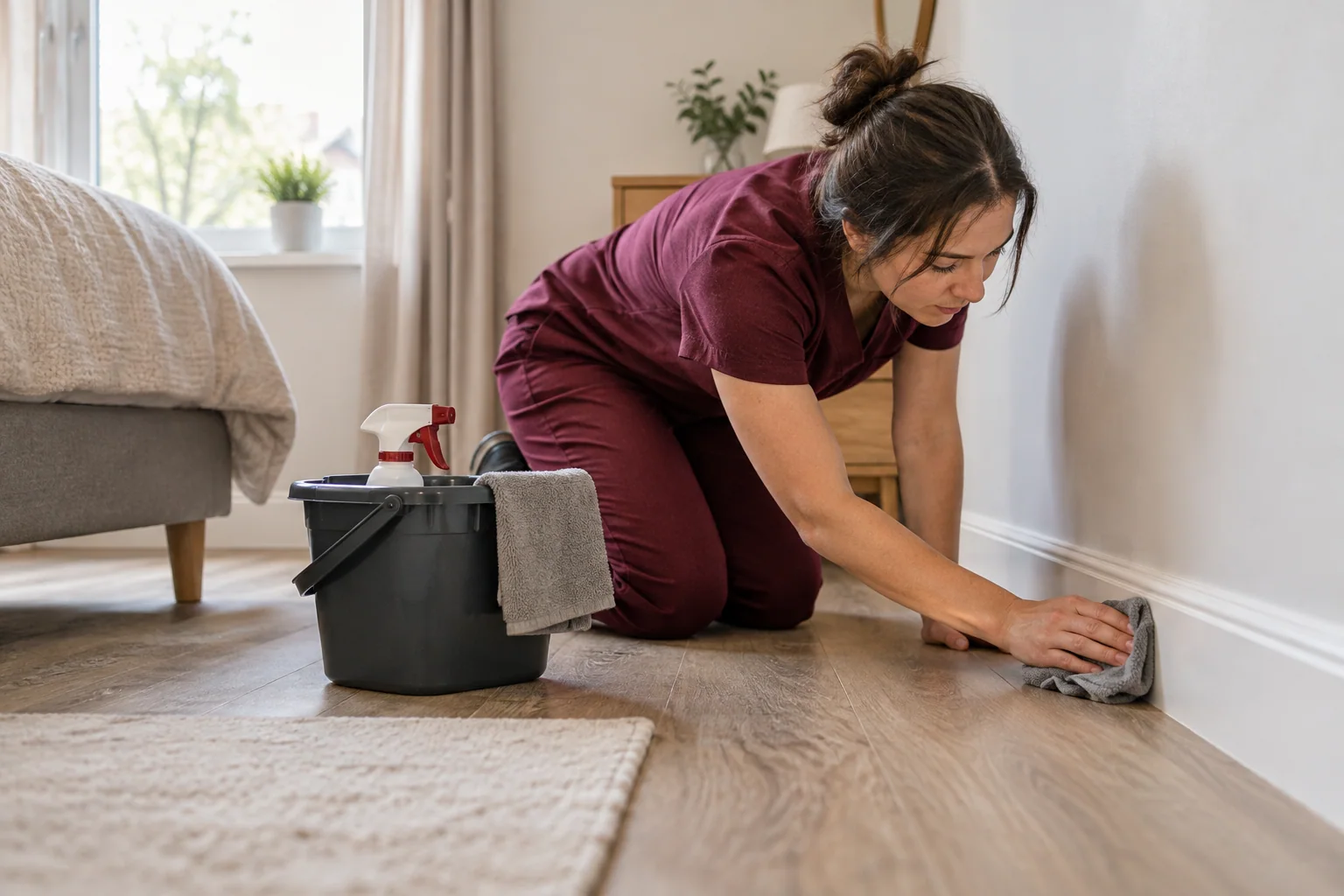
Trace the dirt rather than guessing at an extra service
A hard entrance floor, a carpet runner and a stained threshold need different treatment. Chingford is in E4; use the full postcode when you call, along with the room count and a description of the affected route. We can discuss the indoor end-of-tenancy clean and any separate outdoor or specialist floor work, with realistic limits for worn or damaged surfaces before the agent inspects the property.
Walk from the entrance through the hall and into any room used for garden access. Photograph each different surface in natural light and note where soil is loose, embedded or stained. A muddy mark on washable tile differs from a carpet stain that has dried into fibres. If you used a household product, tell us what it was. The cleaning method should respond to the material and condition, not to a general request to use the strongest available product.
The check-in inventory can help separate new soil from old wear at thresholds and floor edges. Record loose flooring, chipped tile or a damaged mat separately; cleaning cannot fix them. If outdoor paving or a patio is also part of the tenancy check-out, mention it as a separate scope item. An indoor quote should not quietly imply that external surfaces, drainage or garden waste will be handled as part of the same work. If the tenant has swept the entrance already, say so, but do not scrub a stain with an unknown product just before the team arrives. A fresh chemical can interfere with later assessment and leave a residue. Send a photograph taken before treatment when possible. The distinction between loose garden soil and a long-standing material mark is most apparent before several methods have been tried.
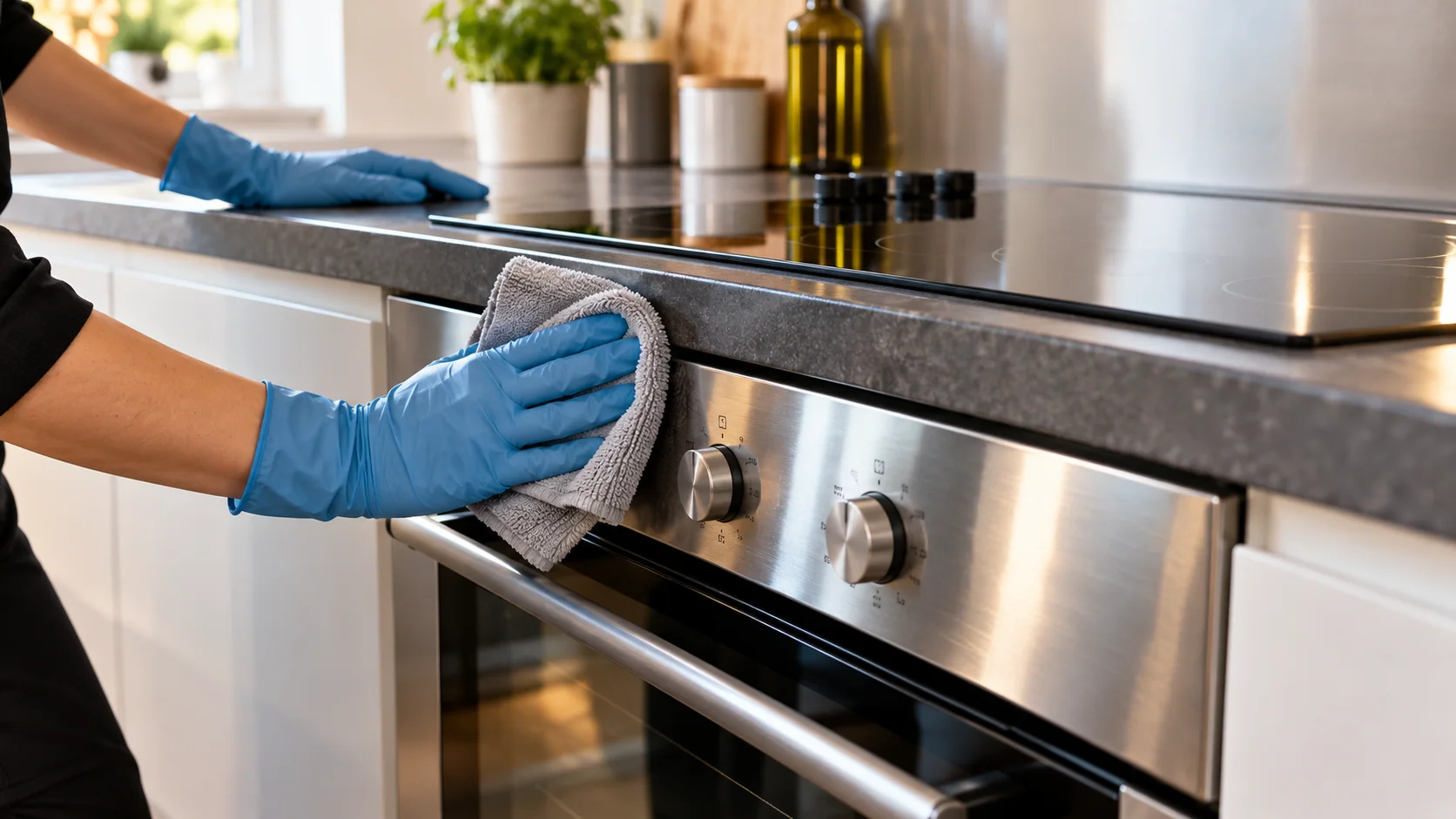
Plan the entire property, not only the entrance
Give the E4 address details, bedrooms, bathrooms, kitchen appliances and proposed date. Send photographs of bathroom scale, kitchen grease and any other marks as well as the floor route. Say whether storage and appliances will be emptied and whether landlord furniture remains. A written quotation should name the oven or fridge interior if required, accessible cabinets, internal glass and floor care. The final price depends on condition, access and extras, so ask what is and is not included before accepting it.
If a carpet runner needs extraction or stain assessment, discuss that separately from ordinary vacuuming. Stain treatment may improve appearance without removing a permanent mark, especially if earlier products changed the fibre. Do not book a specialist service solely because an agent used the word ‘professional’; ask what condition the inventory requires. A clear scope lets you decide whether the extra treatment is justified and helps avoid an unplanned charge.
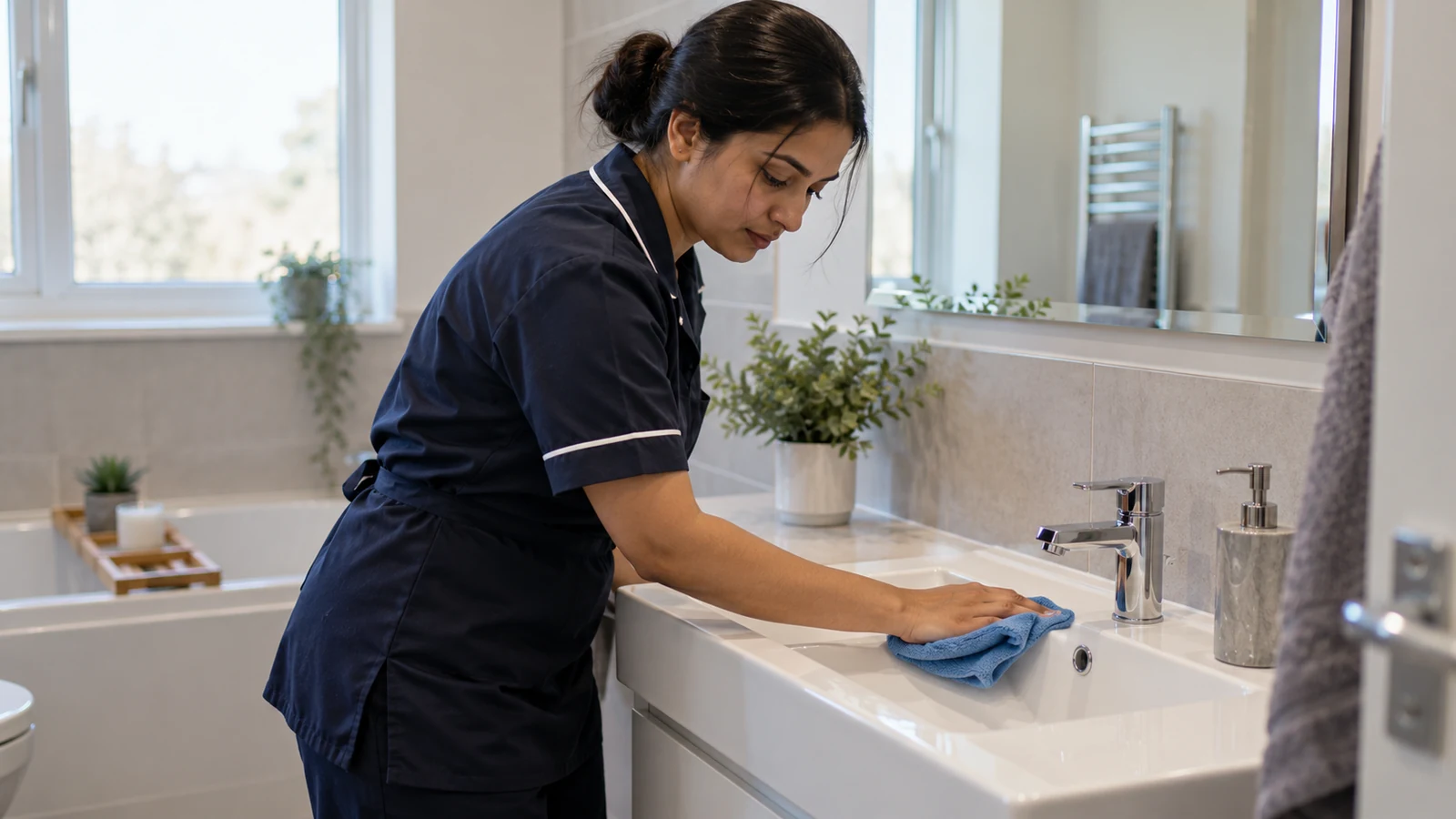
Stop new soil entering before the visit
Finish moving garden tools, planters and belongings before cleaning starts. Remove rubbish, empty storage and food appliances that need interior cleaning, and leave water and power available. If the garden route will still be used after the team finishes, plan how to protect the cleaned floors without covering damp surfaces prematurely. The best sequence is to move out, clean and then inspect, rather than dragging the last items across the hall after floor work is done.
Confirm keys and any gate arrangement for the actual property. A gate that is locked from the other side or a key left elsewhere can delay entry. Point out any delicate floor finish, loose edge or previous stain product during the initial review. Do not ask a cleaner to shift heavy outdoor equipment or use a method likely to drive water into an unsuitable floor. Access and material limits should be agreed before the work begins.

Give floors the right place in the sequence
Higher accessible dusting and emptied storage normally come before kitchen and bathroom work. Floor cleaning can follow those tasks so fresh dust does not settle back onto it. The garden route may need preliminary removal of loose debris before any damp treatment. The precise method depends on tile, timber, laminate or carpet, so a quote based on photographs and material details is more useful than a blanket claim that every floor will be steam cleaned.
A threshold may still show wear after soil is removed. If pigment has penetrated carpet or a protective finish has gone, cleaning cannot restore the original material. Keep close photographs of the before-and-after condition and discuss a remaining mark honestly. Repairs, replacement and outdoor drainage are separate from the tenancy clean. The visit can still produce an inspectable property without pretending those other issues have disappeared.
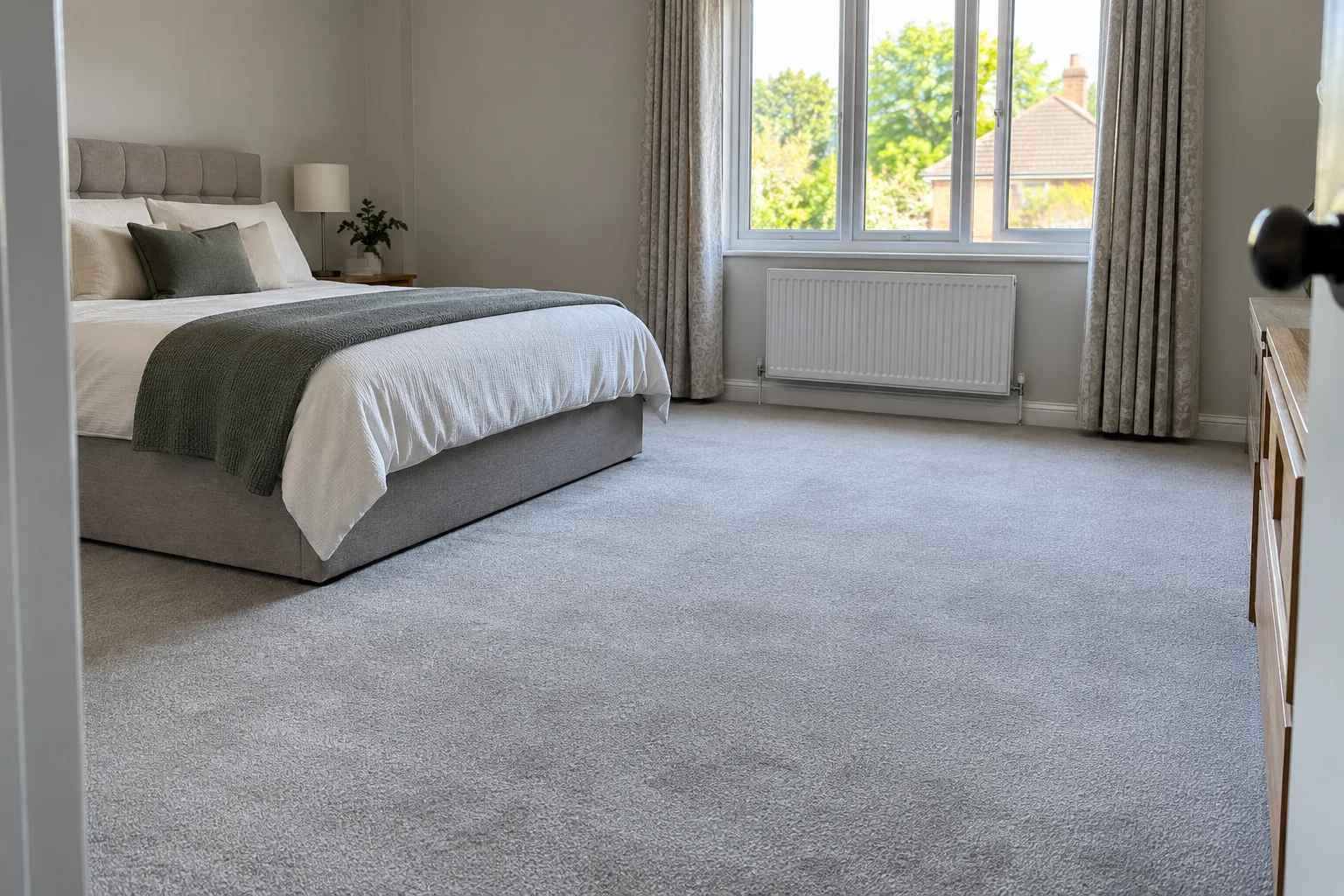
Review the route and the rest of the house
After cleaning, inspect from the entrance along the same route you photographed before, then check the kitchen, bathrooms, storage and other rooms against the quotation. Look at floor edges in good light and open any appliance or cupboard interiors included in the booking. If an agreed area appears missed, send a specific location and image promptly while you still have keys. A single entrance photograph will not document the rest of the tenancy handover.
Keep the original inventory, written scope, receipt and dated photos together. If the agent later describes a muddy floor or a damaged threshold, you can show which condition was present before, what treatment was booked and what remained. The evidence cannot guarantee a deposit result, but it helps identify whether the concern is cleaning, wear or another task. Leave enough time between the visit and key return for that inspection.
Questions about this handover
Chingford tenancy cleaning: practical answers.
Can garden mud on a Chingford tile floor be cleaned?
Usually loose soil can be addressed, but identify the tile and any stain or damaged finish. Show the route from the garden door in photographs. A cracked tile or failed grout is a repair issue.
What about a Chingford carpet runner near the garden door?
Tell us whether it belongs to you or the landlord and show any marks. Routine vacuuming and specialist extraction are separate. Remove your own runner before cleaning if the floor beneath needs access.
Should I clean the Chingford patio before the indoor visit?
If the tenancy requires outdoor work, ask about it separately. Garden waste and patio washing are not implied by an indoor clean. The practical priority is to stop carrying new dirt across finished indoor floors.
What if the Chingford floor is timber or laminate?
Provide the material and any care guidance before treatment. Heavy water can harm some finishes. A scuff, stain and worn protective coating require different responses; do not assume steam cleaning is suitable.
How should I show a stained Chingford threshold?
Take a close image and a wider view of the doorway, then compare the check-in inventory. Say what products you tried. A worn threshold may still look marked after appropriate soil removal.
Can cleaners move garden tools from my Chingford hall?
Arrange their removal before the appointment. Tools obstruct the floor and may carry fresh soil inside. Cleaners should not decide which items to dispose of or store as part of a tenancy booking.
When should I schedule floor cleaning in Chingford?
After removals and other work above the floors, with a gap before key return for inspection. If people continue using the garden entrance, plan how to avoid new footprints across the clean route.
Does a pet change the Chingford floor scope?
Tell us where hair, odour or marks are actually present, if any. Pet ownership alone does not define a treatment. A carpet stain may need separate assessment, while suitable hard-floor soil may be part of ordinary cleaning.
What should I photograph at my Chingford handover?
Record the entrance and garden route, then the agreed kitchen, bathroom, storage and other rooms. Keep before-and-after images with the quote so a later threshold concern can be assessed as soil, wear or damage.