
Move Out Mates / Hampstead
End of Tenancy Cleaning in Hampstead
If a Hampstead tenancy includes a mix of older fittings and newer appliances, the cleaning brief needs more detail than ‘deep clean throughout’. A newly fitted oven may need interior cleaning, while older painted woodwork may need a gentler approach and may show wear that cleaning cannot reverse.

Read the inventory for material and condition clues
At your first call, give the exact address and postcode; NW3 covers Hampstead but the full code identifies the property. Send the inventory, room list and photographs, then explain the key deadline. The aim is a written scope that treats each surface appropriately and can be checked at handover.
Do not use the inventory only as a list of objects. It may describe the condition of floors, windows, worktops, doors and bathroom fittings at the start of the tenancy. Compare those notes with current photographs after furniture has moved. Dust and grease may be removable; faded varnish, chipped paint or a broken tile are not the cleaner’s repair tasks. Mark each issue accurately so you can ask the agent about a maintenance item without asking the cleaning team to take a risk with the finish.
Make a room-by-room list of accessible surfaces. State whether the kitchen has an oven, extractor and fridge that remain with the property, whether the bathroom has a screen or natural stone, and whether any furniture stays. If a carpet or upholstered item appears in the inventory, clarify whether a separate specialist treatment is expected. A tenant should not assume that every item on an inventory is automatically included in an interior cleaning quotation.

Get a quotation that says how far the work goes
Tell us the room and bathroom count, condition of the oven and bathrooms, occupancy state and any known delicate materials. Ask about accessible cupboard interiors, appliance interiors, internal window glass and floors. Request any carpet, rug or upholstery work separately and check the proposed method. Starting prices are a guide, with the final quotation depending on size, condition, access and extras. A written description helps you compare offers and gives the key holder a clear plan on the day.
If a surface is visibly stained, do not accept an unqualified promise that a stronger chemical will restore it. Porous stone can etch, timber can lose finish and old sealant may hold discolouration below the surface. Ask what is likely to be cleaned safely and what may remain for the landlord or a specialist to assess. This is not an excuse to skip ordinary cleaning; it is the distinction between treating residue and damaging a property while chasing an impossible outcome.
Prepare the rooms and disclose sensitive items
Finish removals before the booked visit, clear personal possessions from shelves and cupboards, and remove rubbish and food. Leave water and electricity available. If a fragile mirror, original fitting or specialist-coated surface needs care, point it out at the start and provide any known maintenance guidance. Keep landlord belongings in place but identify them clearly. A cleaner should not have to decide whether an unlabelled vase or chair belongs to the tenant or the property.
Confirm who will admit the team and return the keys. A property may have steps, a shared entrance or an alarm, but the location alone cannot tell us which. Share the actual instructions with the quote and reconfirm them before the visit. If access depends on an agent, obtain permission in advance. This matters when a tenant has already moved away and cannot return quickly to resolve a locked door.
How a material-aware clean proceeds
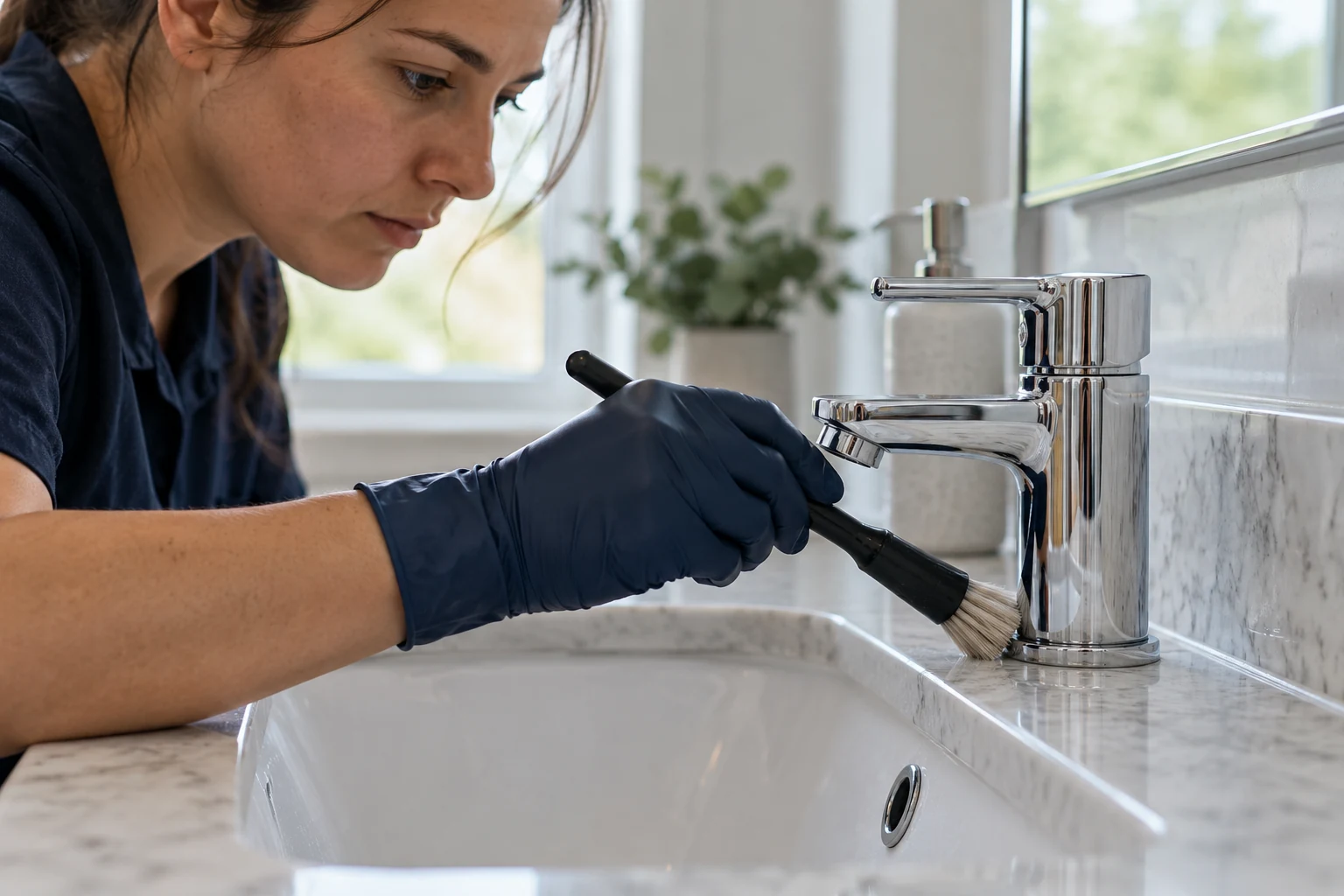
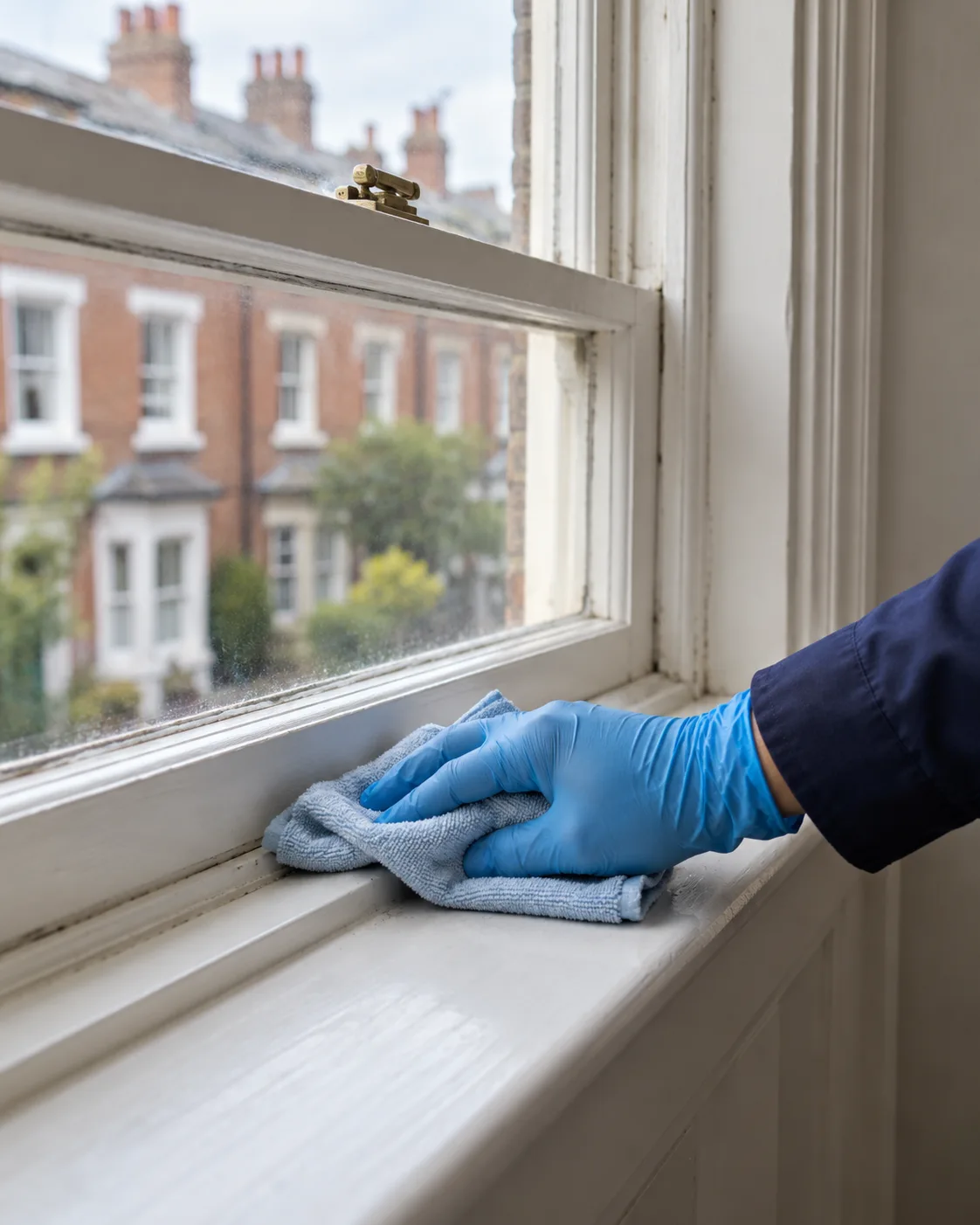
The team should inspect the accessible rooms against the written brief. Kitchen and bathroom residue can be addressed using products suited to the specific fixtures and finishes. Elsewhere, reachable joinery, skirting, doors, mirrors, internal glass and floors can be treated as agreed. Dust should be removed before final floor work, but the detailed order follows product contact times and drying. An older painted surface should not be scrubbed simply because it is still visibly worn after gentle cleaning.
If the team encounters an inaccessible area or a mark that does not respond safely, it should explain the limitation. Moving heavy furniture, dismantling a fitted appliance and repairing failed grout are not automatic parts of the visit. If an additional service might help, the method and cost need discussion before it is added. This keeps the job within what was authorised and avoids a last-minute dispute about unexpected work.

Judge the result against the agreed condition
Inspect the property after cleaning and before handover. Open the oven and cabinets, look at bathrooms from several angles, and check accessible floor edges and internal windows. If something in the agreed scope was missed, photograph the exact area and raise it promptly. Compare lasting marks with the move-in inventory rather than assuming that every imperfection is a cleaning failure. The checkout report may combine cleaning, wear and repairs in one list, but they require different responses.
Retain the quote, approved changes, images and agent’s report. A paid clean is evidence of work commissioned, not a guarantee of deposit recovery. For a Hampstead property with varied ages and materials, clear records of what was cleaned, what was delicate and what was already worn make the final discussion more factual. If a landlord asks for a second treatment of a stubborn mark, request the proposed method and the material guidance first. Repeating an unsuitable treatment rarely changes an etched or worn surface, and a written account of the first attempt is more useful than risking the finish shortly before checkout.

Questions about this handover
Hampstead tenancy cleaning: practical answers.
How can I brief cleaners on old and new fittings in a Hampstead rental?
Mark the rooms where newer appliances sit beside older joinery or stone, and share any care instructions. The quote can cover accessible residue without promising the same product or method for every surface. Existing wear belongs in a separate condition note.
What if the Hampstead inventory describes a mark that is still visible after cleaning?
Keep the original description and a comparable current photograph. A stain or scratch recorded at check-in may be condition rather than missed cleaning. Ask the agent to assess it against that record, not merely against a general expectation of newness.
Should I empty fitted wardrobes before the Hampstead visit?
Yes, if their accessible interiors are included in the agreed scope. Remove clothes and personal items so shelves and floors can be reached. Identify any landlord-supplied contents and confirm whether they should remain rather than asking the team to decide ownership.
Can an older painted door be scrubbed until a Hampstead checkout mark disappears?
It should be treated according to the finish, not scrubbed to an assumed result. Surface dirt may lift gently, but worn or chipped paint will not. Photograph the mark and ask the agent whether it needs repair or redecorating.
What should be agreed for a second oven in a Hampstead property?
Identify both appliances separately and photograph their interiors, racks and doors. Ask the quote to name the second oven and whether it is accessible and functioning. Its workload should not be hidden inside a generic kitchen line.
How do I protect a Hampstead timber floor during the end-of-tenancy clean?
Share any manufacturer or landlord care instruction and mention existing scuffs. The team should use a method appropriate to the finish and avoid excess moisture. Cleaning can remove suitable surface soil but cannot restore worn varnish or deep scratches.
Should the agent inspect a Hampstead bathroom with discoloured silicone before cleaning?
Send a dated photograph and ask whether the seal is sound. Suitable surface cleaning may improve residue, but staining inside failed silicone may persist. Replacement should be handled as maintenance, not silently added to the cleaning quotation.
What do I need from a key holder if I have already left Hampstead?
Give them the written scope, correct entrance and a way to contact you about a specific change. Confirm how keys are collected and returned. They can admit the team without being authorised to approve unlimited additional work.
How should the final Hampstead inspection distinguish cleaning from restoration?
Check the agreed oven, cupboards, bathroom fittings, internal glass and floors, then compare lasting marks with the inventory. Photograph a precise omission while access remains. A cleaning invoice records service, while repair or restoration questions need separate evidence.