
Move Out Mates / Camden
End of Tenancy Cleaning in Camden
Old paint, draughty window frames and settled dust can make a rented room look unclean even after ordinary wiping. If your Camden tenancy has sash windows or painted shutters, describe the actual fittings rather than assuming a cleaner can restore their finish.

Inspect the window condition before quoting
Camden Town is in NW1; include the complete postcode and building access when you enquire. Photographs, the check-in inventory and a list of accessible internal panes will help set a sensible scope. The visit can then address removable dust and residue without confusing worn paint, condensation damage or exterior glazing with routine end-of-tenancy cleaning.
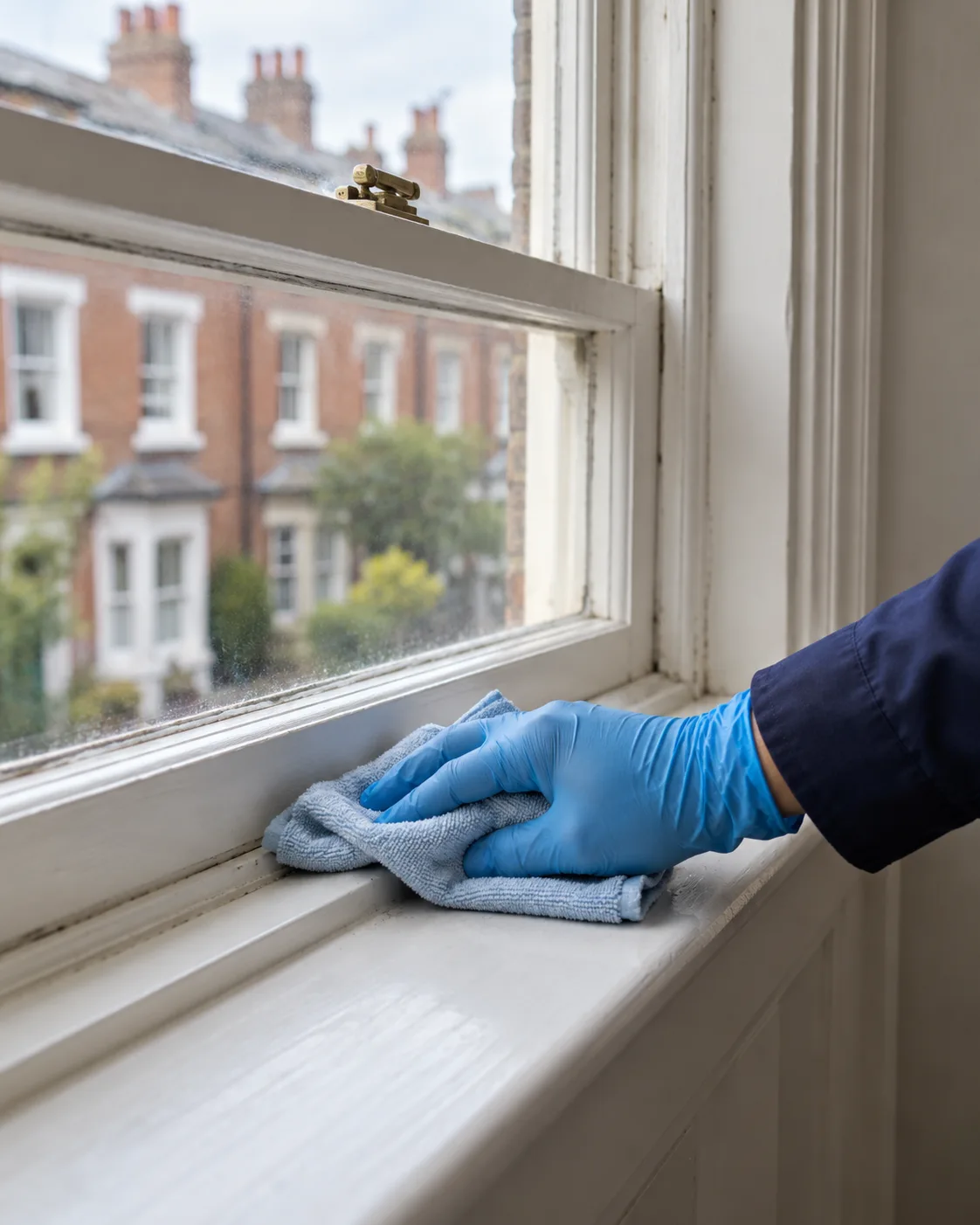
Photograph the frame, sill, glass and any shutter in good light. A wider image shows access; a close one shows whether the problem appears to be dust, adhesive, mould-like residue or a damaged coating. Check what the inventory said at the start of the tenancy. If paint is flaking or the sash does not move safely, report that to the agent. A cleaner should not be expected to force a stuck frame or scrape a fragile finish to satisfy a vague instruction to make it look new. If the original inventory includes photographs, compare like with like: a broad room view can hide a scratched sill, while a close image can exaggerate a small patch of ordinary dust. Take both kinds of photograph when you prepare the enquiry. This gives the cleaner useful context and gives you a fairer baseline for checking the result after the visit.
Ask whether the required work concerns internal reachable glass, frames, tracks or exterior panes. These have different access and safety implications. A high pane or outside surface may need a separate service; do not assume it is included because the window belongs to the room. If curtains or blinds need attention, identify their material and ask separately. Treating a delicate fabric as ordinary dusting can cause damage.

Quote the whole flat, with windows specified
Give the number of rooms and bathrooms, appliance list, floor types, condition photographs and preferred date. Say whether furniture will stay and whether all storage will be empty. Ask for a written list covering the kitchen, bathrooms, living spaces and any internal window work suitable for the property. If oven and fridge interiors matter, name them. Final pricing depends on size, condition, access and extras; a simple room count does not capture fragile fittings or heavy kitchen work.
Compare the list with your signed tenancy and check-in inventory. A dirty extractor, worn paint and scratched glass are three different conditions. Cleaning can remove suitable grease or dust, but cannot repair a coating or scratch. Note any previous product used on a mark before someone tries a stronger one. A clearly stated limitation is better than paying for an impossible result or damaging a landlord-owned fitting.
Prepare safely for the visit
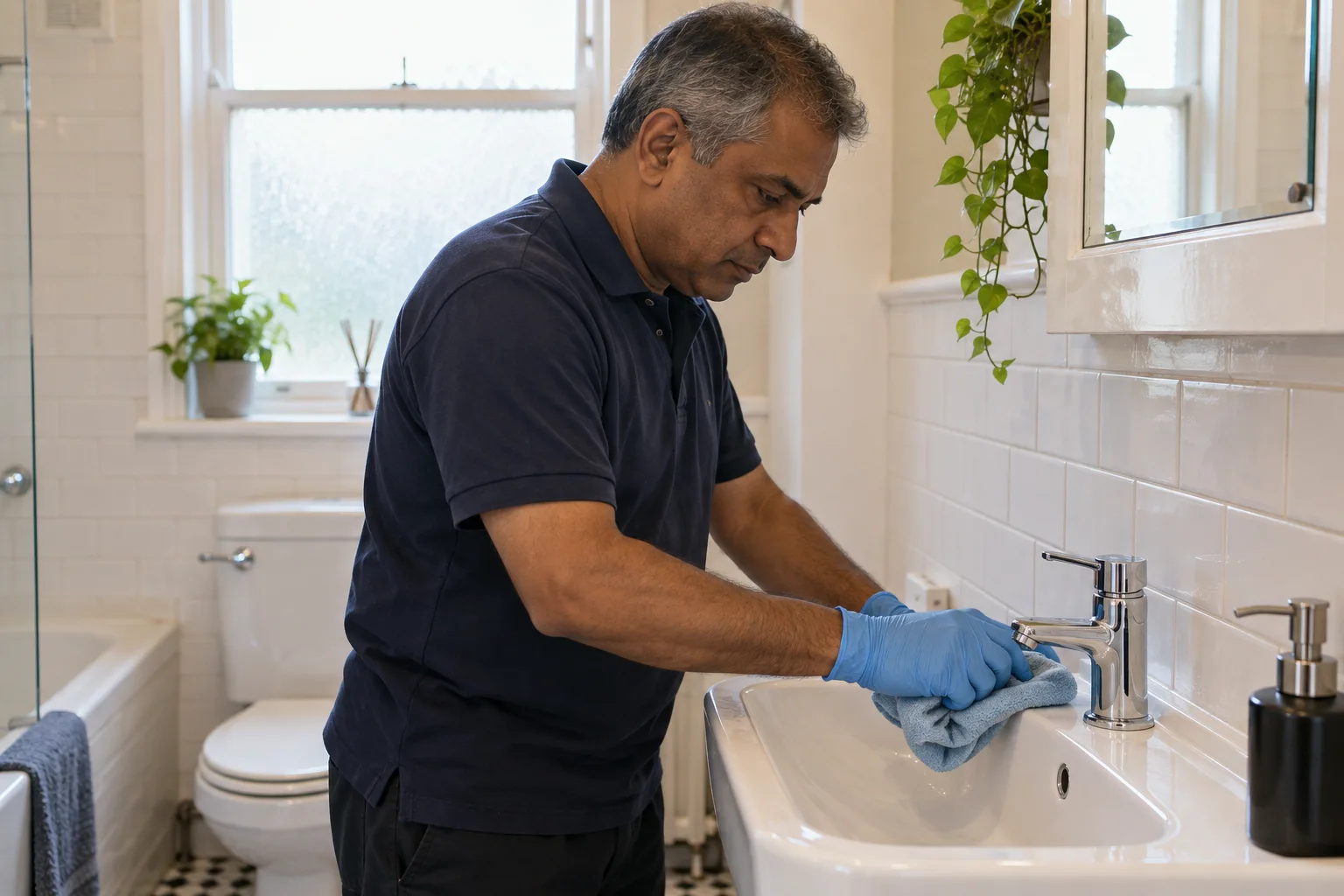
Move belongings and rubbish out, clear sills and empty cupboards and appliance interiors that need work. Keep water and power available. Confirm keys, intercom instructions and who can answer a question on the day. If a window must remain closed because it is defective, say so in advance. A cleaning plan should not depend on unsafe access or a tenant’s improvised attempt to open a damaged sash.
Point out delicate paint and frames at the initial check. The team can plan appropriate accessible dusting and internal glass care, then proceed through kitchen grease, bathroom residue and rooms, with floors handled after work above them. The precise order may vary with the property. If a surface needs a test or is unsuitable for routine treatment, it should be recorded rather than scrubbed harder under check-out pressure.
Decide whether another service is required
Exterior glazing, high-level access, specialist fabric cleaning and repairs are separate from ordinary indoor tenancy cleaning. If the agent expects any of them, ask for exact wording and discuss feasibility before accepting the quote. A tenant should know whether the price covers the reachable internal pane or a more involved task. That distinction affects timing as well as cost, especially if another provider must attend before keys are returned.
If the window frame has condensation staining or peeling paint, cleaning may improve loose surface dirt while leaving the underlying appearance. Raise suspected damp or maintenance with the landlord or agent and keep written evidence. A clean flat is not necessarily a newly painted flat. The aim is to hand over surfaces that are inspectably clean where suitable, with defects documented on their own terms.

Check the result from more than one angle
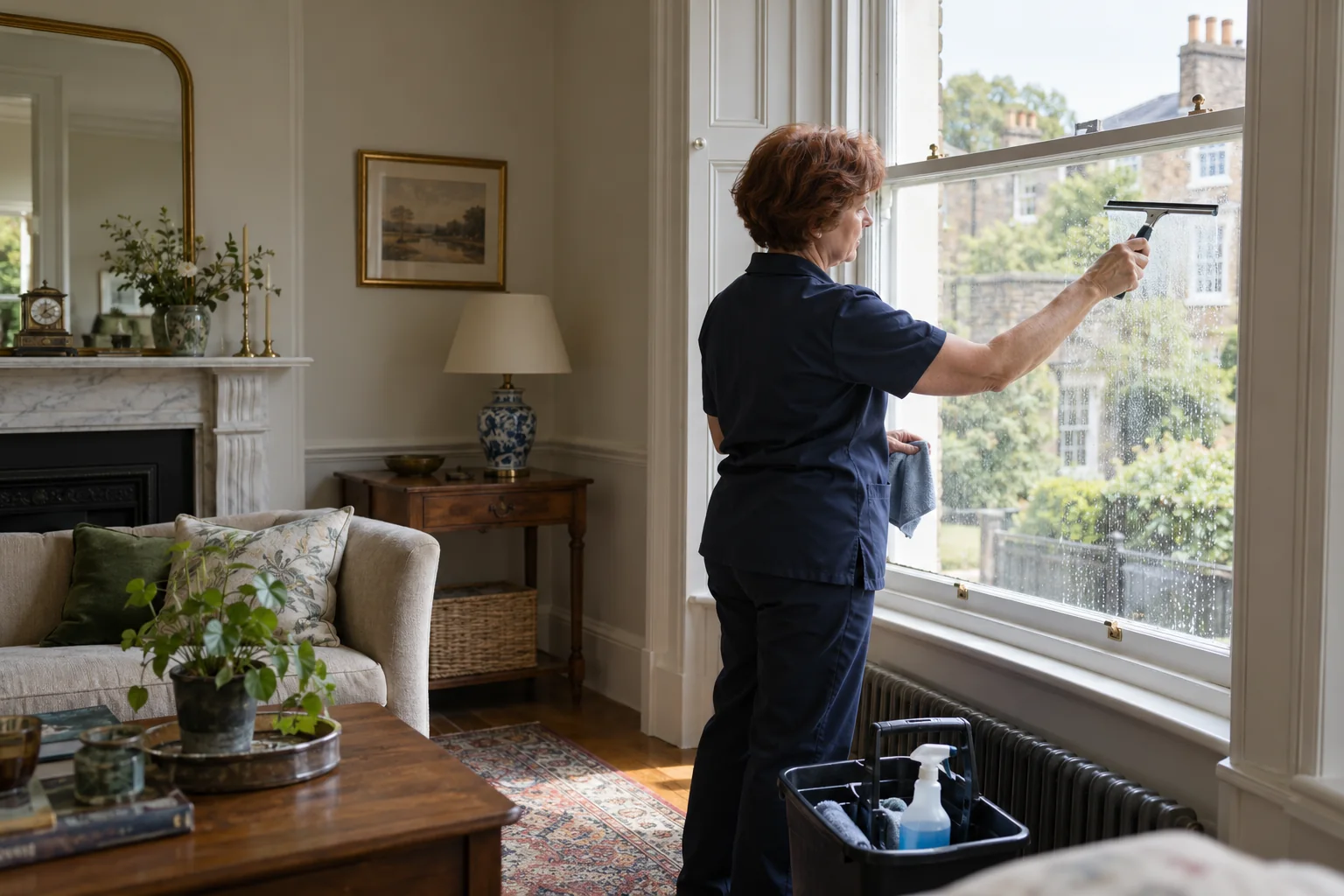
Inspect internal panes and sills named in the scope in daylight if possible. Then open agreed cupboards and appliance interiors, check bathroom fittings and look at skirting and floors. Photograph the result of each room, including any frame condition that could otherwise be mistaken for remaining dirt. If an accessible pane appears missed, send its exact location and a clear image promptly while the cleaner’s visit and your access are still recent.
Keep your original inventory, maintenance messages, written quotation and receipt with dated before-and-after photos. An agent’s report might mention a dirty pane, a defective sash or damaged paint; the records help you separate those findings. Do not rely on a general promise that all windows would be cleaned. A precise scope and evidence of the actual fittings make the handover discussion fairer and more practical.
Questions about this handover
Camden tenancy cleaning: practical answers.
Should a stuck Camden sash window be forced open for cleaning?
No. Photograph it and report the defect to the landlord or agent. Reachable interior glass may be cleaned, but the team should not damage a frame to access tracks or exterior panes.
How do I show worn paint on Camden window frames?
Take a wide photograph of the window and a close image of the peeling or stained area, then compare the check-in inventory. Cleaning can remove suitable dust, not restore a failed coating.
Are Camden shutters included in an end-of-tenancy clean?
List them and their material. Reachable dusting may be suitable, but fragile paint or mechanisms need care. The written scope should say whether shutters are included rather than treating them as ordinary glass.
Can condensation between Camden window panes be wiped away?
Moisture trapped inside sealed glazing cannot be reached from the room. Report the likely glazing issue to the agent. The cleaner can still address suitable internal pane surfaces if agreed.
What about upper Camden window panes?
Send photos showing height and access. An upper internal pane may require a separate safe-access assessment; exterior glazing is distinct again. Do not ask cleaners to stand on furniture or an unsafe sill.
Will Camden curtains be washed during the tenancy clean?
Not unless a separate fabric service is discussed and suitable. Share the care label and inventory condition. Removing or wet-cleaning delicate curtains without assessment can cause shrinkage or damage.
How should Camden window tracks be prepared?
Remove your possessions from sills and show whether tracks are accessible through normal window operation. Do not force a damaged sash. Ask for track cleaning explicitly if it matters to your check-out.
Does a Camden frame stain always mean dirt?
No. It may be condensation damage, worn paint or a mark in the material. Show close photos and any maintenance correspondence. Cleaning should not be sold as a way to repair the frame.
What should I record at my Camden handover?
Photograph the agreed internal glass, sills and shutters in daylight, then the kitchen, bathroom and floors. Keep the scope and inventory with the images so a later window comment can be assessed precisely.