
Move Out Mates / Greenford
End of Tenancy Cleaning in Greenford
If you are leaving a Greenford property that has been used as a home and a workspace, the checkout clean needs a clear boundary. A desk, equipment and boxes may have been moved out, but their former positions can reveal dust, floor marks and cable residue.
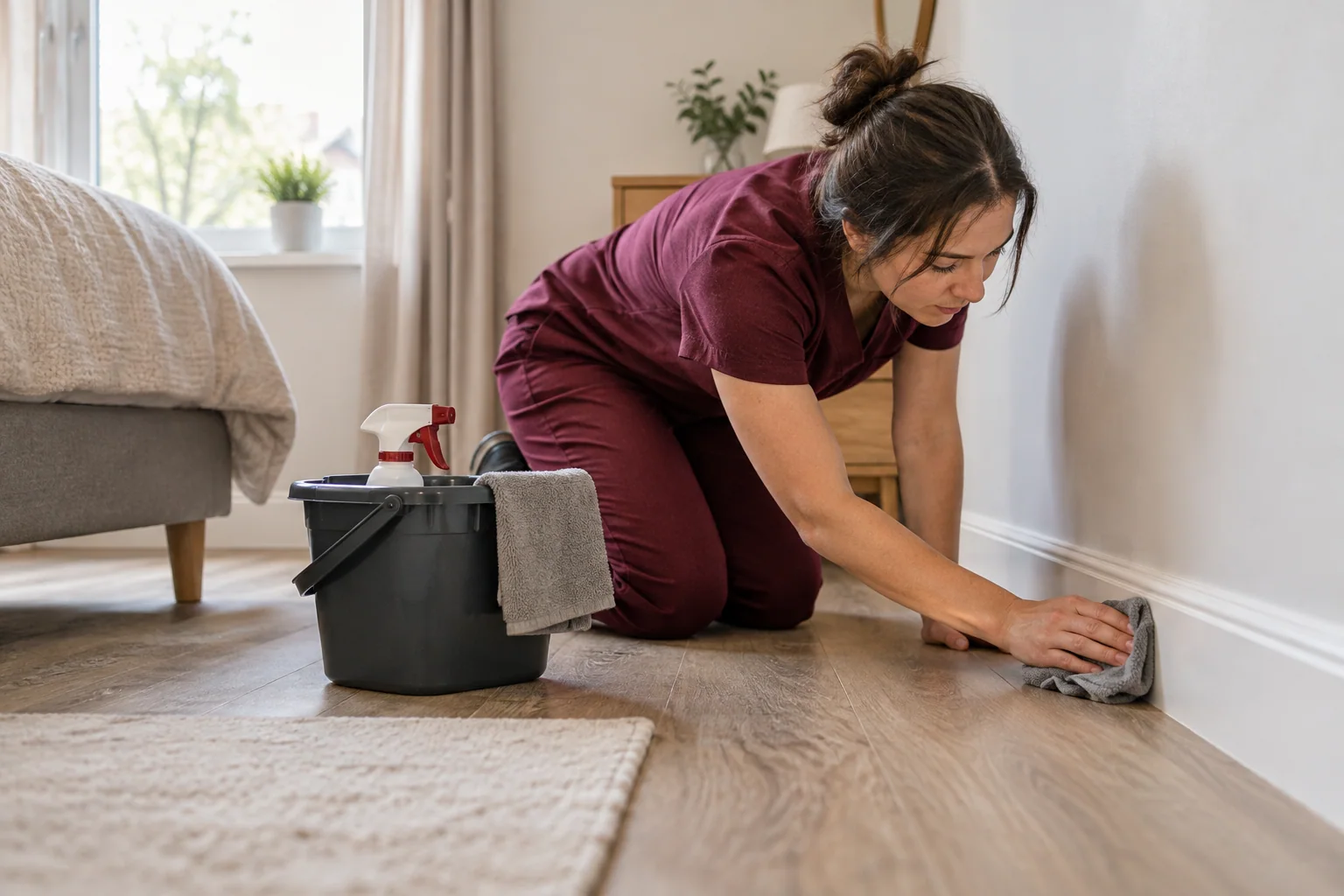
Look behind the former workspace before booking
Start with the tenancy inventory and a fresh walk-through after your own items are gone. At your first enquiry, give the full address and postcode; UB6 covers Greenford, but the complete code identifies the actual property. Tell us which rooms were used for work, whether fitted furniture remains and when the keys are due back. That information helps shape a room-by-room quote that addresses accessible surfaces without treating repairs or equipment disposal as cleaning.
Move the desk and storage units before photographing the room. Check skirting, sockets, window ledges and the floor where the chair sat. Dust is a normal cleaning task; gouges in laminate, adhesive damage to paint and compressed carpet are different conditions. Record them separately and ask the agent how the checkout inventory treats them. A cleaner should not use a harsh product on a painted wall in an attempt to erase a mark that needs repair or redecorating.
If work equipment was stored in a spare bedroom, confirm that every item, cable and packing material will leave with you. An empty room gives the team access to corners and inside storage. If fitted shelves or cupboards remain, name them in the brief. If the property contains a separate office supplied by the landlord, say whether it has a carpet, blinds or specialist surfaces that need a separate discussion. The word ‘office’ alone is too broad to define the work.

Build the quotation from the whole property
The former workspace is only one part of the tenancy. List the bathrooms, kitchen appliances, living spaces, stairs and any utility area. Give photographs of the oven and extractor, bathroom screens and any stained floors. Ask whether accessible cupboard interiors, internal glazing and appliance interiors are covered. If you want carpet, upholstery or exterior window treatment, request those by name. The published starting prices are guides; final cost depends on size, condition, access and optional tasks.
A useful written quote also states what happens if the team finds a blocked room or a condition that was not visible in the photographs. Extra work should be explained and priced before it starts. Avoid relying on a phrase such as ‘professional standard’ without a list of rooms and surfaces, because it leaves both customer and cleaner guessing. The checkout inventory provides a more practical reference, though it may also include wear and repairs outside the cleaner’s remit.
Hand over an empty and workable home
Finish the removal of furniture, office equipment, personal items and waste before the visit. Empty cupboards and the fridge, leave water and electricity available and make any alarm or key instructions clear. If the moving van is returning for one final load, schedule the clean after that load. Pulling equipment across newly cleaned floors risks creating marks and can make it unclear whether an issue existed when the cleaner finished.
Decide who will meet the team and answer questions. A family member can provide access, but only if they know which areas are in scope and can reach you for a decision. If a fitted desk or heavy cabinet belongs to the landlord, do not assume the team can move it. Point out inaccessible areas in advance and ask whether any safe access is possible. An honest limitation is preferable to damage caused by forcing furniture or fittings.
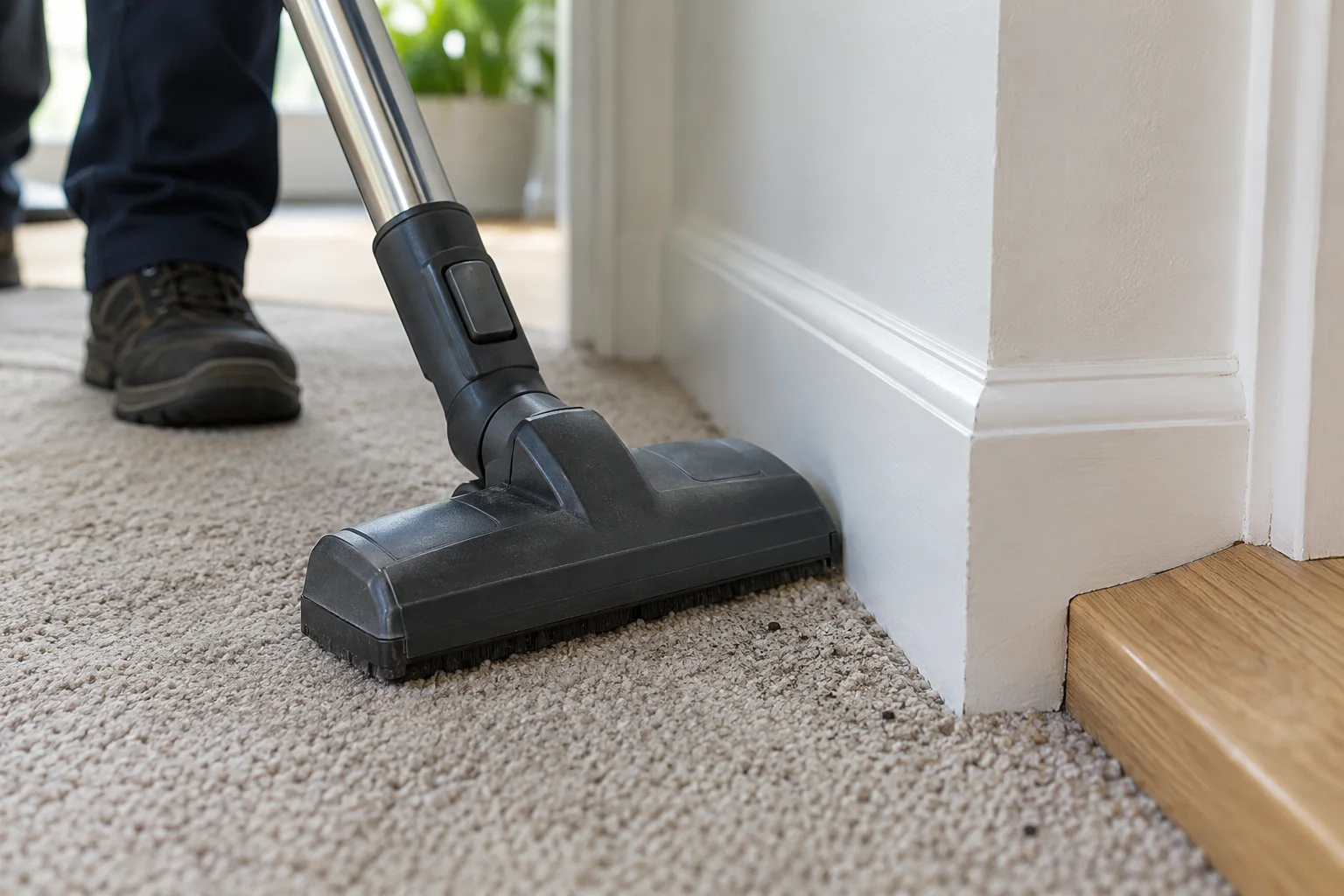
Expect a sequence based on materials, not room labels
The team should begin by checking the property against the agreed brief. Kitchen and bathroom surfaces can be treated with methods suited to grease, limescale and soap residue, then reachable fittings and internal glass can be attended to elsewhere. Dust from shelves and skirting should be handled before the final suitable floor treatment. The former office may have delicate electronics sockets or a particular floor finish, so it should be approached as a set of materials and accessible surfaces rather than as a generic ‘spare room’.
Cleaning will not remove every trace of use. A chair’s permanent pressure mark, scratched paint or adhesive pulled from plaster may remain. Likewise, a bathroom seal that is deteriorating can look discoloured after surface residue is gone. If such an issue becomes clear during the visit, the team should flag it and avoid a damaging attempt to make it disappear. Any change from the agreed scope should be discussed before additional work is done.
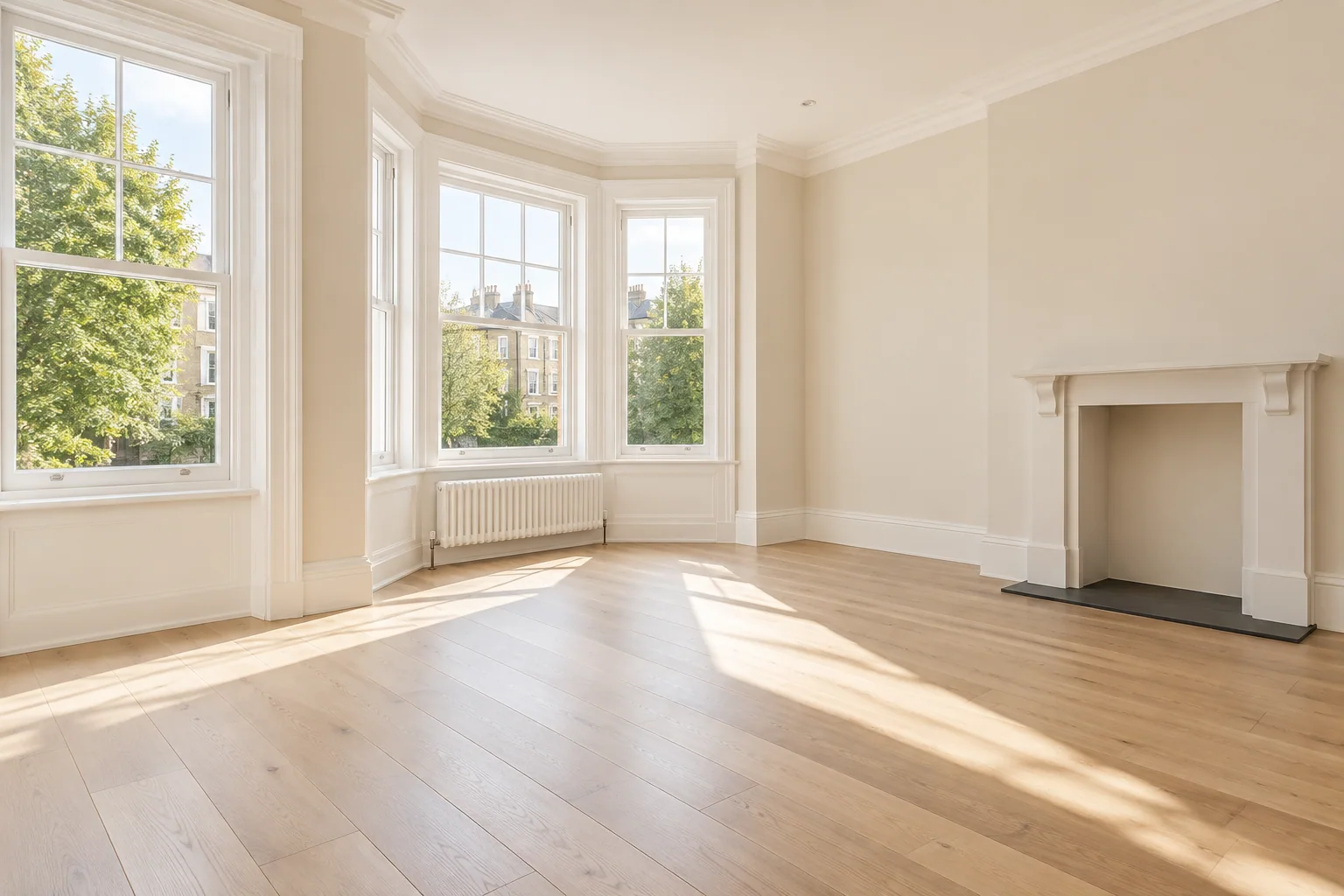
Check the room where the desk used to stand
After the clean, inspect the kitchen, bathrooms and other rooms against the brief, then return to the former workspace in daylight. Look at the edges that furniture once hid, the window ledge, skirting and floor. Photograph a specific cleaning omission while access remains and raise it promptly. Photograph wear or damage separately, because it may need a different conversation with the landlord. A general statement that the room is ‘not right’ is harder to resolve than a named surface and image.
Keep the quotation, any approved extras, completion record and checkout report together. They show what was requested and what could be inspected, but they do not guarantee a deposit decision. In Greenford, as elsewhere, the useful aim is a clean property with a clear account of its remaining condition. That is especially important when a work area has changed how one room was used during the tenancy.
Questions about this handover
Greenford tenancy cleaning: practical answers.
Could a weekend move-out change the cleaning brief for a move from Greenford?
A weekend move may change when keys can be collected and whether a building permits visitors or loading. Confirm the actual access arrangements before booking. More importantly, give the time the last desk and boxes will leave, so the work area is accessible.
How should I prepare for a property above the ground floor when booking cleaning in Greenford?
Describe the floor level, stairs or lift, and the route from the entrance. A postcode does not show whether equipment can be brought in easily. If lift use must be booked, arrange it before confirming the cleaning slot.
How should built-in storage behind sliding doors be recorded in my Greenford cleaning arrangements?
Empty the sliding-door storage and show how the doors open without forcing them. Ask for reachable shelf interiors and tracks to be listed in the quote. A fitted unit should not be dismantled simply to reach a hidden recess.
What should I do if high kitchen cabinets comes up close to my Greenford handover?
Photograph the high cabinets and say whether they are empty. Ask which surfaces can be reached safely with the team’s normal equipment. A cleaner should not climb on a worktop or risk a fall to satisfy an unspecified ‘all cupboards’ request.
Which details about a heated towel rail help scope a tenancy clean in Greenford?
Tell us whether the rail is heated, fixed and in working order, and show any limescale or paint wear. The team can discuss safe accessible wiping when cool. Electrical faults or loose brackets belong with the landlord or a tradesperson.
What should I confirm about vinyl flooring with ingrained marks before an end-of-tenancy clean in Greenford?
Show the marks after furniture has left and identify the vinyl type if known. Some surface residue may lift, but dye migration, indentations or worn coating can remain. Avoid abrasive products that may strip the floor’s finish before checkout.
How does fixed windows above a lightwell affect planning a tenancy clean in Greenford?
Fixed glazing above a lightwell may not be reachable from either side without specialist access. Provide photographs from a safe position and ask specifically what internal surfaces are included. Do not assume exterior high-level cleaning is part of the interior visit.
What should I tell Move Out Mates about rubbish discovered behind furniture at my Greenford property?
Remove the rubbish yourself or arrange a separate clearance service before cleaning. Tell the team if sharp or unidentified material is present, and do not ask them to sort it. Once cleared, photograph the exposed floor and skirting for the scope.
How should I prepare for an extra bathroom when booking cleaning in Greenford?
Add the bathroom to the room list before the quote is confirmed, showing its fixtures and condition. An extra toilet or shower creates more work than the original property description suggests. Empty toiletries and make the room accessible on the day.