
Move Out Mates / Hackney
End of Tenancy Cleaning in Hackney
When a Hackney tenancy ends in a converted flat, the cleaning plan may need to account for narrow stairs, shared entrances and rooms with several different finishes. None of those details should be guessed from the district name.
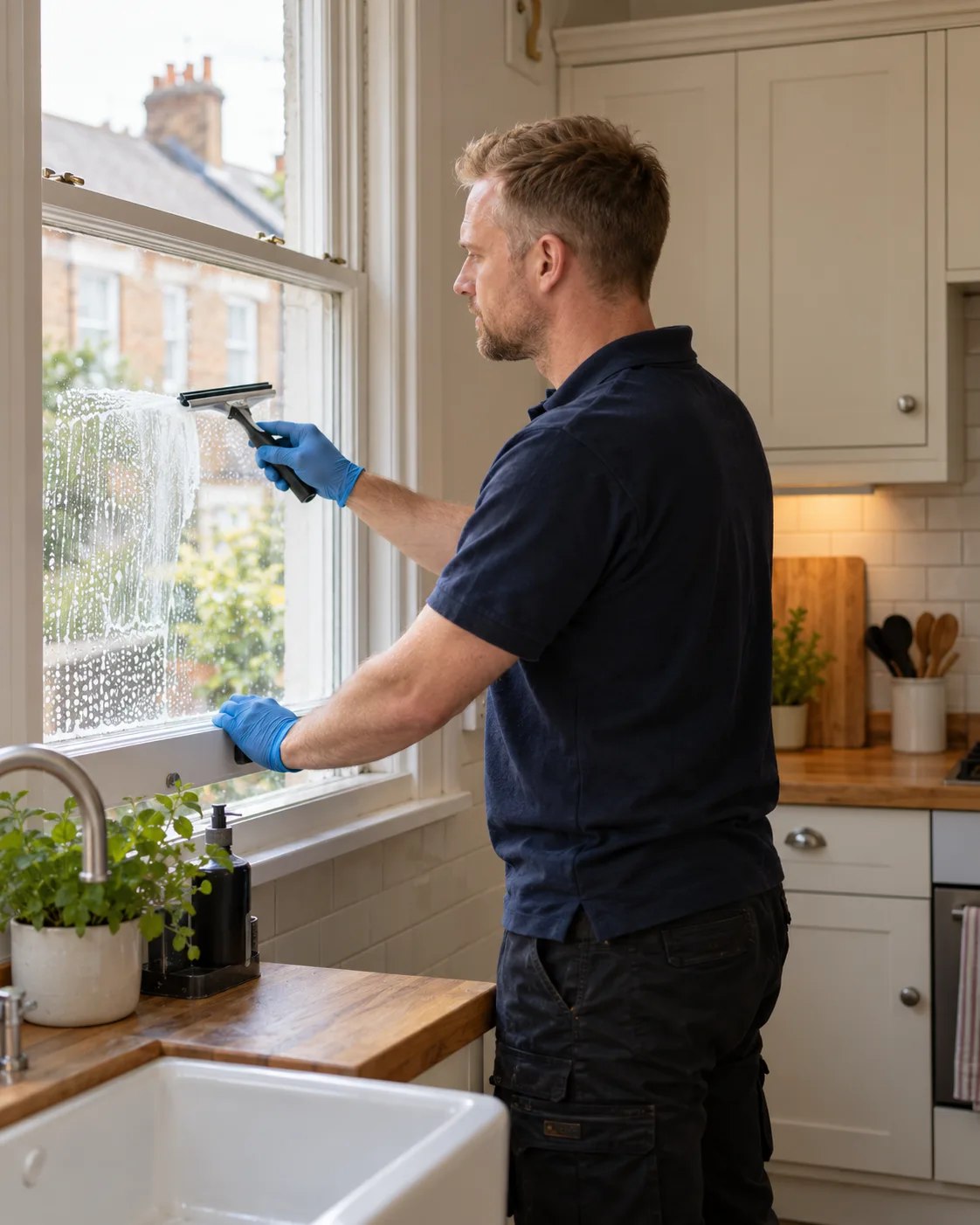
Separate your flat from the shared building
At your first enquiry, give the full property postcode and address; E8 is one Hackney postcode district, while the exact building determines access. Share the inventory, room count, photographs and key deadline. The useful aim is to agree what can be cleaned inside your flat, how the team will enter and what remains the landlord’s maintenance responsibility.
A checkout inventory may include your own hall and stairs, while the block’s shared stairwell is maintained separately. Identify the boundary before asking for a quote. If the agent has asked you to leave a shared landing clear, that may mean removing possessions rather than hiring the tenancy cleaner to treat communal space. Obtain permission before arranging work outside the flat, particularly if the common areas have protected finishes or a managing agent’s rules. This avoids an accidental promise to clean an area outside the tenant’s control.
Within the flat, list every room, bathroom, fitted cupboard and appliance. A converted property can contain awkward alcoves or original joinery, but the team can only work where it is safe and accessible. Photograph delicate surfaces and existing marks, then ask whether they are ordinary dirt or a repair issue. Cleaning a painted ledge is different from restoring chipped paint; dusting an original feature is different from removing a stain embedded in old timber.
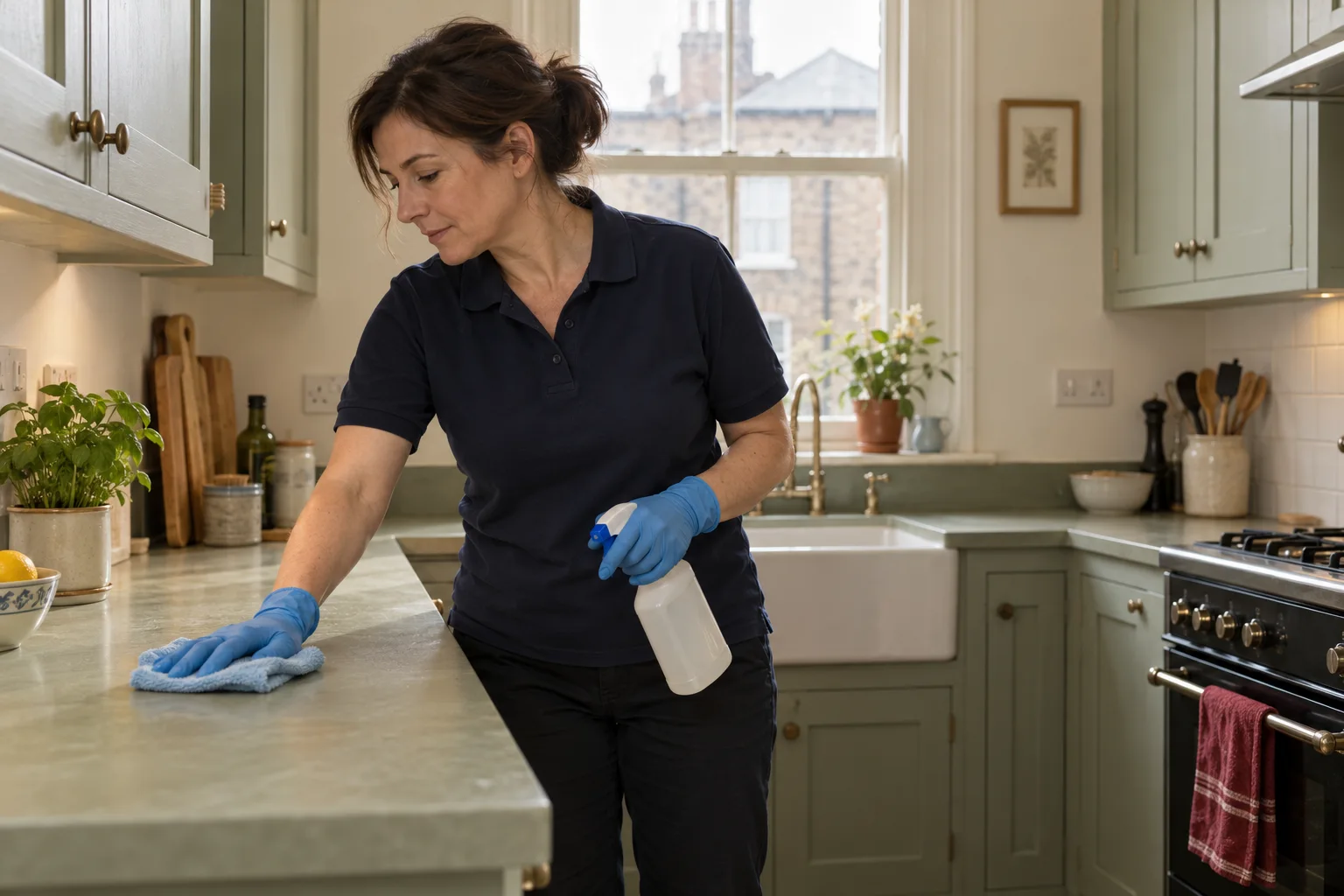
Use the first call to make the quote specific
Tell us whether the flat will be empty, how many bathrooms it has and which kitchen appliances need interior attention. Describe the oven and extractor honestly, and provide images of any limescale or stubborn residue. Ask whether reachable cupboard interiors, internal glass and floor cleaning are included. If carpets, upholstery or exterior windows need work, request them separately. Starting prices are guides rather than fixed bills; the final quotation depends on size, condition, access and agreed extras.
Mention the stairs and entry system early. If a team must be admitted by a key holder or can only use a particular entrance, the booking needs that information before confirmation. Parking should never be assumed from the postcode; describe any known restriction and let the practical arrangements be checked. A written scope and access plan are more useful than a low headline figure if the team cannot reach the property at the arranged time.
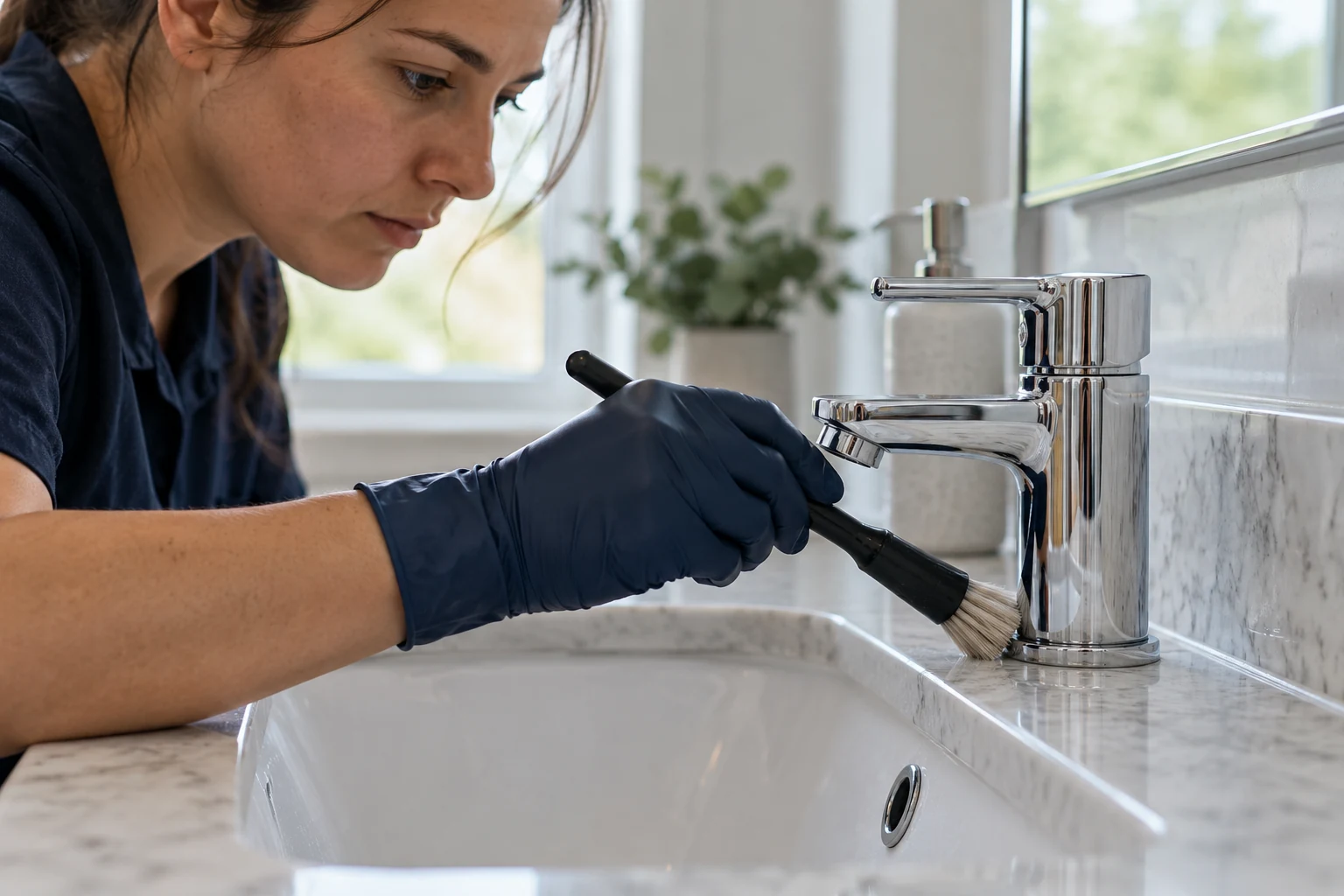
Empty the alcoves and arrange a key holder
Finish removals before the cleaning visit. Empty shelves, under-stair cupboards and fridge compartments, remove personal furniture and waste, and leave water and electricity connected. If a built-in cupboard contains landlord items, identify them rather than asking the team to decide what stays. In a small converted flat, bags left in an alcove can block both the floor and the skirting behind them. Clearing them first gives the team a fair opportunity to cover the agreed areas.
Arrange for someone to open the correct door and answer questions. If the agent provides keys, confirm collection and return in writing. The person meeting the team should have the room list and be able to authorise only specific changes after hearing the cost. If movers still need to use the shared staircase, schedule the cleaning after their departure where possible; repeated traffic can carry dust back into a freshly cleaned flat.
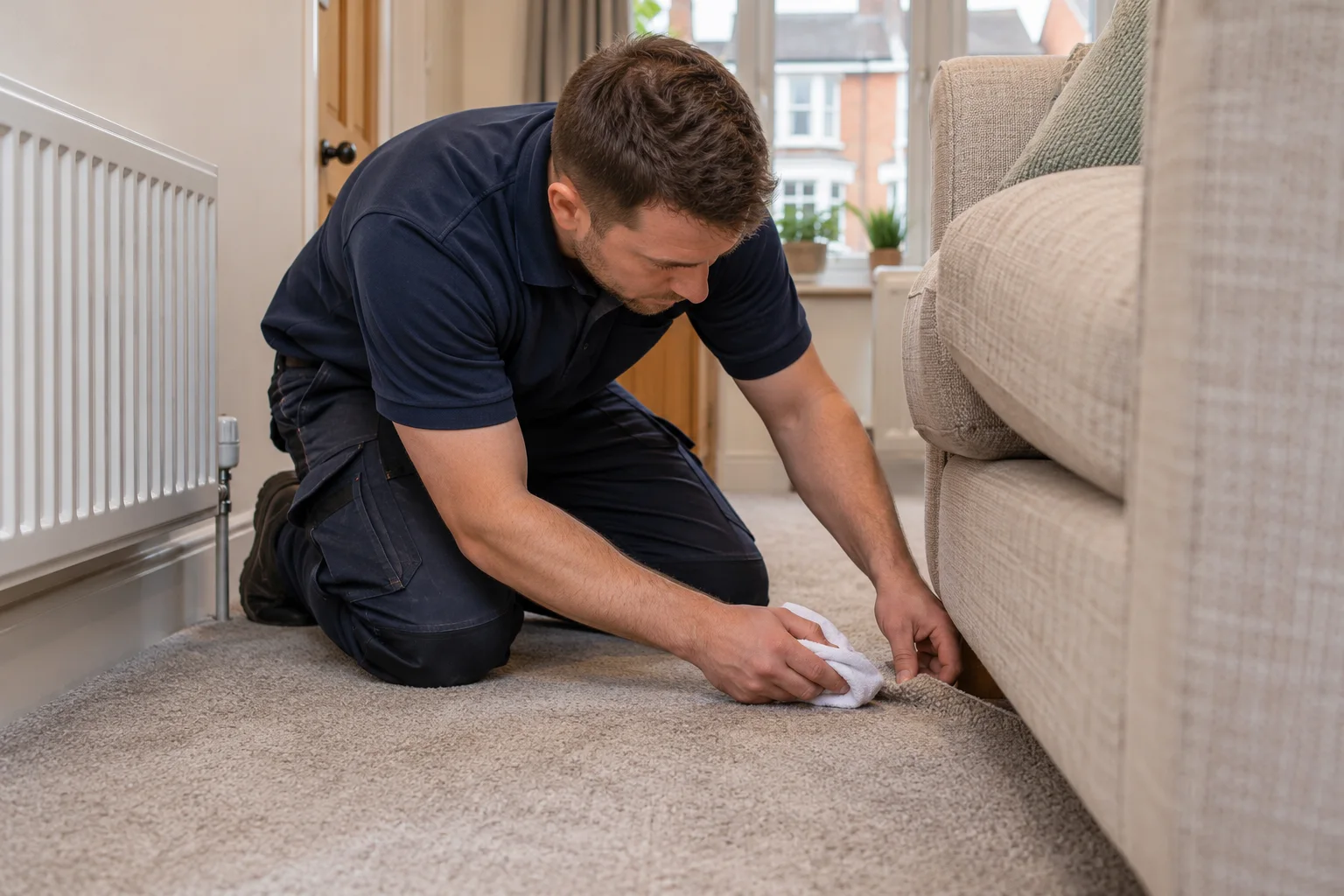
Treat each finish appropriately during the visit
The team should check the booked scope against the rooms as presented. Kitchen and bathroom cleaning may address grease, food residue, limescale and soap film with suitable products, while other rooms receive attention to reachable fittings, doors, internal glazing and skirting. Floors are approached according to their material. A painted wooden stair, tile and laminate floor should not be treated with one universal method. The sequence is adjusted to the property and drying needs rather than fixed in advance.
Old paint, porous stone, failed sealant and scratches may resist cleaning or be vulnerable to strong products. If a mark will not lift safely, the team should explain the limitation. They should not dismantle a fitted appliance or move a heavy item merely to satisfy a vague promise of ‘deep cleaning’. When an unexpected condition changes the work, agree what can be done and any extra charge before it starts.
Inspect your rooms before leaving the shared entrance
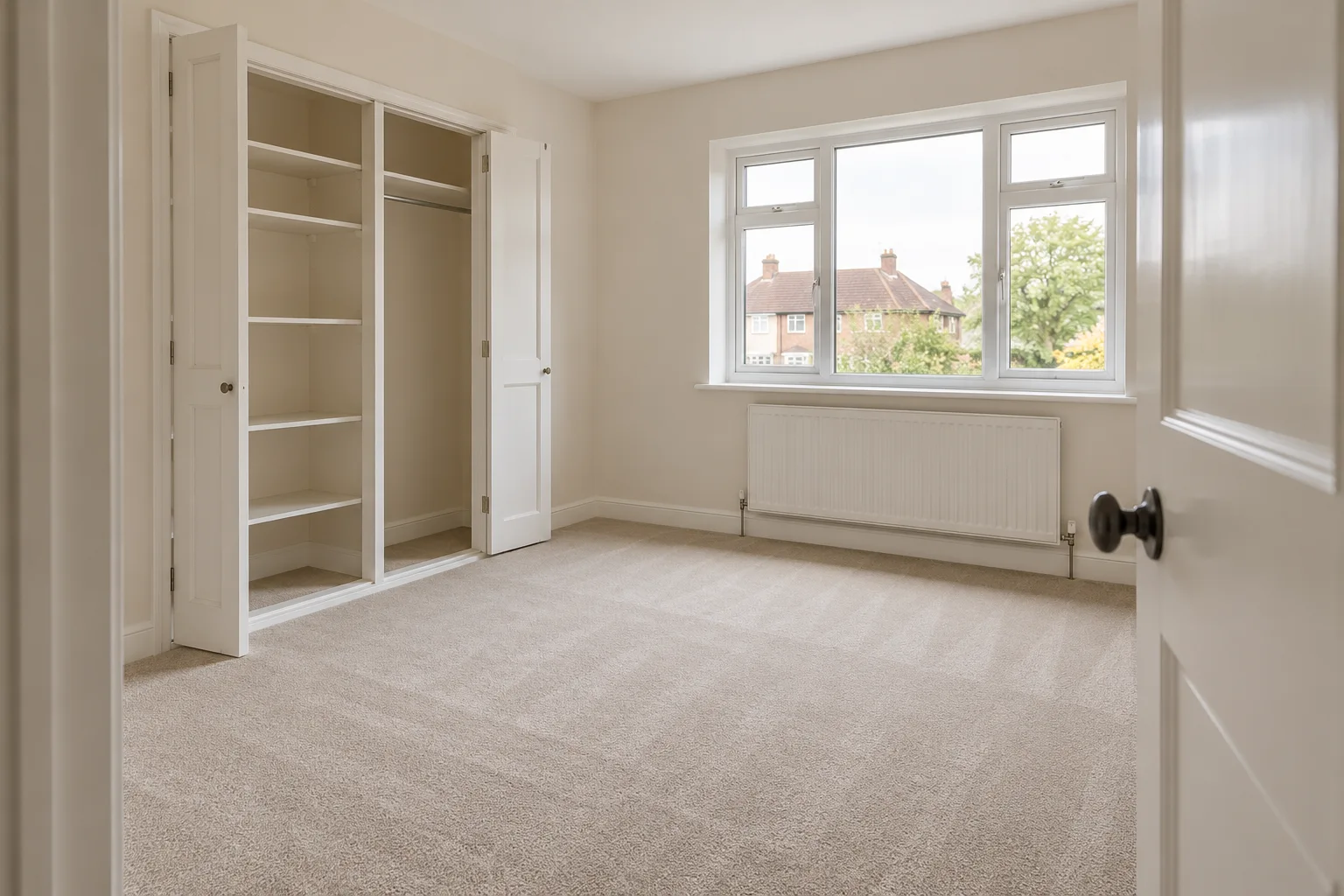
Walk through the flat against the inventory and written scope while you still have the keys. Open the oven and cupboards, look at bathroom fittings and inspect the floor edges that were accessible. Photograph a specific missed cleaning item and report it promptly. Then check that no personal possessions or cleaning equipment remain in the communal route. This final check is practical in a shared building because the landlord may inspect the flat while a managing agent looks after the common areas.
Keep the quotation, any agreed variation, completion evidence and checkout report. If an agent later cites a cleaning shortfall, ask for the exact room, surface and image. Wear, maintenance and shared-building issues should be considered separately. An invoice does not guarantee a deposit decision, but a documented handover makes it easier to explain what was actually cleaned and what was beyond your tenancy’s boundary.
Questions about this handover
Hackney tenancy cleaning: practical answers.
Which details about a handover appointment with the agent help scope a tenancy clean in Hackney?
Give the agent’s appointment time when asking for a quote and reserve time for your own inspection first. If the visit follows removals, say when the flat will actually be empty. A checkout meeting is not a substitute for checking the clean.
What should I tell Move Out Mates about an alarm that stays active at my Hackney property?
Explain how the alarm is disarmed, who may receive the code securely and whether it reactivates automatically. Test the access procedure before the appointment. A cleaner cannot work through an active alarm while waiting for an absent key holder.
How does paint splashes from recent work affect planning a tenancy clean in Hackney?
Tell us when the painting was done and whether the paint is fully cured. Photograph the splashes and identify the surface beneath them. Removal may risk damage to flooring or glass, and the contractor may be responsible for tidying the work area.
How should I prepare for an induction hob with marks when booking cleaning in Hackney?
Photograph the marks and identify whether they are food residue, scratches or damage to the hob surface. Use of an abrasive tool can ruin induction glass. Ask what safe cleaning can be attempted without promising the panel will look newly installed.
Could a bathroom with no working light change the cleaning brief for a move from Hackney?
Report the failed light to the landlord and arrange safe temporary lighting before the visit. Poor visibility affects cleaning and inspection, especially around wet floors. The team should not be expected to repair wiring or work in an unsafe dark room.
What should I do if a doormat and runner left behind comes up close to my Hackney handover?
Confirm whether the mat and runner belong to you or the landlord. Remove your own items; list supplied textiles if they remain. Rug or runner treatment is a separate service and should not be assumed within hard-floor cleaning.
What should I do if upper-floor external windows comes up close to my Hackney handover?
Upper-floor exterior panes need an access and safety assessment. Show photographs and ask for a separate exterior glazing quote if required. A general end-of-tenancy clean can cover agreed reachable internal glass without implying someone will lean from a window.
How does unwanted furniture affect planning a tenancy clean in Hackney?
Arrange removal of unwanted furniture before the visit or request a separate clearance solution. The team cannot decide ownership or dispose of a sofa under a cleaning quotation. Furniture left in place also blocks floor and skirting behind it.
What should I confirm about the oven and hob condition before an end-of-tenancy clean in Hackney?
Open the oven and photograph its interior, racks and door, then show the hob in good light. Distinguish grease from scratches or worn enamel. Confirm which parts are included in writing so the team and checkout agent assess the same task.