
Move Out Mates / Leyton
End of Tenancy Cleaning in Leyton
If a Leyton rental has been occupied while decorating or small repairs were underway, the checkout clean needs to start only after that work is finished. Paint dust, filler and tools can make ordinary cleaning ineffective if a tradesperson returns afterwards.
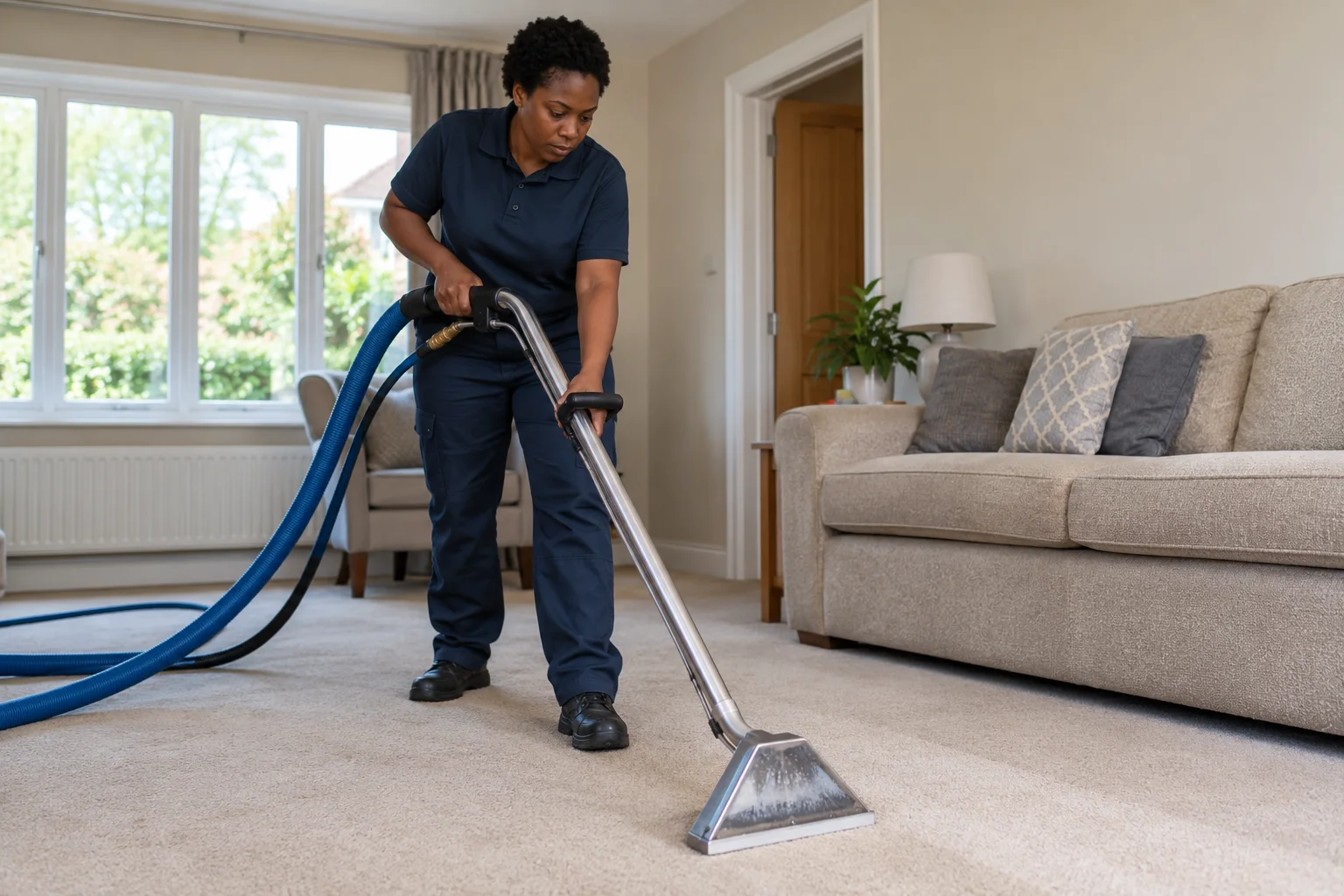
Decide which work finishes before cleaning begins
At your first enquiry, provide the full address and postcode; E10 is Leyton’s district, but the complete code identifies the property. Send the inventory, room count, photographs and key deadline. Explain what work the landlord has authorised and when it will end. The quotation can then cover accessible cleaning tasks without confusing them with building dust removal or unfinished repairs.
Ask the landlord or agent whether any repair visit is planned before checkout. A newly painted wall, repaired tile or replaced appliance can leave dust or packaging that should be cleared before the final clean. If tradespeople must return after the cleaners, decide who will address the new residue. The cleaning team cannot guarantee a finished appearance in a room where sanding or installation continues. Put the sequence in writing so the date is based on an actual handover of the property, not an optimistic estimate.
Separate repair from cleaning in the inventory. A scuffed painted door may need touch-up; grease on a handle needs cleaning. Filler residue can be removed only if the surface can be treated safely, and the person who made the repair may be responsible for tidying the work area. Photograph existing marks and ask which party should resolve each one. This prevents a general tenancy clean from being priced as an open-ended after-builders service.
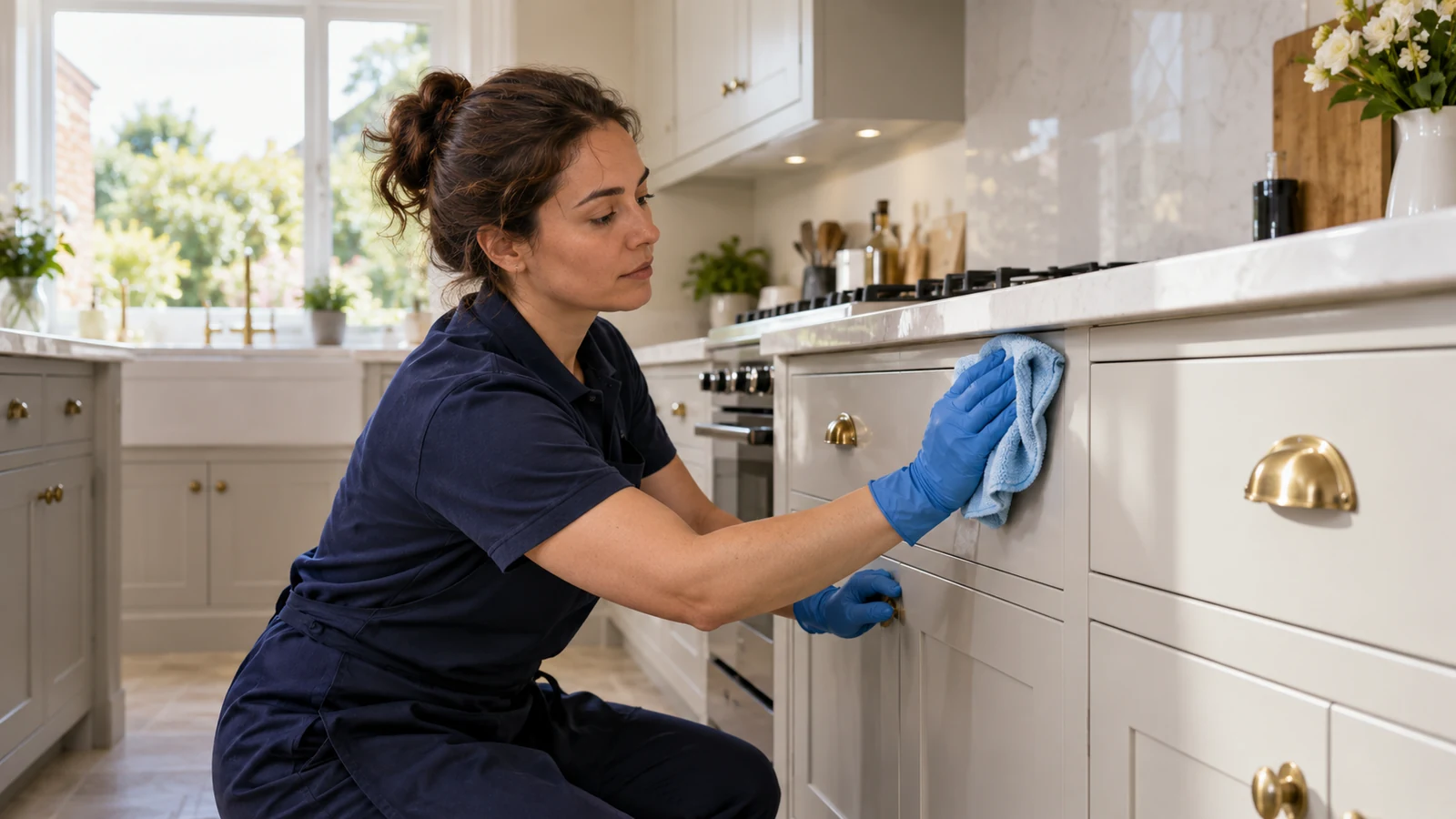
Describe the rooms after the work is complete
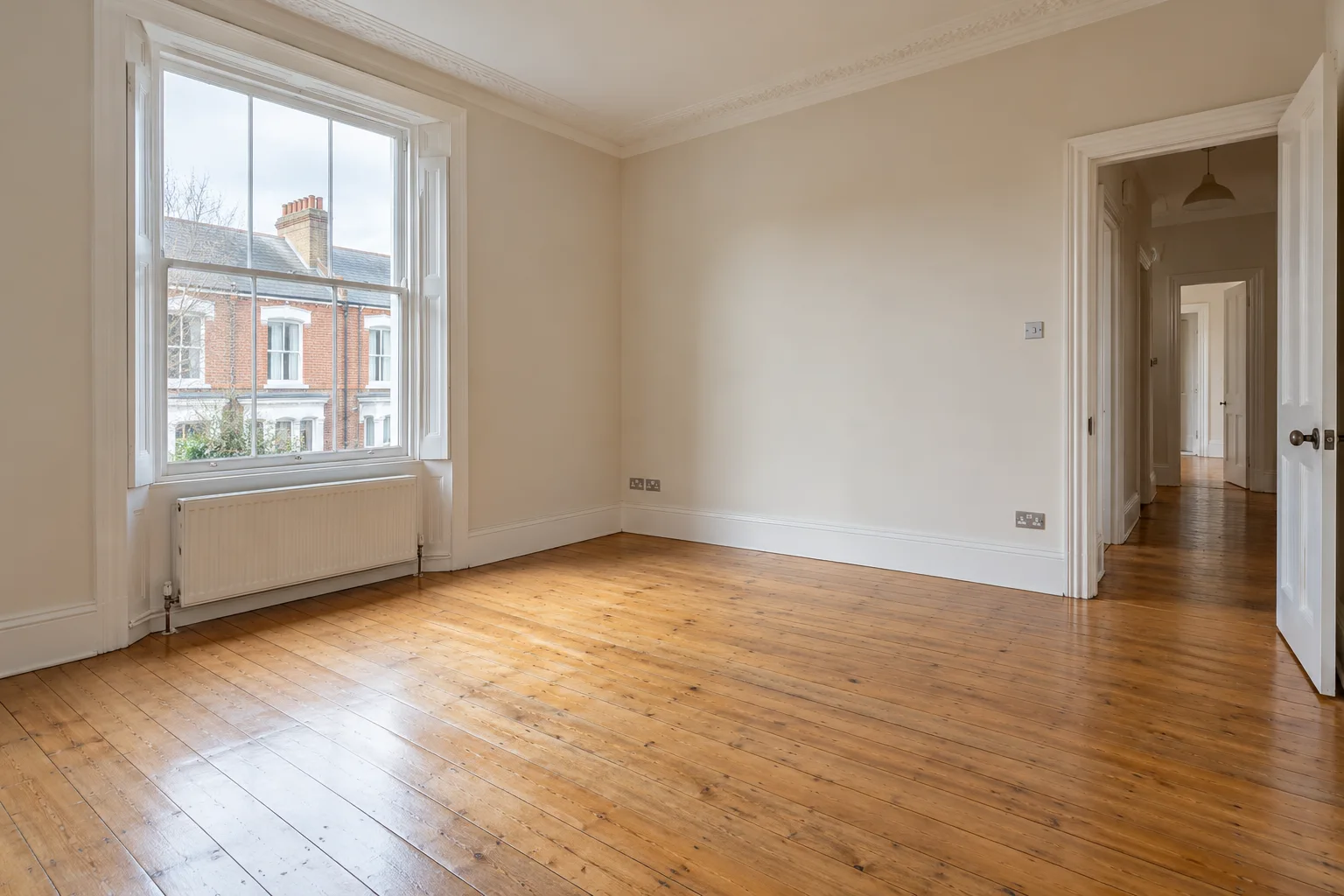
The most useful quote photographs are taken once tools and protective coverings have gone. Show the oven, extractor, bathrooms, floors and any residual dust. State which appliances remain, how many bathrooms there are and whether cupboards will be empty. Ask whether the price includes accessible cupboard interiors, internal glass, fittings and floors. Carpets, upholstery, external windows and construction-related debris should be discussed separately. Starting prices are guides; final cost depends on size, condition, access and chosen extras.
A written scope should also cover how a late change is handled. If the room is left covered in sanding dust after the quote was agreed, the team should explain whether the booked work can still be completed or whether a different service is needed. Agree any additional charge before it is undertaken. A vague instruction to ‘make it right’ cannot substitute for identifying the source, extent and safe method of cleaning.
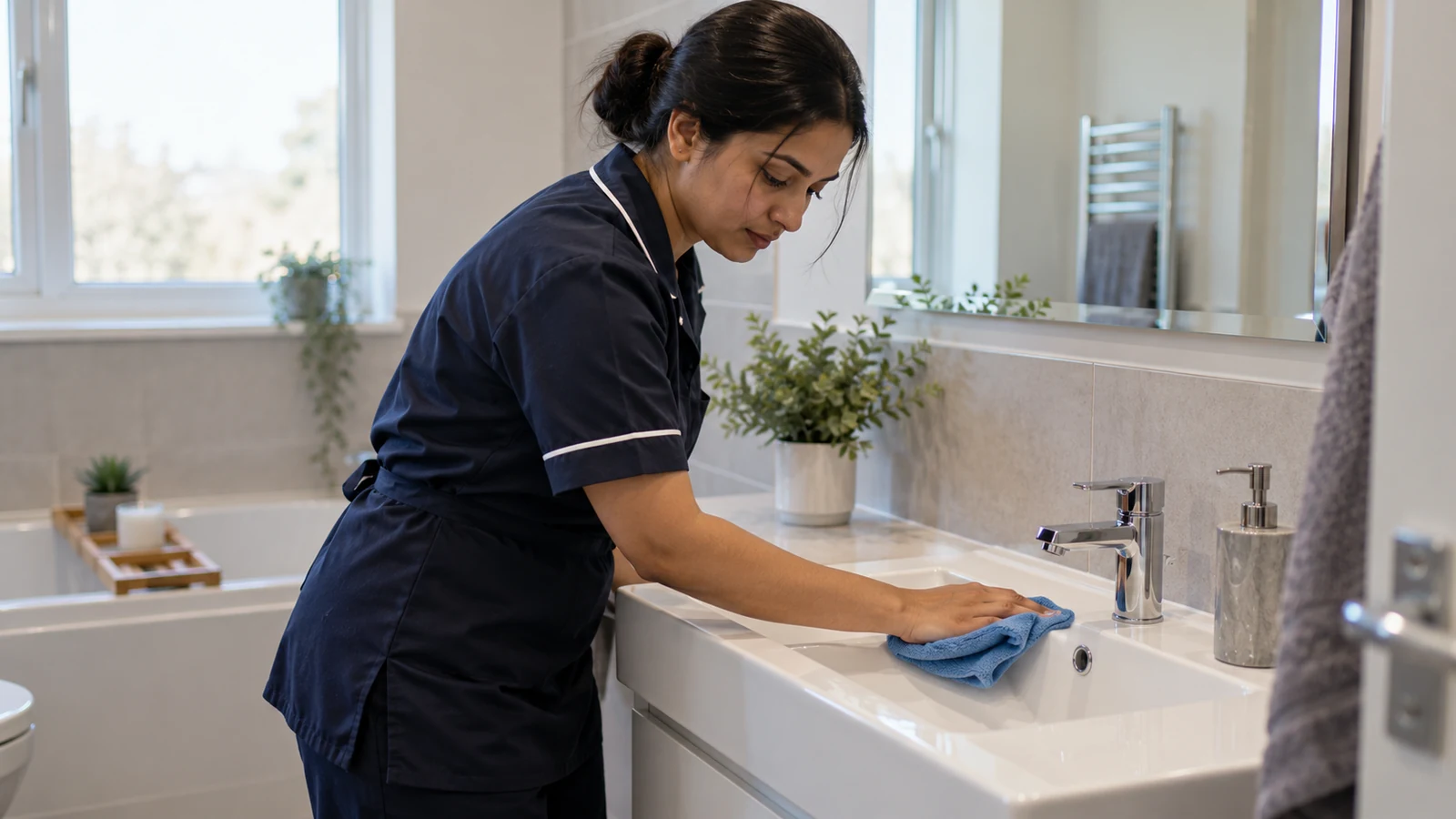
Clear both your belongings and the contractor’s materials
Remove your furniture, food, toiletries and waste. Ask the relevant contractor or landlord to remove tools, leftover materials and protective sheets before the cleaning appointment. Empty cupboards and keep water and electricity available. If an appliance is newly installed, confirm whether it is ready for use and whether the manufacturer has any care instruction. A cleaner should not test a fitting that a tradesperson has not handed over as safe.
Give the team the actual entry instructions, key holder and contact for a scope question. E10 alone does not establish parking or the route to the door. If a contractor holds keys, agree who will transfer them and when. An accessible, empty property gives the cleaners a fair chance to address the agreed surfaces and lets you inspect the result before the next party enters.
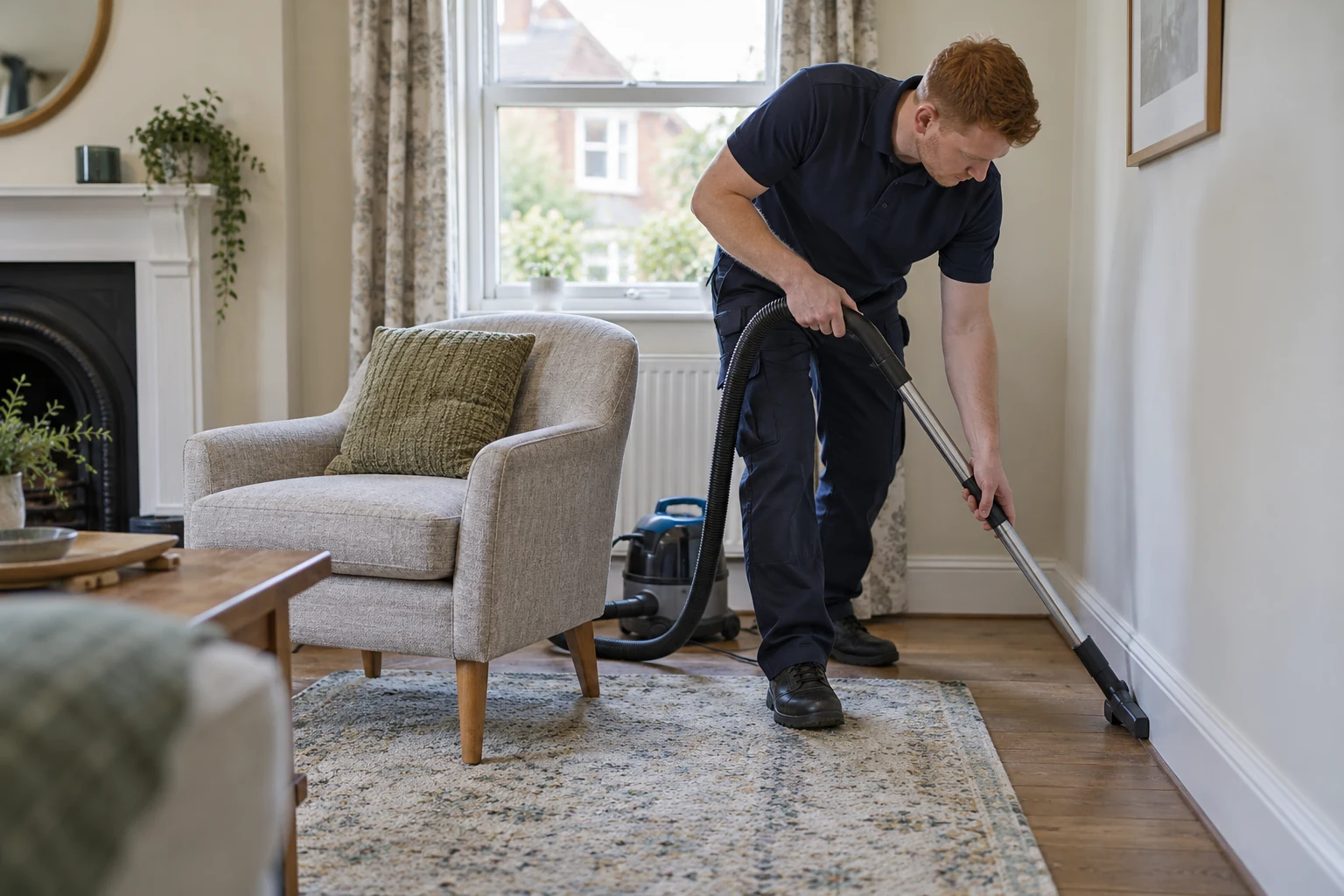
A final clean after dust-generating work
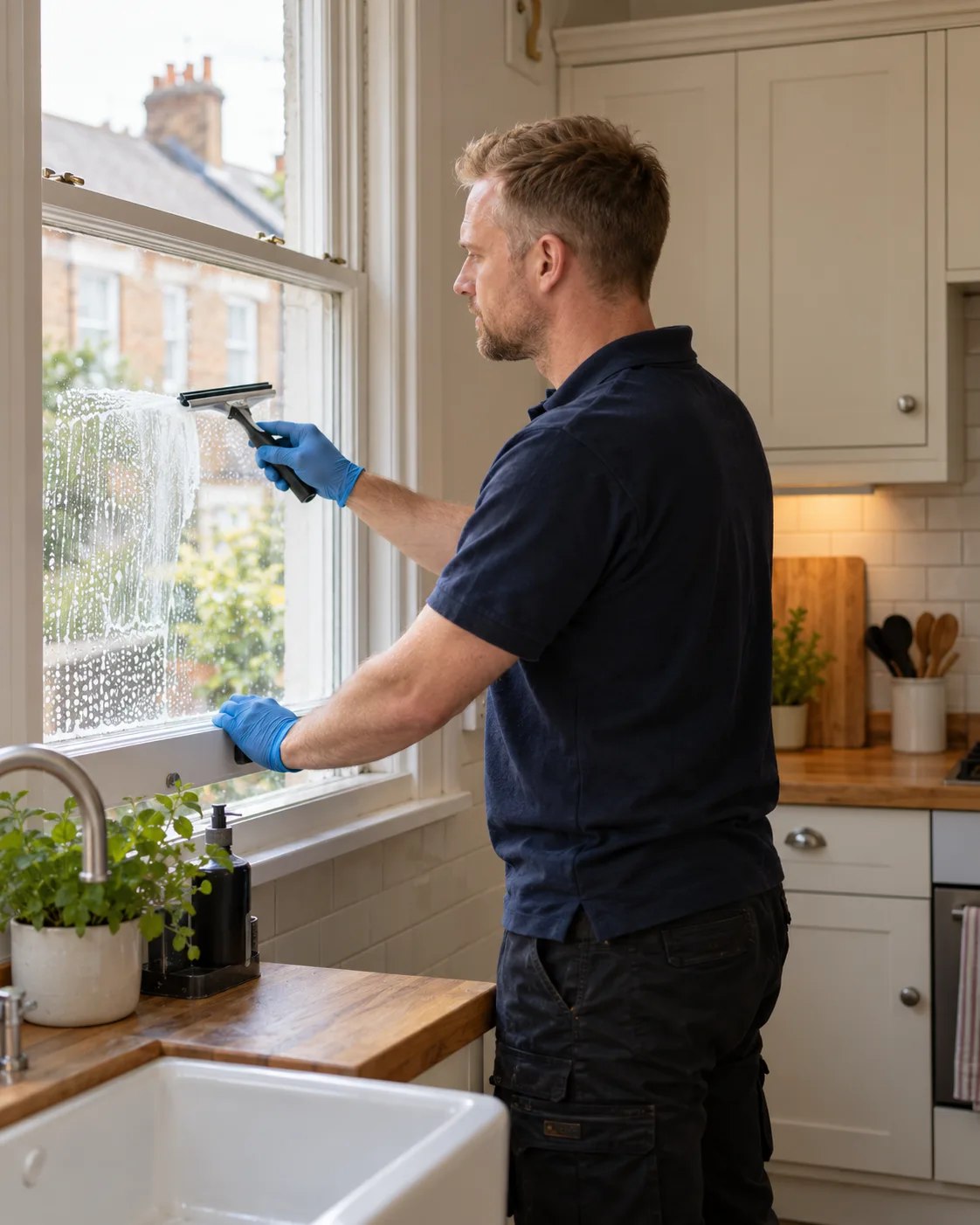
The team should check that the repair work is finished and the agreed rooms are accessible. Kitchen and bathrooms can be treated for suitable grease, limescale and soap residue, while other reachable surfaces receive dust removal and wiping according to their materials. Internal glass, doors, skirting and floors can be completed as agreed. Product and drying requirements affect the order. The team should not scrub fresh paint or a newly sealed joint before the relevant curing instructions allow it.
If there is continuing fine dust, an unsafe fitting or paint residue on a delicate surface, the team should flag it rather than force a result. Cleaning cannot repair a badly finished job. Any additional after-work clean needs a separate discussion of scope and cost. This protects the tenant from paying for a problem created after the agreed cleaning window and protects the property from inappropriate treatment.
Inspect after everyone else has left
Do the final walk-through only when cleaners and any contractors have finished. Check the kitchen and bathrooms, accessible cabinet interiors, internal glass and floors against the written scope. Photograph a precise missed cleaning item while access remains. If a repair has left a flaw or new dust, record who performed that work and when rather than assuming the tenancy cleaner caused it. The order of visits matters when explaining the property to the agent.
Keep the quote, approved changes, repair schedule, photographs and checkout report. A cleaning invoice does not guarantee a deposit decision, but it helps show which service was commissioned and when. For a Leyton property with recent work, a timeline of repairs, clearance and final cleaning is more useful than an unsupported statement that the rooms were clean at some point before handover. After any repair visit, ask the tradesperson or agent to confirm that all tools and protective coverings have been removed. If fresh dust appears after the cleaners finish, record the later visit. This establishes a fair sequence for the handover instead of attributing residue to whichever service attended first.
Questions about this handover
Leyton tenancy cleaning: practical answers.
Should the final clean in Leyton happen before or after the decorator leaves?
Arrange it after dust-generating work, tools and protective sheets have been removed. If the decorator returns later, ask who will clear new residue. Cleaning a room while sanding continues makes the final result difficult to inspect fairly.
Who should clear paint tins and leftover filler from a Leyton rental?
Ask the landlord or contractor who owns and will remove those materials. The cleaning team should not treat unidentified chemicals or leftover building products as ordinary household waste. Clear them before the appointment and photograph the accessible surfaces.
Can a Leyton cleaner remove paint splashes from a timber floor?
Show the splash and floor finish in photographs before booking. Removal may require a method that risks the coating, so the person who painted may need to resolve it. A tenancy cleaner should not scrape the timber under an open-ended instruction.
How do I brief the Leyton team about newly sealed bathroom joints?
Tell them when the sealant was applied and provide any curing instruction. A freshly sealed edge may not be ready for water or cleaning products. Ask the contractor to confirm it is safe before the final bathroom clean begins.
What if a new Leyton appliance has not been tested after installation?
Report that to the landlord or installer and do not ask the cleaners to operate or dismantle it. The team can discuss accessible exterior surfaces where safe, but a functioning and safe handover of the appliance is a separate responsibility.
Will ordinary end-of-tenancy cleaning cover sanding dust in every Leyton room?
Describe the extent and send photographs after the repair work finishes. Heavy fine dust may require a different scope and time from ordinary tenancy residue. Ask for the work and price to be confirmed rather than assuming it is included.
What should I do if a Leyton repair is scheduled after the cleaners?
Ask the agent to change the order or agree who will clean any residue created by the later visit. Keep a timeline and photographs. The first team cannot be responsible for dust or packaging introduced after it leaves.
How should exposed floor marks behind a removed Leyton desk be handled?
Photograph them after furniture is gone and compare with the check-in record. Surface dirt may be treated, while scratches or worn paint need a different response. Tell the team what material is affected before approving a product.
What belongs in the Leyton checkout record when repairs and cleaning overlap?
Keep separate dates for the repair, clearance, final clean and your inspection. Note who entered after each stage. That sequence helps an agent assess a newly noticed mark without assuming the last person on site created it.