
Move Out Mates / Marylebone
End of Tenancy Cleaning in Marylebone
A Marylebone renter leaving a serviced or managed flat should confirm which checkout tasks belong to the tenant and which are handled by the building or landlord. A concierge may manage access, but that does not define the cleaning scope.
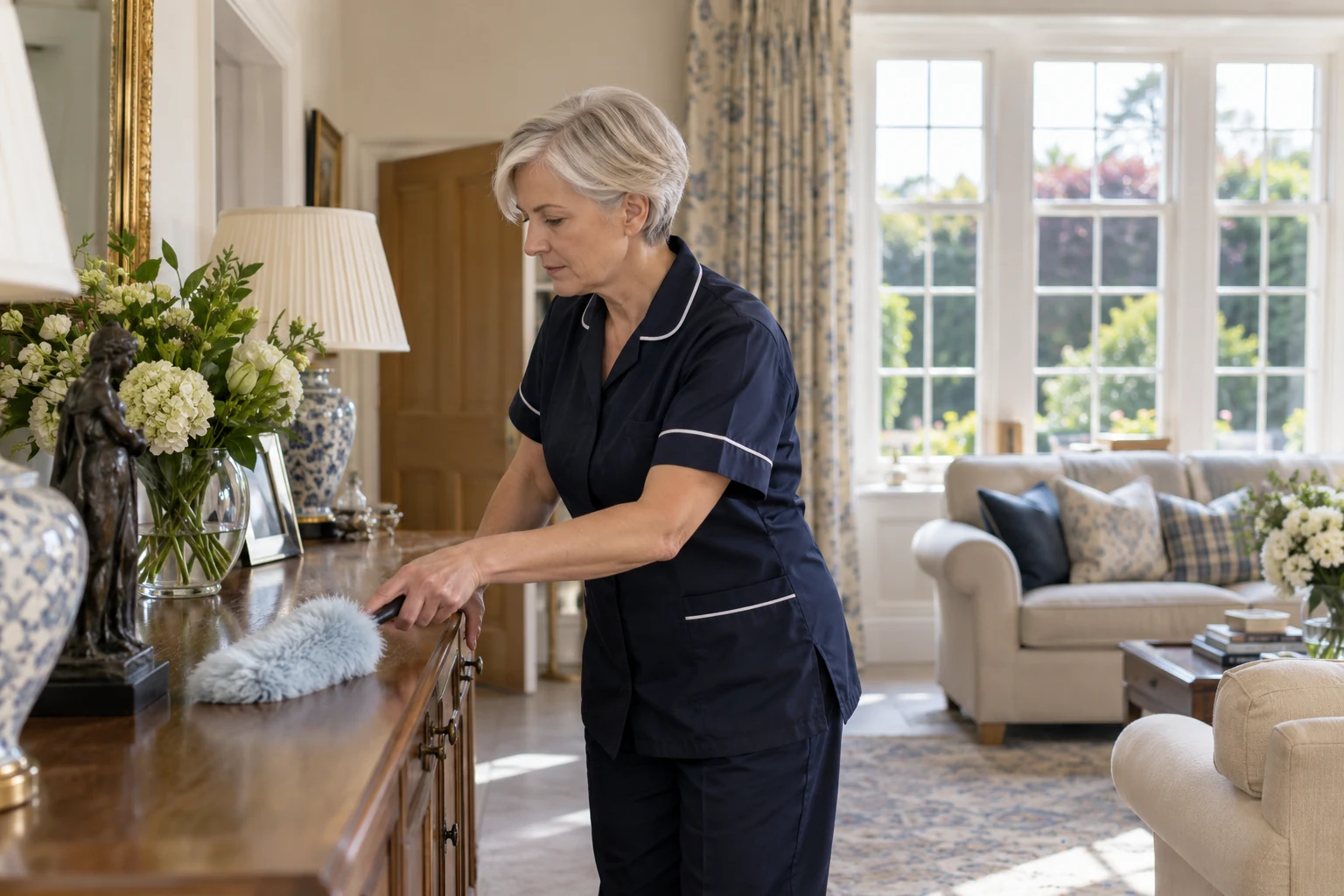
Read the tenancy papers before involving the building desk
At the first enquiry, give the full address and postcode; Marylebone includes W1U, W1H, W1G and parts of NW1, so a neighbourhood name cannot identify the entrance. Provide the inventory, room count, photographs and key deadline. A written quotation can then cover the actual interior work and the visit can be coordinated with the property’s real access rules.
Find the checkout instructions and inventory supplied by the landlord or agent. They may name appliances, cupboards, bathroom fixtures and furnished items that must be left in suitable condition. Separately, ask the building manager how a cleaning team is admitted and whether a service entrance or prior registration is required. Do not assume the concierge can approve changes to your tenancy clean or settle a condition dispute. Their role may be limited to access and keys.
If the flat has a housekeeping service during the tenancy, clarify what has already been done and what the end-of-tenancy booking must cover. Regular surface cleaning does not necessarily include an oven interior, empty cupboards or behind moved belongings. Conversely, avoid paying twice for a task the landlord has expressly undertaken. A room-by-room list derived from the agreement is more useful than the label ‘serviced flat’.

Describe the condition rather than the building’s reputation
Send photographs of the oven, extractor, bathrooms and any marks after your possessions have moved. State which appliances and furnishings remain. Ask whether the quote covers accessible cupboard interiors, internal glazing, fittings and floors. Request carpet, upholstery, rug or exterior window work separately. Starting prices are guides; size, condition, access and chosen extras determine the final figure. A polished lobby says nothing about the state of a particular kitchen, so it should not determine the price.
If a surface is natural stone, timber or specially coated, share any care instructions. A cleaner can choose an appropriate method for ordinary dirt but cannot restore etched stone, scratched lacquer or failed sealant. Ask about the limits before agreeing to treatment. A written scope also makes clear what happens if the team finds a problem the photographs did not show: proposed extra work and price should be approved before it starts.
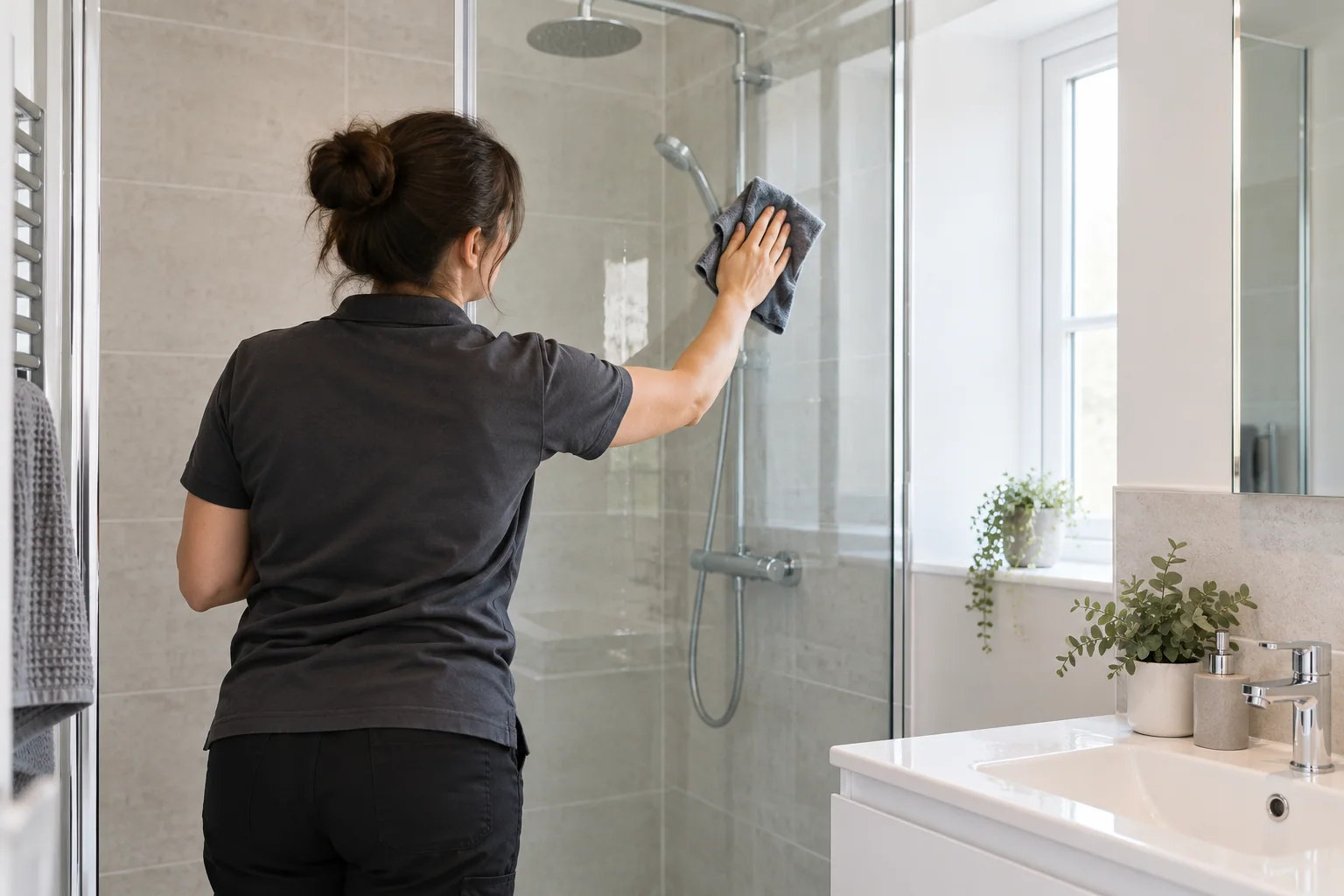
Prepare access and make the flat genuinely empty
Remove food, toiletries, clothes and personal furniture, and empty cupboards that are in scope. Leave water and electricity on. Keep inventoried furnishings in place and mark any loose object whose ownership is unclear. If a room is still storing luggage, the cleaners cannot reach the floor and skirting behind it. Schedule removals to finish before the visit and leave a buffer for your own inspection before the agent takes the keys.
Agree the building’s entry procedure in writing. Provide the correct flat number, bell or desk contact and any permission needed for a lift or service route. Do not assume a parking space exists or can be used. Name the person who can authorise a specific change if you are absent. A concierge may be able to release keys, but the customer should remain responsible for decisions about the cleaning scope and cost.
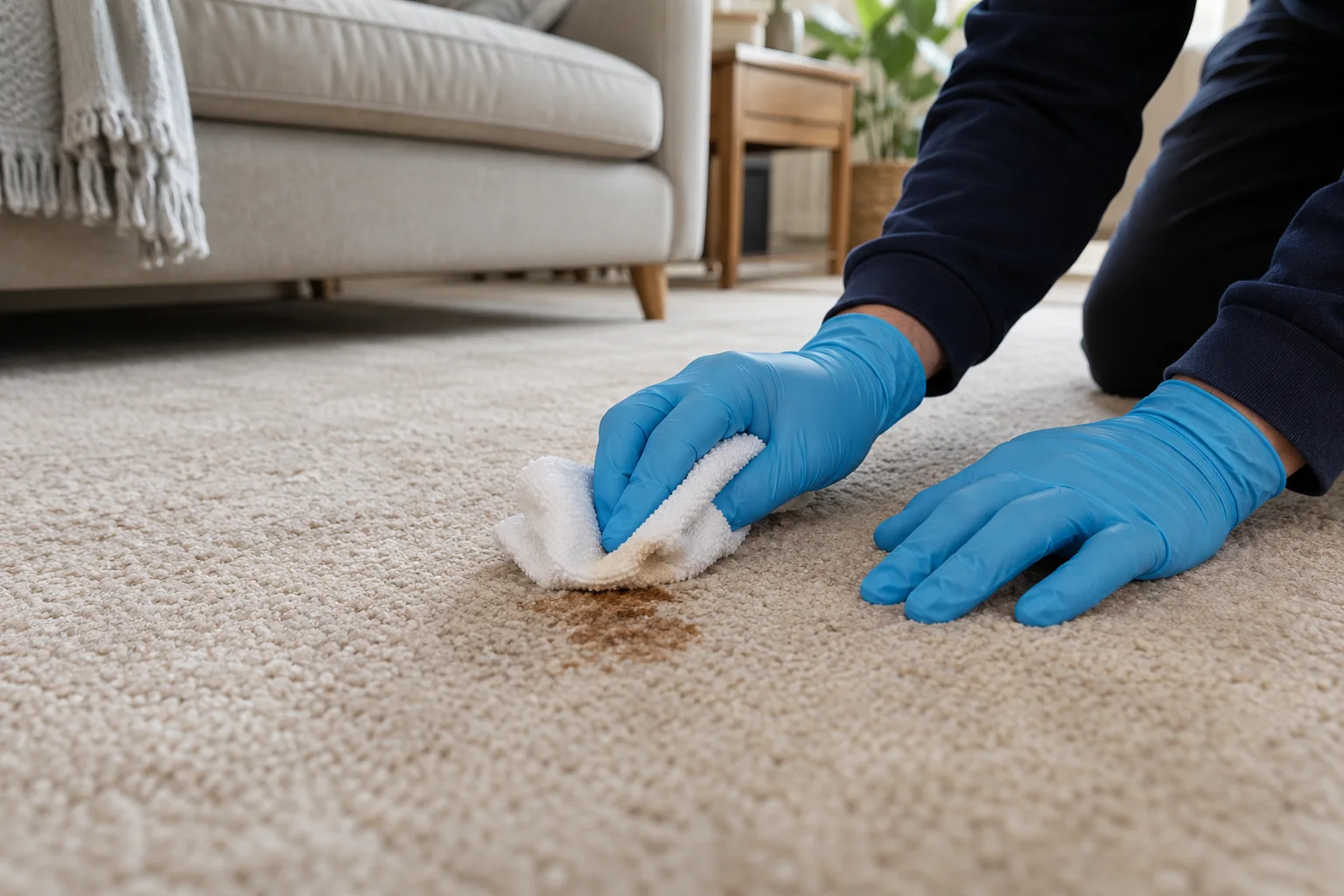
Check the work inside, not just the access log
The team should compare the accessible rooms with the quoted task list. Kitchen and bathroom surfaces can be addressed for suitable grease, limescale and residue, with other reachable fittings, doors, skirting, internal glass and floors treated according to materials. The exact sequence varies with product and drying needs. If a furnished area cannot be reached without moving heavy items, that limit should be reported rather than hidden behind an assumption that all furniture was movable.
A locked cabinet, damaged fixture or permanent stain may prevent a requested result. The team should explain why and avoid forcing or dismantling property. If an additional specialist task is suggested, approve the method and price before adding it. This allows the final handover to distinguish what was cleaned from what requires maintenance or another service. The building’s access record cannot show those distinctions.
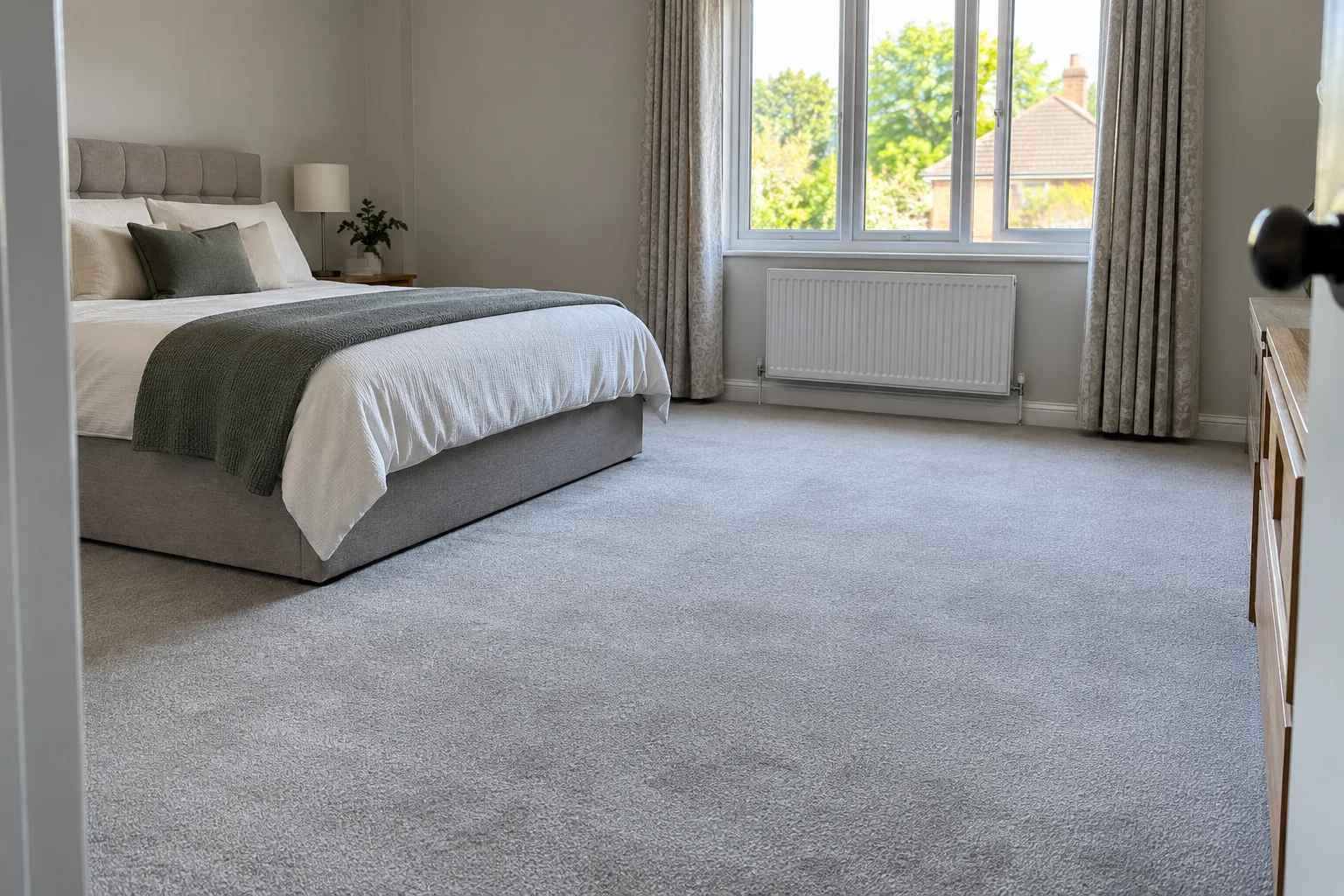
Complete a tenant’s inspection before returning fobs
Open agreed appliance and cupboard interiors, view bathroom fittings, accessible internal glass and floor edges, and compare the result with the inventory. Photograph a precise missed item while you still have entry to the flat. Raise it promptly with the cleaning team, then follow the agreed procedure for returning keys and any fobs. A lost access card is a separate handover issue and should not be mixed with a cleaning complaint.
Keep the quote, approved changes, final images and checkout report. If a later deduction is proposed, ask for the exact room and surface. Wear, repair and cleanliness should be discussed separately. The invoice cannot guarantee a deposit return, but a detailed record can show what the Marylebone visit was asked to do and what was observed before access ended. Ask the building desk to confirm who may collect and return keys, but send all cleaning questions to the person named in the booking. Keeping access and scope decisions in separate channels prevents a well-meaning concierge from approving a task that the customer did not request or expect to pay for.
Questions about this handover
Marylebone tenancy cleaning: practical answers.
Who in a Marylebone managed building can approve extra cleaning?
The person paying for the booking should authorise a specific task and price. A concierge may admit visitors or manage fobs, but that does not give them authority to add work. Put a direct contact in the booking.
Can the concierge’s access log prove my Marylebone flat was clean?
It can show when the team entered and left, not what each room looked like. Keep the written scope and your own final photographs. Ask a key holder to inspect agreed appliances and bathrooms before surrendering access.
Does regular housekeeping replace a Marylebone end-of-tenancy clean?
Check what the regular visits actually covered. They may maintain visible surfaces without cleaning an emptied cupboard or oven interior. Use the inventory to identify outstanding tasks, then request a quote only for the work needed at handover.
How should Marylebone building lift rules be given to the team?
Confirm the actual visitor or service-lift procedure with the building manager and share it before the appointment. A moving-day lift reservation may not cover the cleaners. State the correct entrance, flat number and contact at the desk.
What if furnished items in a Marylebone flat have delicate finishes?
List the items, photograph existing wear and share any care guidance. Ask what accessible surfaces the team can treat safely. Upholstery or restoration is a different service, and heavy furniture should not be moved without prior agreement.
Should I give a Marylebone cleaner every fob and access card?
Give only the access items needed through the agreed key handover, and record the number and return route. A building fob is a separate asset from the flat’s condition. Ask the concierge or agent to confirm receipt when returned.
Can a Marylebone quote include a fitted oven but exclude a freestanding microwave?
Yes, if the written scope identifies each appliance accurately. Show what belongs to the landlord and what will stay. An appliance should not be presumed included merely because it is in the kitchen on the day.
How do I deal with a Marylebone cupboard that is still full at the appointment?
Clear it before work starts if its interior is booked. If it remains occupied, tell the team and agree the effect on scope. Cleaners should not sort or discard possessions to reach shelves, even in a managed building.
What should I check before the Marylebone fobs are surrendered?
Inspect the agreed appliance interiors, bathrooms, cupboards, internal glass and floors while access remains. Photograph a specific missed area and raise it promptly. Then return keys and fobs through the building’s documented process.